Agile Methodology: A Complete Guide to Agile Development
A practical 2026 guide to agile methodology — Agile Manifesto values, Scrum vs Kanban, team roles, sprint ceremonies, CI/CD, and how to lead a successful agile transformation without turning stand-ups into micromanagement.
In today's fast-paced tech landscape, the ability to pivot quickly is not just an advantage; it is a necessity for survival. If you are looking to define agile development methodology, it is best understood as a dynamic, highly collaborative approach to building products. But what does agile actually mean in practice? Ultimately, the true agile development meaning boils down to flexibility, continuous improvement, and putting the customer at the center of the development lifecycle.
Whether you are managing a small app or enterprise-grade infrastructure, embracing an agile methodology can completely transform how your team delivers value. Let's dive deep into this revolutionary way of working.
What is agile? A brief overview
To provide a comprehensive agile software development overview, we must look back at how software used to be built. Historically, teams used rigid, linear models. So, what is agile computing in contrast? It is a paradigm shift that breaks massive, multi-year projects into small, manageable, and functional chunks.
Whether you are involved in broad agile project development or highly technical agile system development, the core objective remains the same: deliver working software quickly and adapt to changes instantly. By adopting an agile development methodology, teams can pivot easily when user needs or market conditions shift. This flexibility applies to all facets of agile software creation, from initial ideation right through to final deployment.
The foundation: values and principles
All successful agile approaches are rooted in the Agile Manifesto values and principles. Written in 2001, this foundational document prioritizes:
- Individuals and interactions over processes and tools.
- Working software over comprehensive documentation.
- Customer collaboration over contract negotiation.
- Responding to change over following a plan.
These agile development principles encourage teams to work closely together. It's not just about writing lines of code; it is about holistic agile design that solves real-world problems elegantly and efficiently.
Frameworks: how does agile work?
You might be asking, "how does agile work on a day-to-day basis?" Agile itself is an umbrella term; to execute it, teams rely on a specific agile framework.
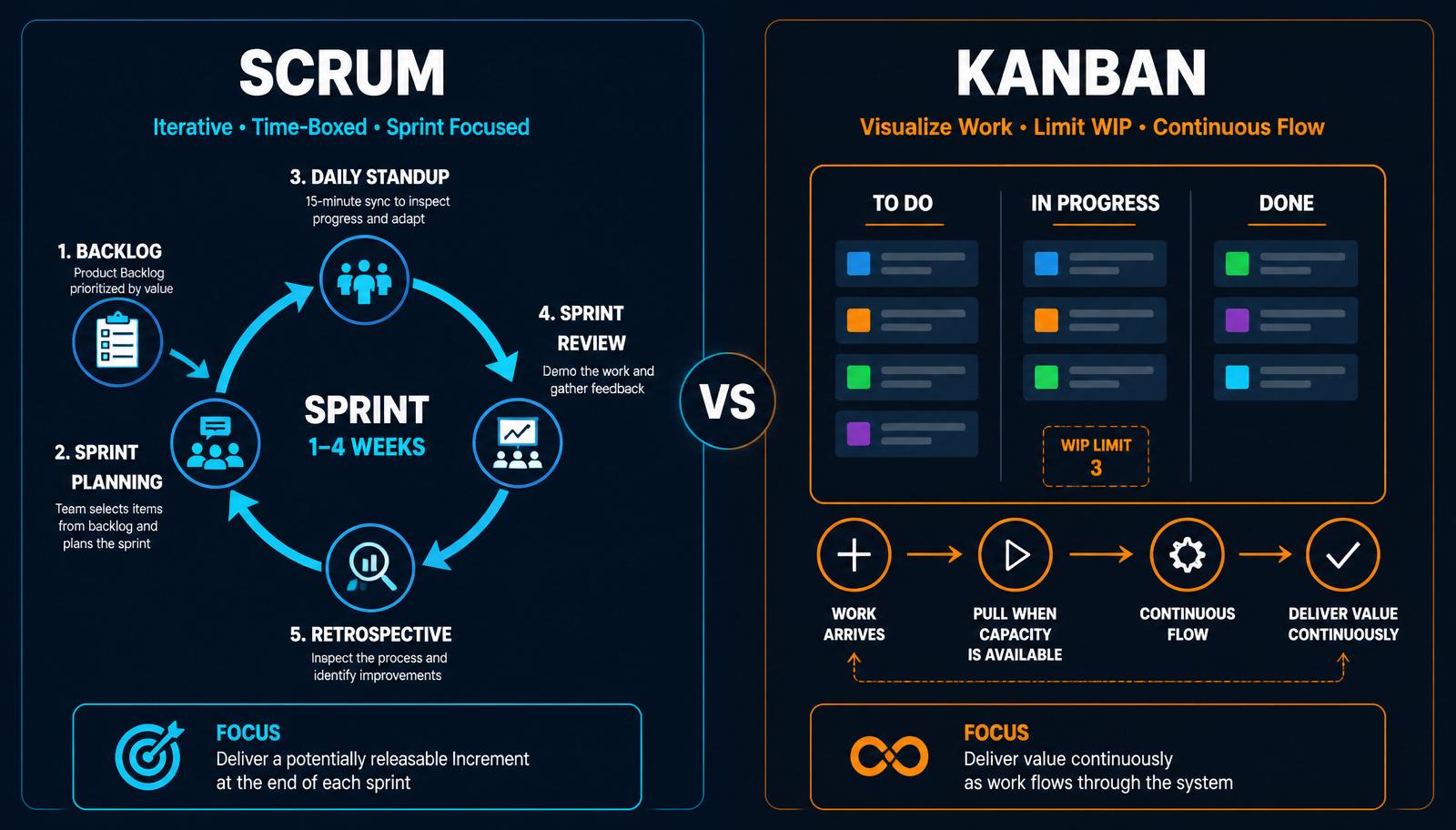
The most prominent agile development framework is Scrum, though Kanban is equally revered. A quick Scrum vs Kanban framework comparison reveals their distinct strengths: Scrum organizes work into fixed-length iterations (called sprints) ideal for predictable product development, while Kanban focuses on continuous flow and visual workload management, perfect for support and maintenance. Both are exceptional for managing agile work.
Additionally, many modern teams integrate Lean software development core concepts, which focus intensely on eliminating waste, amplifying learning, and optimizing the whole system rather than just individual parts.
Structuring the agile environment
Creating a thriving agile environment — often referred to as an agile development environment — requires organizing the right people into the right roles.
Understanding Scrum Master vs Product Owner responsibilities is critical to your agile software project management success. The Product Owner acts as the voice of the customer, deciding *what* needs to be built. The Scrum Master serves as a coach and facilitator, ensuring the team knows *how* to build it without bottlenecks.
One of the greatest benefits of cross-functional team structures is the elimination of silos. When developers, designers, and testers collaborate daily, communication improves, bottlenecks vanish, and the quality of the final product skyrockets.
The agile development process
The actual agile development process is vastly different from traditional models. The typical agile software development steps are driven by iterative and incremental development cycles. Instead of waiting a year to launch a product, teams release small, functional pieces of software every few weeks.
Planning and prioritization
The journey begins with a robust agile development design process. Teams utilize user story mapping and acceptance criteria to clearly define what features the end-user needs and exactly how those features should behave.
To keep the pipeline organized and relevant, teams employ active backlog refinement and prioritization techniques. This ensures the development team is always working on the highest-value items first, preventing time wasted on low-priority features.
Ceremonies and day-to-day practices
Robust agile practices keep the engine running smoothly. If you read any sprint planning and retrospective guide, you will see that planning sets a clear goal for the upcoming iteration, while the retrospective allows the team to reflect on and improve their processes.
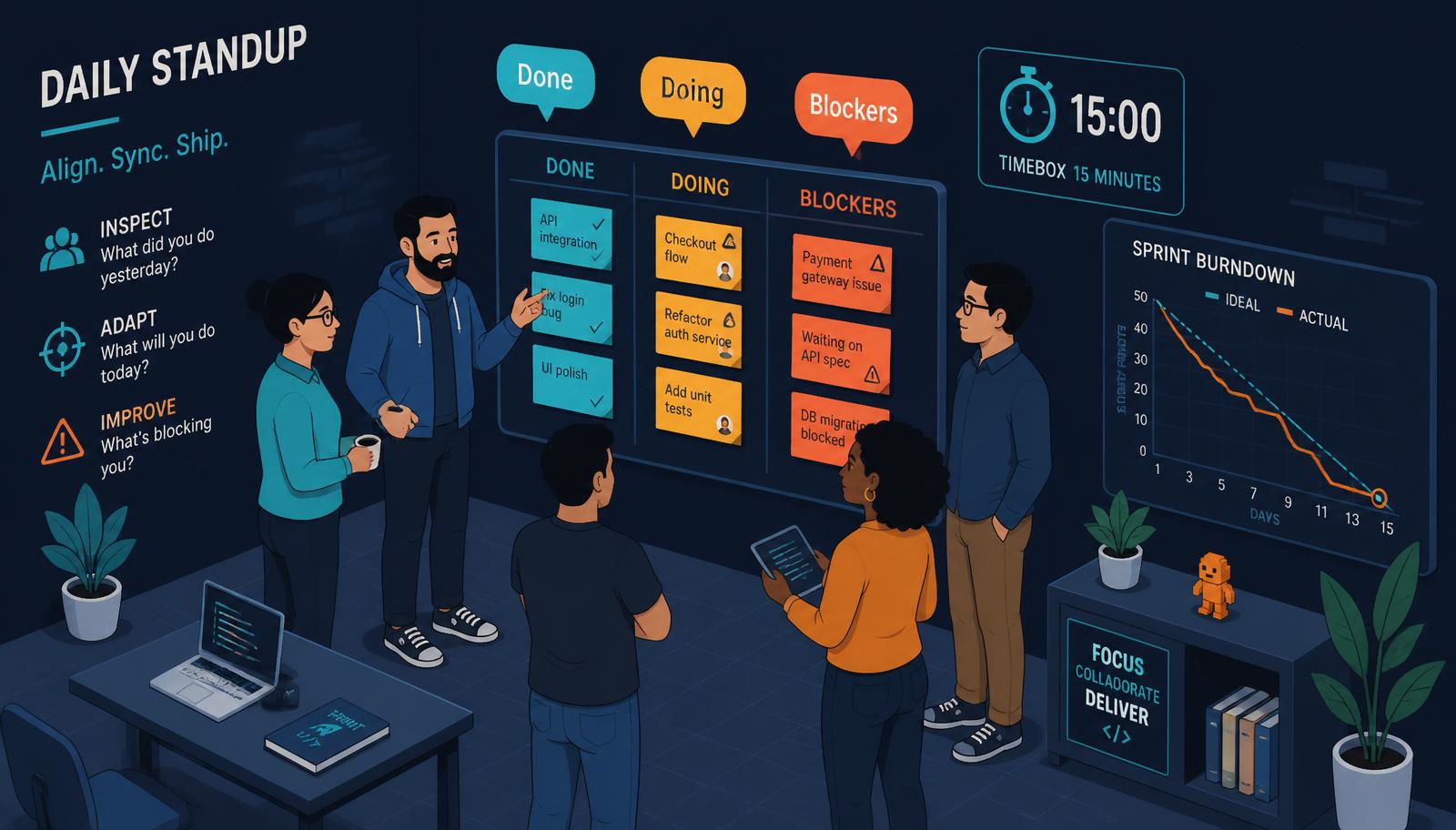
Daily alignment is maintained through quick check-ins. Knowing how to conduct effective daily standups — keeping them strictly to 15 minutes to discuss what was done, what will be done, and any blockers — is vital. Over time, measuring team velocity and performance allows leaders to accurately forecast future delivery timelines.
Engineering, testing, and delivery
Agile isn't solely a management philosophy; it fundamentally changes technical execution. Modern agile development relies heavily on specialized tools. Utilizing the right agile methodology software for project tracking, alongside collaborative agile programming software, empowers developers to write and review code at high speed.
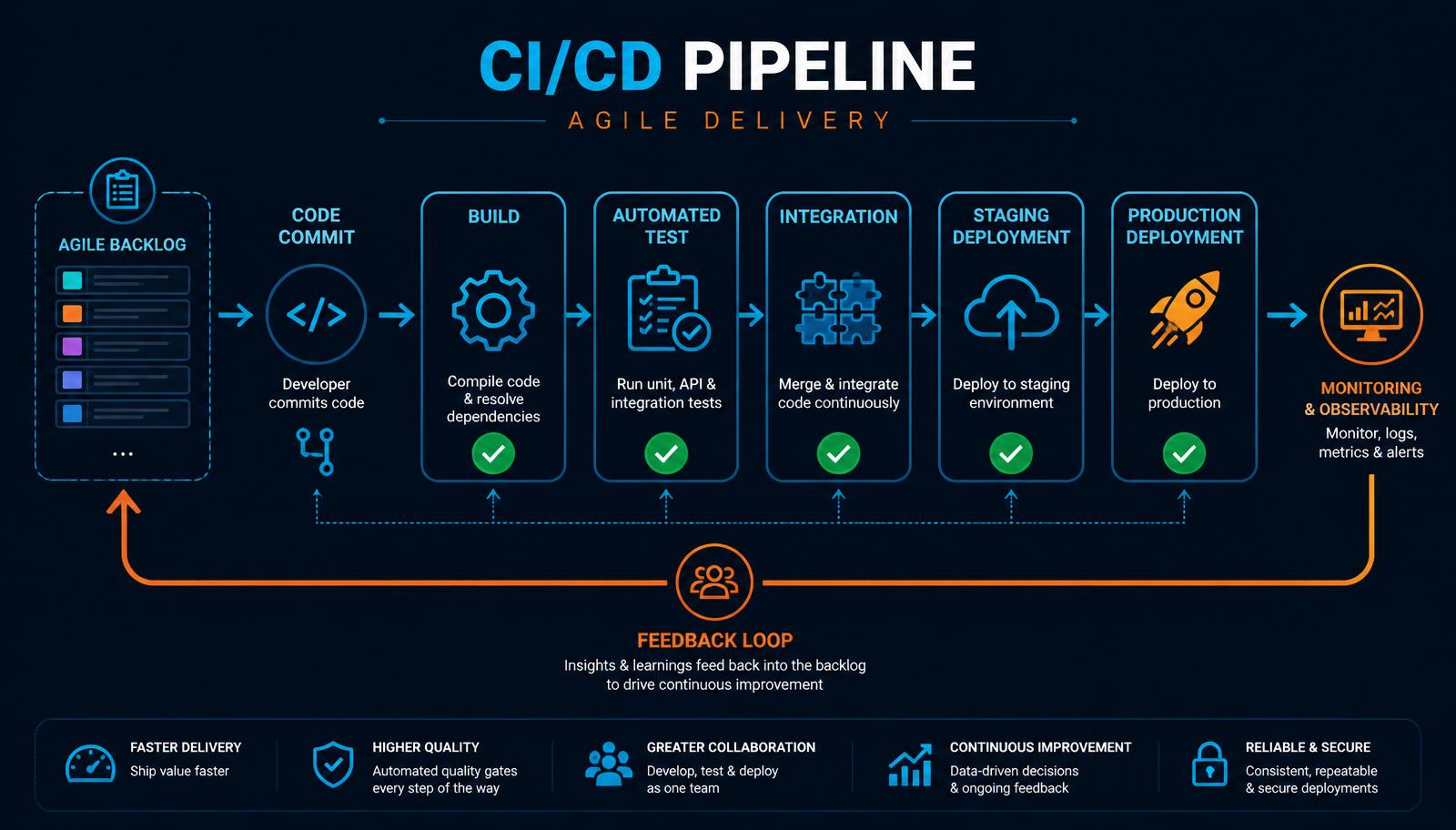
Furthermore, integrating agile methodology in software testing ensures that quality assurance happens concurrently with development. Testers don't wait until the end of a project to find bugs; they test daily. To support this rapid pace, teams depend heavily on continuous integration and delivery workflows (CI/CD), automating testing and deployment so that new features can reach users safely and reliably.
Traditional vs. agile: navigating the shift
When conducting a Waterfall vs Agile project management analysis, the contrast is stark. Waterfall requires rigid, upfront planning where all requirements are set in stone before coding begins. Agile, however, thrives on adaptive planning for changing requirements, allowing businesses to respond to user feedback in real-time.
Despite its massive benefits, shifting to agile software development isn't always seamless. Companies often face common challenges in agile transformation, such as deep-rooted cultural resistance, a lack of executive buy-in, or teams treating Agile as a set of micromanagement meetings rather than a collaborative philosophy. Overcoming these hurdles requires patience, coaching, and a genuine commitment to continuous learning.
If you want experienced guidance rolling this out, our engineering services team and portfolio of delivered agile projects are a good starting point — you can start a scoped project brief and get a response within one business day.
Conclusion
Embracing an agile methodology is one of the most effective ways to ensure your tech initiatives succeed in a competitive market. From understanding the basic agile software development overview to mastering complex CI/CD pipelines and cross-functional collaboration, the journey requires dedication. By focusing on the core principles, trusting your teams, and remaining adaptable, you can build an agile culture that consistently delivers high-quality, customer-centric software.