Build AI Workflows with Top AI Agent Builder
Discover the power of AI automation with an AI agent builder. Create workflows with no code, deploy custom agents, and enhance business efficiency effortlessly.
The landscape of workplace automation has shifted fast. Streamlining business processes with intelligent agents is no longer a futuristic idea reserved for tech giants — it is an accessible, everyday reality. At the centre of that shift sits the AI agent builder: a platform that lets individuals and teams design, test, and deploy autonomous digital workers. Whether you want to build AI workflows with no code or go deep into custom AI agent development, understanding how these platforms actually work is what separates a useful agent from an expensive chatbot.
What an AI agent builder actually does
A chatbot answers. An agent *acts*. An AI agent builder gives you four things a raw model API does not: a place to store instructions and guardrails, a memory layer so the agent remembers context, connections to the tools where your work already lives, and a runtime that executes multi-step tasks without a human clicking each step.
If you have already experimented with AI coding assistants and how they compare in 2026, an agent builder is the next rung up: instead of suggesting the next line, the system owns an entire task from trigger to result.
The rise of accessible automation
The first real decision when asking "how do I build an AI agent?" is no-code platform versus development framework.
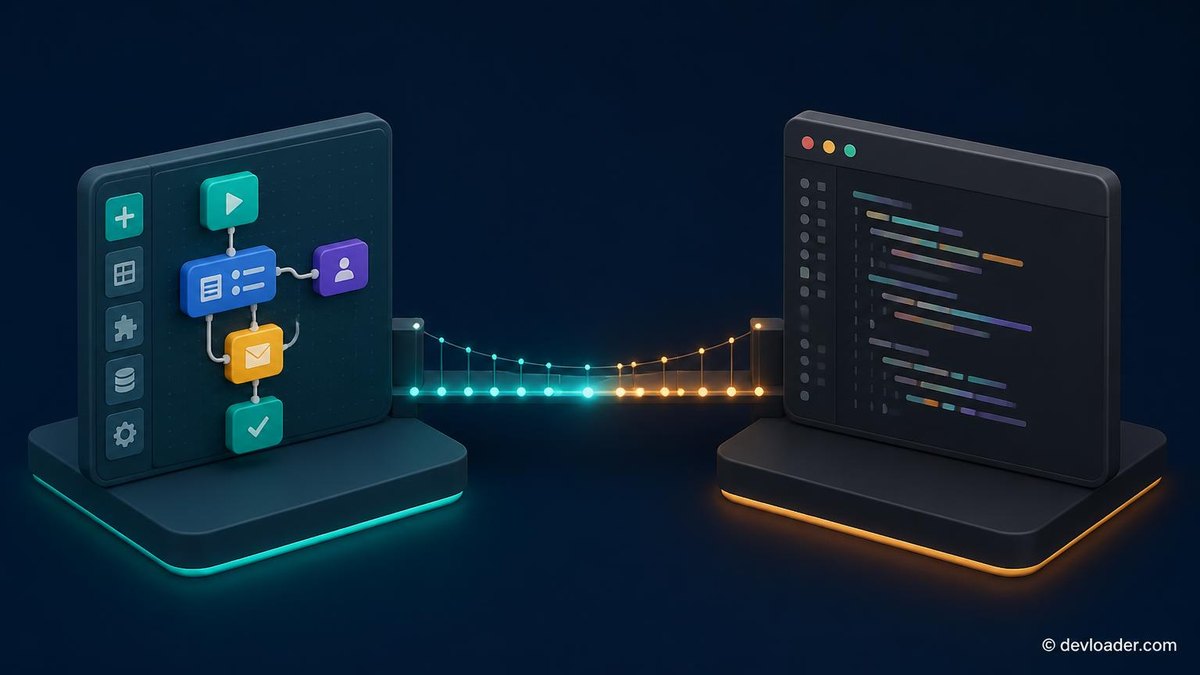
A modern no-code AI agent builder lets non-technical users assemble automation through drag-and-drop canvases and visual flowcharts. Operations leads, marketers, and support managers can ship working agents without ever opening a terminal. A low-code AI agent builder sits in the middle: pre-built modules for the boring 80%, with escape hatches for custom logic, transformations, and API calls where the business rules get unusual.
Neither is automatically the right answer. No-code wins on speed, maintainability, and handover. Code-first frameworks win when your agent needs behaviour the visual editor cannot express.
Core features of top AI agent development platforms
Behind friendly interfaces, the platforms worth paying for are strong in four technical areas:
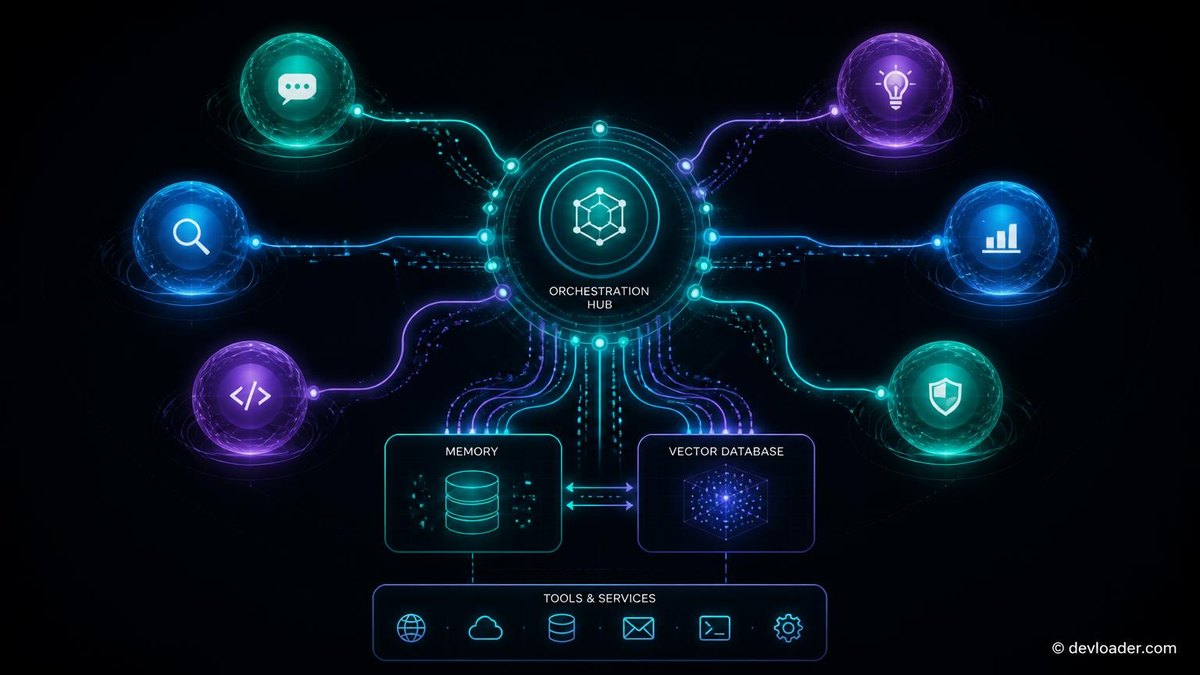
- Contextual awareness. Memory management keeps state across turns and sessions, so an agent handling a support thread on Friday still knows what happened on Tuesday.
- Knowledge retrieval. Pairing a language model with a vector database lets the agent answer from your documentation, pricing, and policies instead of guessing. If you are building this yourself, our Supabase authentication tutorial covers the access-control groundwork retrieval systems depend on.
- Reasoning and planning. Goal-oriented loops let the agent plan, execute, check the result, and adapt — the difference between a script and an actual agent.
- Enterprise orchestration. Running dozens of workflows concurrently with queues, retries, rate limits, and audit trails is where hobby projects fail and production platforms earn their price.
How we evaluate agent platforms for client projects
We build automation for clients, so this is not a survey of marketing pages. Before we recommend a platform, we run the same short pilot on each candidate: one real workflow, one real data source, and one deliberately messy edge case.
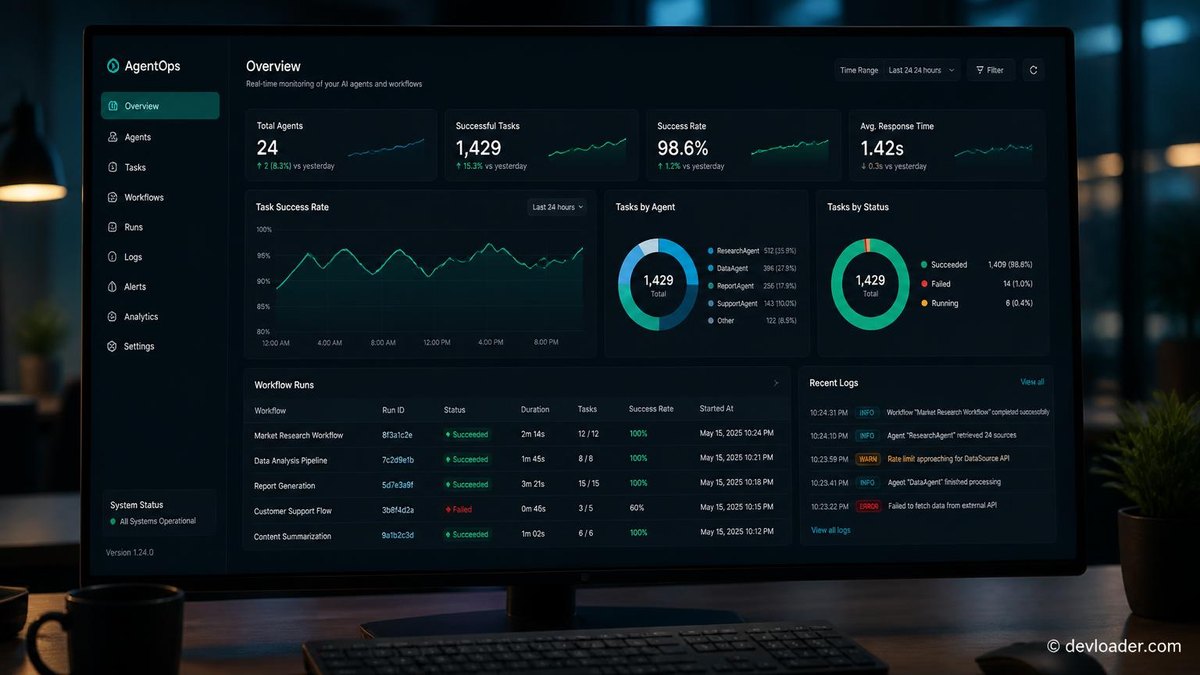
Three things consistently decide the outcome. First, failure behaviour — what the agent does when an API times out or returns junk matters more than what it does on the happy path. Second, observability — if you cannot see the reasoning trace of a failed run, you cannot fix it. Third, exit cost — how much of the logic is portable if you switch vendors in a year. Platforms that look identical in a demo separate sharply on those three.
A step-by-step guide to building autonomous software
Whether you are automating a department process or creating a custom GPT-style assistant for customer support, a structured method beats improvisation:
- Define one core objective. One job, one clear success condition. Vague scope is the single most common reason agent projects stall.
- Choose the right tool. Many teams start on a free AI agent builder to validate the idea, then migrate to a paid tier once volume, permissions, or compliance requirements appear.
- Write the system instructions carefully. Prompt engineering for agentic behaviour is mostly about constraints: what the agent may do, what it must refuse, and what it must escalate. Explicit boundaries are your best defence against confident hallucinations in automated decisions.
- Connect real tools. CRM, inbox, calendar, database, project board. Integrations are what turn a conversationalist into an executor.
- Launch, then measure. Track completion rate, escalation rate, and cost per task. Refine instructions from real transcripts, not assumptions.
Frameworks versus no-code: choosing your path
Experienced engineers usually end up comparing agent frameworks — orchestration libraries for control over every step, versus retrieval-focused libraries for document-heavy systems. Open-source frameworks give granular control over tool calls, prompts, and state, which matters when the behaviour is genuinely novel.
Dedicated platforms win on time-to-value: hosting, retries, secrets, versioning, and monitoring arrive out of the box. The interesting frontier is multi-agent collaboration, where a researcher agent, a writer agent, and a reviewer agent work in a shared environment — a pattern that mirrors how AI is reshaping freelance writing work and how teams now use AI to organise a weekly schedule.
The honest answer: pick based on your team's technical depth, the cost of a wrong answer in your domain, and how quickly requirements change.
The future of enterprise efficiency
The barrier to entry has collapsed. Organisations now run agents for tier-one support triage, data analysis, scheduling, and first-draft financial reporting. That accessibility is exactly why platform choice matters — an agent wired into the wrong ecosystem becomes technical debt with an API key.
The era of passive software is ending. Adopting an AI agent builder shifts your team from manual execution to strategic oversight. Whether you go fully no-code or build on frameworks, the tools are mature, affordable, and ready.