Best Medical Website Design Services | Healthcare Solutions
How professional medical website design improves patient experience, streamlines bookings, meets HIPAA and WCAG requirements, and ranks locally — plus how to pick the right healthcare web design company.
In today's digital-first world, a patient's healthcare journey rarely begins in a waiting room — it starts with a search engine. For modern practices, professional medical website design is no longer just a digital business card; it is the virtual front door to your clinic.
Whether you run a solo practice or manage a multi-specialty hospital, investing in strategic healthcare website design can be the deciding factor between a fully booked schedule and missed opportunities. By embracing high-quality medical website development, you can establish medical authority, improve patient experiences, and streamline your administrative operations.
Here is a comprehensive guide to building a digital presence that serves both your patients and your practice.
The foundations of a great patient experience
The core of successful website design for medical practice is user experience. When users visit your site, they are often stressed, feeling unwell, or looking for urgent answers. Implementing patient-centric UX design principles ensures that visitors can find what they need intuitively and quickly.
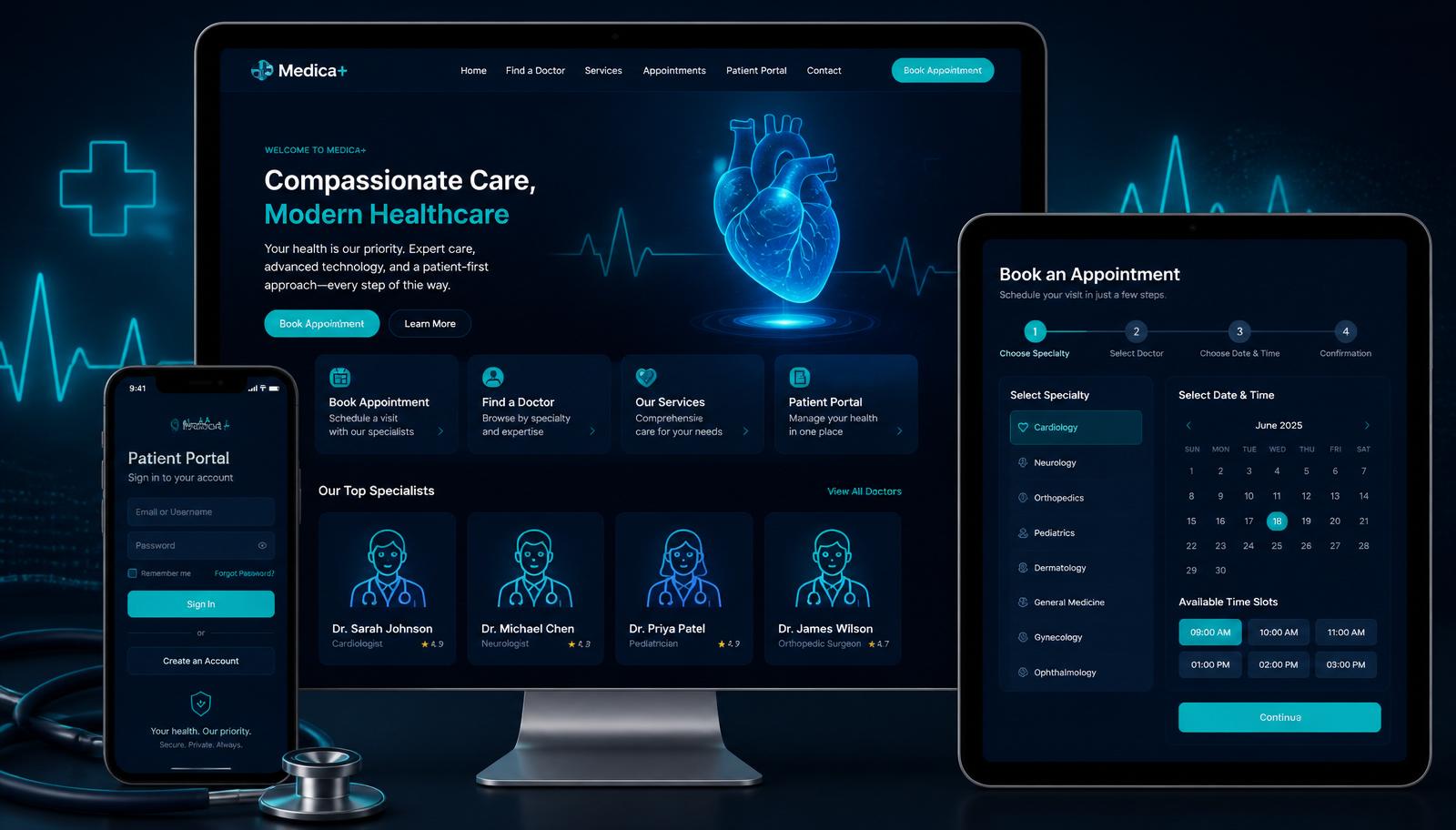
A cluttered homepage frustrates users, whereas a clean, well-structured medical web page design helps them navigate to your contact forms or patient portals effortlessly. When you look at the best clinic website examples for inspiration, you will notice they all share a warm, welcoming tone and a clean, mobile-responsive physician site interface. Since the vast majority of patients will browse your site on their smartphones, a responsive layout is a non-negotiable standard in modern healthcare web design.
Furthermore, digital credibility is crucial in healthcare. You can actively begin building patient trust with testimonials (while strictly adhering to privacy laws) and by showcasing your staff's credentials. When people see positive outcomes and real human faces, they feel significantly safer choosing you as their provider.
Essential features to drive bookings and efficiency
What separates average website development for doctors from the absolute best medical web design? The answer lies in functionality. Your website should act as an extension of your front-desk team.
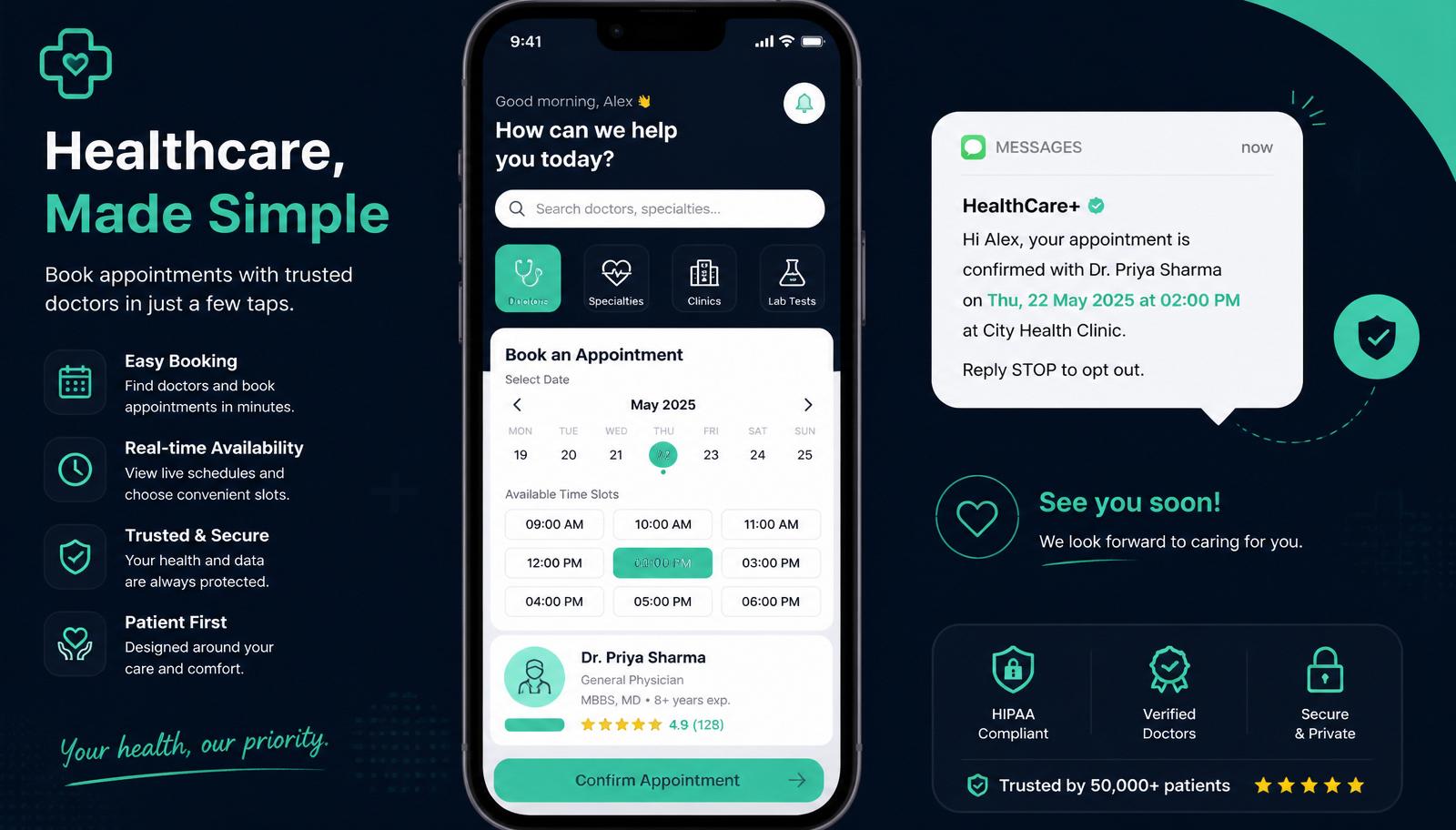
- Robust booking systems. Implementing advanced online appointment scheduling — real-time calendar syncing and automated SMS reminders — is the number-one strategy for increasing patient online bookings. Allowing patients to book 24/7 removes friction and captures leads after hours.
- Safe data access. A secure patient portal is vital. Patients need a reliable, encrypted space to view lab results, request prescription refills, and communicate with medical staff.
- Seamless workflow. Integrating electronic health records with your website streamlines your internal workflow, drastically reducing manual data entry errors and saving your staff hours of paperwork.
When exploring these functionalities, you will likely debate custom healthcare portals vs website templates. While templates are cheaper upfront, custom medical web development ensures your platform scales with your specific practice needs, providing long-term ROI and superior security.
Navigating security and accessibility requirements
In the medical field, data privacy is a strict legal requirement. Partnering with an experienced medical web design company ensures your site meets all complex regulatory standards.

- Data protection. Any contact form, booking system, or portal handling Protected Health Information (PHI) must be highly encrypted. Investing in HIPAA compliant web development is mandatory to protect patient data and avoid heavy regulatory fines.
- Inclusivity and compliance. Your site must serve everyone, including individuals with visual, auditory, or cognitive disabilities. Familiarize yourself with healthcare website accessibility requirements and ensure your site strictly follows WCAG 2.1 guidelines for doctors. Features like screen-reader compatibility, adjustable text sizes, and high-contrast modes are vital components of responsible physician website design.
Optimizing for search engines and speed
A beautiful website is useless if potential patients cannot find it. Optimizing healthcare practitioner local SEO is critical so your clinic appears at the top of the page when patients search for "doctors near me" or specific local treatments.
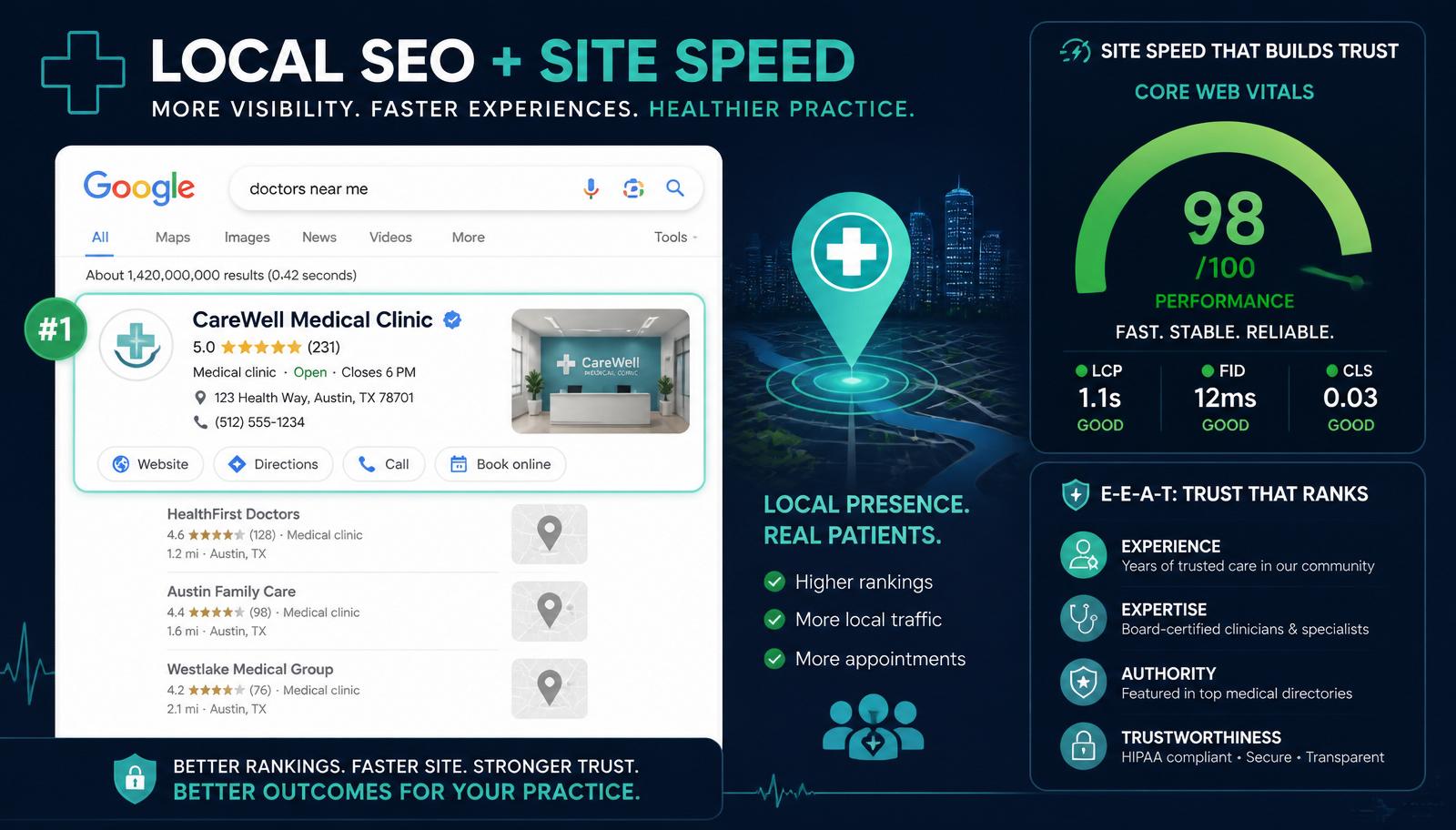
Search engines heavily favor websites that load instantly. Therefore, medical practice site speed optimization must be a top priority during the medical website design and development phase. Fast-loading pages drastically reduce bounce rates and keep prospective patients engaged.
Furthermore, Google uses a specific framework for health-related content known as "Your Money or Your Life" (YMYL). To rank well, you must focus on creating high E-E-A-T medical content (Experience, Expertise, Authoritativeness, and Trustworthiness). Publishing quality medical blogs, detailed service pages, and doctor bios establishes you as a thought leader and should be a staple in your healthcare website development strategy.
Finding the right web design partner
Creating a high-performing medical site requires more than just standard coding skills; it requires deep, industry-specific knowledge. That is why you should seek out a dedicated medical web design agency or a specialized healthcare web design company.
What should you look for in a partner?
- Industry expertise. A generic digital agency might not fully understand HIPAA protocols or EHR integrations. A dedicated healthcare website design company will already have the frameworks in place.
- Comprehensive offerings. Look for providers offering full-scale healthcare web design services and medical website design services. You want a team that handles everything from initial wireframes to post-launch maintenance.
- Proven track records. Ask to see portfolios from any medical website design agency or healthcare website development company you interview. Check their past work specifically in medical doctor website design and general website design for doctors to ensure their style aligns with your vision.
Whether you need a simple medical site design overhaul or complex healthcare web development with custom software integrations, a specialized healthcare website development agency understands the unique nuances of the medical field. The right medical website design company will expertly handle everything from visually appealing web design for medical practices to advanced, compliant technical architecture.
Conclusion
Your digital presence is a direct reflection of the quality of care you provide in your clinic. By prioritizing professional medical web design, you create a seamless, reassuring experience for your patients before they even step foot in your office.
Investing in expert healthcare website development and partnering with a trusted medical web design firm is an investment in your practice's long-term growth and reputation. Ensure your digital front door is secure, accessible, patient-focused, and highly optimized, and watch your patient base — and patient satisfaction — grow.
Work with Devloader
Devloader is a remote-first, USA-serving healthcare web design company delivering HIPAA-aware engineering, WCAG 2.1 accessibility, and Core Web Vitals-grade performance for clinics, multi-location practices, and digital health platforms. Every engagement is backed by measurable case studies you can review in our portfolio.
If you are shortlisting partners for a new medical site, a HIPAA-compliant patient portal, or an EHR-integrated booking experience:
- Explore our healthcare-ready web, mobile and AI engineering services — from discovery through post-launch monitoring.
- Review transparent pricing and package options to see what a scoped clinic or hospital engagement looks like.
- Browse the Devloader Marketplace for ready-to-deploy dashboards, admin panels, and starter kits that shave weeks off healthcare launches.
- Hire vetted senior developers experienced in HIPAA workflows, or request a scoped project brief and get a proposal within one business day.
We built Devloader.com to be exactly the kind of partner this article describes — deep bench, transparent process, secure by default, and accountable from kickoff through year-three maintenance. When you are ready to compare us against other healthcare web design companies on your shortlist, start a conversation — we will send scoped estimates, references, and a technical proposal within 24 hours.