Master Key Principles of Agile Project Management
A practical guide to the key principles of agile project management — the Agile Manifesto, Scrum vs Kanban, sprint planning, daily stand-ups, retrospectives, velocity, and how to roll agile out across small and enterprise teams.
If you have ever wondered, "what does agile actually mean for my team?" or "how does agile work in practice?", you are certainly not alone. The modern business landscape moves at lightning speed, and traditional, rigid management structures are no longer sufficient. Understanding the Key Principles of Agile Project Management is essential for any organization looking to remain competitive, deliver high-quality products, and keep customers satisfied.
Whether you are exploring what is agile computing for the first time or looking for a comprehensive agile software development overview, making the transition to an adaptive workflow can revolutionize your output. Let''s explore the core philosophies, practical steps, and essential frameworks that make this approach so incredibly effective.
Demystifying the agile development meaning
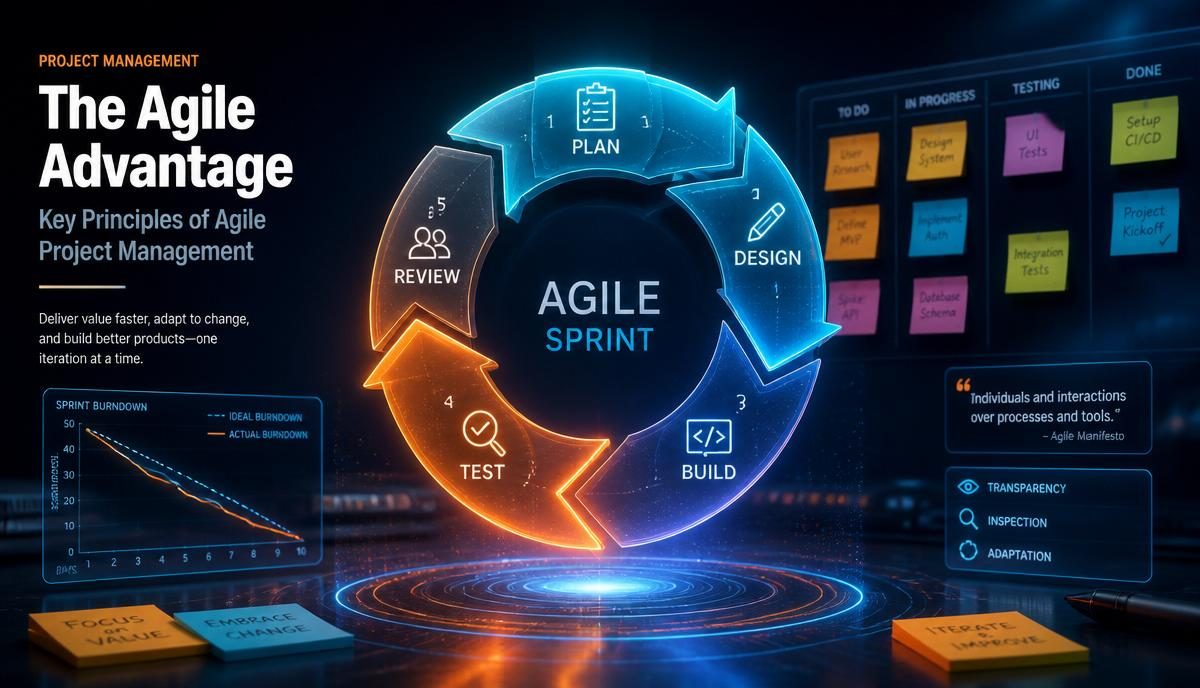
To truly grasp this concept, we must first define agile development methodology. At its core, agile is an iterative approach to project management and software development that helps teams deliver value to their customers faster and with fewer headaches. Instead of betting everything on a massive, single launch, an agile development environment focuses on delivering work in small, consumable increments — the same rhythm our web design and web development pods use to ship demos every two weeks.
When evaluating Agile vs Waterfall project management pros and cons, the differences are stark. Waterfall relies on a linear, sequential design where all planning happens upfront. Agile, by contrast, relies on a highly flexible framework. Requirements and plans are evaluated continuously, allowing teams to pivot quickly. This flexibility is the true agile development meaning — an environment where change is not just expected, but welcomed. By adopting this mindset, everyday agile work shifts from blindly following a rigid plan to responding dynamically to user feedback.
The manifesto and agile development principles
The foundation of any agile methodology software or workflow is rooted deeply in its founding philosophies. Successful agile system development is guided by the twelve core values of the Agile Manifesto (often celebrated as its guiding principles). These principles prioritize individuals and interactions, working software, customer collaboration, and responding to change.
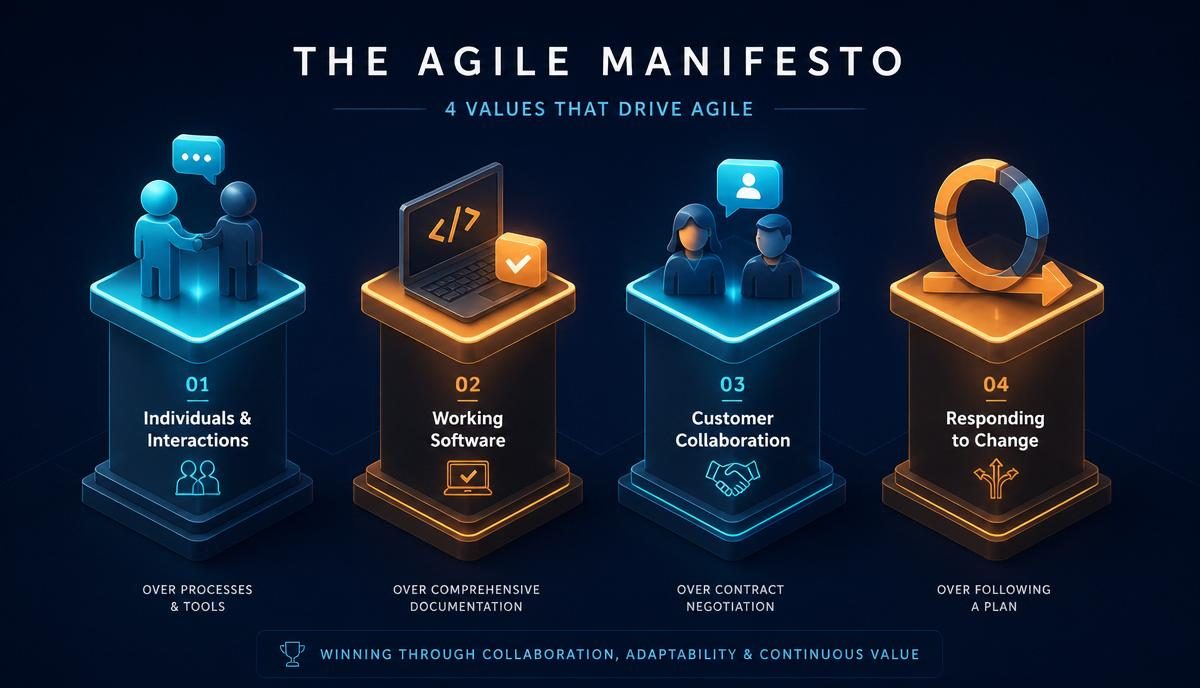
Embracing these concepts leads directly to adaptive planning and evolutionary development. Rather than locking into a finalized scope, an agile methodology allows teams to evolve their product over time. In a bustling agile environment, these agile approaches ensure that the final product actually meets the customer''s current needs, not just the needs they anticipated months ago.
Navigating the agile development process
So, what are the actual agile software development steps? The agile development process is cyclical and heavily relies on continuous feedback. Typical phases include:
- Concept and planning: Determining the project''s vision using an agile development framework.
- Agile design: The agile development design process involves creating lightweight architectures that can easily be modified as new requirements emerge — a discipline our UI/UX design team applies to every product engagement.
- Development: Engineers write code and build out features, effectively putting agile development into action.
- Testing: Implementing agile methodology in software testing ensures that QA happens simultaneously with development, guaranteeing that every increment of agile software is fully functional.
- Deployment and review: Releasing the product to users, gathering feedback, and adjusting the next cycle.
This agile project development lifecycle proves that delivering working software early and often is entirely possible.
Frameworks, roles, and tools for success
Executing an agile software project management strategy requires structure. This is where specific methodologies come into play. Choosing between Scrum and Kanban frameworks is one of the first decisions a team must make. Scrum organizes work into fixed-length iterations called sprints, while Kanban focuses on a continuous flow of tasks visualized on a board — the same cadence we run for mobile app development sprints, where store review windows demand predictable flow.

If you choose Scrum, understanding the Role of the Scrum Master and Product Owner is vital. The Product Owner champions the customer''s needs, while the Scrum Master removes roadblocks and ensures the team adheres to agile practices.
To support these roles, companies often utilize specialized agile programming software. The right tools enhance team collaboration with cross-functional structures, ensuring that developers, designers, and testers can easily communicate and share updates in real time.
Daily agile practices and collaboration
Outstanding agile delivery relies on consistent, day-to-day habits. Here are a few actionable practices that keep agile teams on track:
- Refining the backlog: Managing a product backlog effectively ensures the most critical tasks are always queued up for the next iteration.
- Writing clear requirements: Creating user stories for agile development frames technical tasks from the end-user''s perspective, keeping the team focused on actual customer value.
- Staying aligned: The importance of daily stand-up meetings cannot be overstated. A quick, 15-minute sync keeps everyone informed about what was completed yesterday, what is happening today, and any blockers standing in the way.
- Continuous improvement: After a cycle ends, running successful sprint retrospective meetings allows the team to openly discuss what went well and what needs adjustment before the next round of agile software development begins.
Metrics and overcoming challenges
As you define your agile system, it is crucial to measure your success. Tracking project progress with velocity and burn-down charts gives your team crystal-clear visibility into how much work is being completed versus how much remains.
For leaders wondering how to implement agile methodology in small teams, the secret is starting simple. Focus on the core benefits of iterative development cycles — reduced risk, higher transparency, and faster time-to-market. When leadership needs an outside read on velocity, roadmap risk, or team topology, our tech consultancy practice runs short audits that turn raw sprint data into actionable staffing and delivery decisions.
Naturally, you will face hurdles. Overcoming common agile adoption challenges usually requires addressing cultural resistance. Some team members may struggle with the shift away from detailed, upfront planning. Education, patience, and showcasing quick wins through your new agile methodology are the best ways to foster a truly collaborative culture.
Conclusion
Embracing the Key Principles of Agile Project Management takes time, but the payoff is immense. By understanding what is agile computing and applying these flexible methodologies, you can build a resilient, responsive organization. Whether you are defining your agile design, upgrading your agile methodology software, or simply trying to optimize your daily stand-ups, consistency is key. Keep these agile project management best practices for beginners in mind, and you will be well on your way to mastering continuous, value-driven delivery.
If you want experienced guidance rolling this out, our web design, mobile app development, UI/UX design, and tech consultancy teams at Dev Loader LLC work as one delivery pod — you can browse our portfolio of delivered agile projects, start a scoped project brief, or contact us and get a response within one business day.