MERN Stack Development Cost in 2026: A Data-Backed Breakdown
TL;DR: Estimating a MERN stack development cost in 2026 requires looking beyond generic hourly rates to analyze complex factors like cloud infrastructure shifts, the rising premium of TypeScript-fluent engineers, and Mon…
MERN Stack Development Cost in 2026: A Data-Backed Breakdown
TL;DR: Estimating a MERN stack development cost in 2026 requires looking beyond generic hourly rates to analyze complex factors like cloud infrastructure shifts, the rising premium of TypeScript-fluent engineers, and MongoDB Atlas pricing cliffs. While a simple MVP can be launched for $25,000 using global agencies, a highly resilient, enterprise-grade platform easily crosses $180,000. Balancing fast React updates with Node.js backend orchestration demands pragmatic architecture. This comprehensive breakdown analyzes current regional developer market rates, technical trade-offs, hidden lifecycle expenditures, and actionable strategies to optimize your engineering budget without sacrificing performance.
The Modern State of MERN Stack Development in 2026
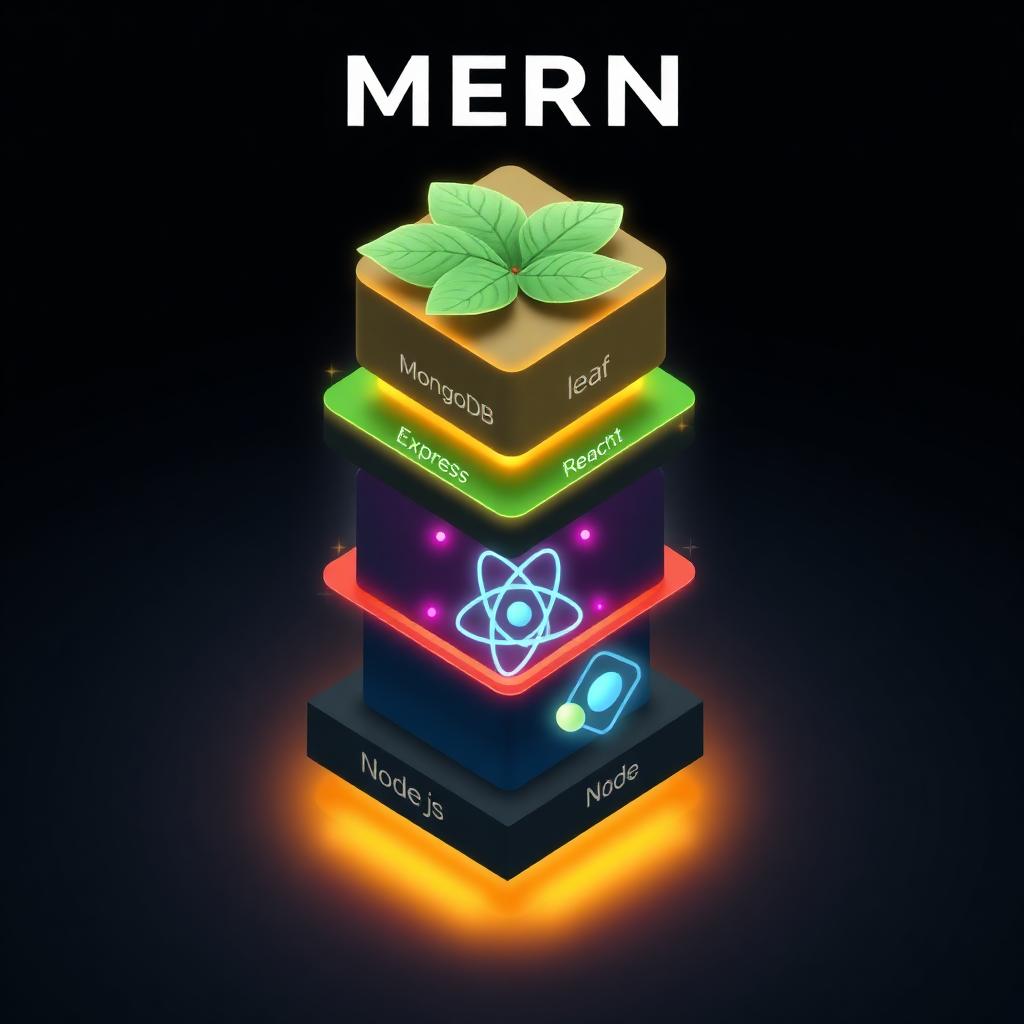
The MERN (MongoDB, Express, React, Node.js) stack remains an industry cornerstone for building dynamic, feature-rich web applications. Over the last decade, it transitioned from a trendy alternative to traditional LAMP and Java options into a standard choice for early-stage startups and enterprise digital products alike. However, the ecosystem has shifted dramatically as we move through 2026.
  +-------------------------------------------------------------+
  |                        React 19+ Client                     |
  |             (Server Components, Actions, Suspense)          |
  +-------------------------------------------------------------+
                                 |
                                 V (JSON / REST / GraphQL APIs)
  +-------------------------------------------------------------+
  |              Express / NestJS / Node.js Backend             |
  |               (TypeScript runtime, v22+ Features)           |
  +-------------------------------------------------------------+
                                 |
                                 V (Mongoose ODM / Native Drivers)
  +-------------------------------------------------------------+
  |                    MongoDB Database Layer                   |
  |              (Atlas Serverless, Document Model)             |
  +-------------------------------------------------------------+
Historically praised for its "single language across the entire stack" advantage, modern MERN architecture is no longer just about writing basic JavaScript. The wholesale industry transition to TypeScript, the mainstream adoption of React 19 Server Components, the integration of native asynchronous context tracking in Node.js, and the rise of edge computing have complexified the stack. These modifications have altered how teams plan, build, and budget for these applications.
Furthermore, development cost is no longer a simple calculation of developer headcount multiplied by hourly rates. Teams must budget for sophisticated continuous integration and continuous deployment (CI/CD) pipelines, multi-region cluster deployments, and AI-assisted pair programming tool licensing. Today, understanding the true cost of shipping a production-ready application requires an objective assessment of both initial engineering inputs and downstream maintenance overheads.
Organizations looking to hire developers can explore the Dev Loader LLC marketplace to source vetted software engineers who understand how these performance changes impact delivery timelines.
Cost Drivers in MERN Stack Engineering
The ultimate cost of custom software is decided by key architectural, organizational, and design-related decisions made long before the first line of code is committed. Within the MERN paradigm, specific characteristics shape development velocity and project complexity.
Dynamic vs. Static Data Modeling
MongoDB provides a schema-less structure, which offers tremendous flexibility in the early phases of development. This allows developers to iterate rapidly without needing complex database migration scripts. However, this flexibility acts as a double-edged sword. If data validation is neglected, the application layer must perform heavy sanitization, which increases code complexity and testing requirements.
Determining whether to enforce validation directly in MongoDB via JSON Schema or to manage validation programmatically via TypeScript libraries like Zod dictates the architectural workload. This decision can add dozens of billable hours to database design tasks.
Client-Side vs. Server-Side Rendering (SSR)
While vanilla React functions as a Client-Side Rendered (CSR) library, modern user experiences and Search Engine Optimization (SEO) demands frequently require hybrid rendering frameworks or custom Express integrations to support Server-Side Rendering. Setting up custom Express middleware to bundle, render, and hydrate React templates requires specialized engineering knowledge, which commands a premier rate compared to building a straightforward Single Page Application (SPA).
Security Architecture and Compliance mandates
An application processing financial transactions or handling protected health information (PHI) can expect validation, testing, and compliance costs to increase project budgets by 30% to 50%. Structuring a secure MERN product requires:
- Implementing JSON Web Token (JWT) rotation schemes.
- Setting up secure HTTP-only cookie transport.
- Managing Transport Layer Security (TLS) certificates.
- Undergoing regular penetration testing.
Additionally, building robust logging systems using Node.js logging libraries like Pino or Winston is critical for compliance records.
To see how these costs compare with traditional development models, dynamic organizations partner with professional resource teams. You can read about customized team structures on our services page.
The Untamed Beast: Why MongoDB is Your Ultimate Long-Term Cost Center
One of the most persistent myths in modern software engineering is that NoSQL databases like MongoDB are cheaper to scale than relational alternatives like PostgreSQL. Developers often choose MongoDB for its ease of setup, but without structural discipline, it can quickly escalate your monthly cloud bill. Understanding this trade-off is essential when calculating your overall mern stack development cost.
       MongoDB Atlas Monthly Cost Curve vs. Data Scaling
  Cost
   ^                                           / (Unoptimized Queries)
   |                                          /
   |                                         /
   |                                    _---'
   |                               _---'  <-- Cost Cliff (RAM exhaustion)
   |                          _---'
   |                     _---'
   |                _---'   <-- (Optimized Indexes & Sharding)
   |           _---'
   +-----------------------------------------------------> Data Volume / RPS
The Document Memory Overhead
MongoDB works best when its active working set (the indexes and frequently accessed documents) fits completely within your server's RAM. If your data grows large and your queries are not properly indexed, MongoDB must read data from disk, which severely degrades performance.
To compensate, teams are forced to upgrade their instances on hosting environments like MongoDB Atlas, which are priced on a tiered system where memory scale-ups trigger exponential price increases. A database cluster that costs $60 per month can instantly jump to over $1,200 per month when forced to scale RAM to handle poorly optimized collections.
Deep Query Inefficiencies
Relational databases rely on structured tables and foreign keys to run highly efficient pointer-based joins. When running equivalent relational operations inside MongoDB, developers rely on the $lookup aggregation pipeline step.
While $lookup is highly capable, performing nested aggregations across large collections without carefully configured compound indexes requires full collection scans. This consumes vast amounts of CPU and IOPS (Input/Output Operations Per Second), driving up the operational costs of your database cluster.
Code Example: Schema Validation with Express & Mongoose
Configuring strict validation at the application and database boundary is essential to prevent messy data from inflating your cloud bills and search index sizes. The code below shows how to implement structured validation and custom indexing using Mongoose to protect MongoDB from dynamic query overhead:
import { Schema, model, Document } from 'mongoose';
import z from 'zod';

// 1. Define the TypeScript interface for a User Document
export interface IUser extends Document {
  email: string;
  profile: {
    firstName: string;
    lastName: string;
    phoneNumber?: string;
  };
  billingStatus: 'active' | 'delinquent' | 'trial';
  metaData: Map<string, string>;
  createdAt: Date;
}

// 2. Define a strict validation schema using Zod for payload sanitization
export const UserValidationSchema = z.object({
  email: z.string().email(),
  profile: z.object({
    firstName: z.string().min(1).max(50),
    lastName: z.string().min(1).max(50),
    phoneNumber: z.string().regex(/^\+?[1-9]\d{1,14}$/).optional(),
  }),
  billingStatus: z.enum(['active', 'delinquent', 'trial']),
  metaData: z.record(z.string()),
});

// 3. Construct the highly optimized Mongoose Schema structure
const UserSchema = new Schema<IUser>({
  email: {
    type: String,
    required: true,
    unique: true,
    trim: true,
    lowercase: true,
    match: [/^\S+@\S+\.\S+$/, 'Please use a valid email address.']
  },
  profile: {
    firstName: { type: String, required: true, index: true },
    lastName: { type: String, required: true, index: true },
    phoneNumber: { type: String },
  },
  billingStatus: {
    type: String,
    enum: ['active', 'delinquent', 'trial'],
    default: 'trial',
    index: true
  },
  metaData: {
    type: Map,
    of: String
  }
}, {
  timestamps: true,
  // Enforce strict query parameters to avoid index pollution
  strict: true,
  strictQuery: true
});

// 4. Create compound index to avoid in-memory sorting limitations
// This ensures queries sorting active members by creation balance bypass memory buffers
UserSchema.index({ billingStatus: 1, createdAt: -1 });

export const UserModel = model<IUser>('User', UserSchema);
By adding structural bounds, typing validations, and compound indexing directly in your application’s initialization phase, you protect systems from the runtime performance degradations that inflate engineering budgets. If your team is struggling to resolve these types of scaling challenges, consult our comprehensive resource marketplace at the Dev Loader hire platform.
Developer Rates and Regional Labor Arbitrage in 2026

Software engineering services exhibit heavy geographic price differences. While a project's budget is highly sensitive to the location of its developers, selecting a team based purely on low hourly rates often carries hidden costs. Communication overhead, timezone alignment issues, and varying engineering standards can lead to missed deadlines and expensive rewrites.
+------------------+--------------------------+----------------------------+
| Developer Origin | Junior Engineer Rate     | Senior Staff Architect     |
| Region           | (0-2 Years Experience)   | (8+ Years Experience)      |
+------------------+--------------------------+----------------------------+
| North America    | $75 - $110 / Hour        | $165 - $250+ / Hour        |
| Latin America    | $45 - $65 / Hour         | $100 - $155 / Hour         |
| Eastern Europe   | $40 - $60 / Hour         | $95 - $140 / Hour          |
| South/SE Asia    | $25 - $40 / Hour         | $65 - $95 / Hour           |
+------------------+--------------------------+----------------------------+
Navigating Regional Engineering Realities
North America (United States & Canada)
North American engineers operate at the highest billable tier, reflecting high domestic labor demand and strict legal structures. Hiring onshore talent is highly beneficial for enterprise systems that require localized compliance knowledge (such as SOC 2 and HIPAA) or immediate integration with your internal execution teams. Engaging a senior Node.js architect in New York or San Francisco costs between $165 and $250 per hour.
Latin America (Brazil, Mexico, Colombia)
Latin America has become a primary outsourcing destination for US businesses, driven by nearshore timezone alignment. Working in overlapping hours avoids the communication delays common with cross-continental outsourcing. Average senior rates hover midway between $100 and $155 per hour, offering a balance of velocity, communication, and cost.
Eastern Europe (Poland, Romania, Ukraine)
Eastern Europe maintains a long-standing reputation for strong algorithmic foundations, complex data engineering, and robust backend talent. Engineers in this region generally command between $95 and $140 per hour for senior expertise. However, recent geopolitical dynamics require careful organizational screening and due diligence of partner agencies.
South/Southeast Asia (India, Philippines, Vietnam)
South and Southeast Asia provide the largest pool of technical talent at highly competitive entry rates. While simple tasks can be sourced for under $30 per hour, experienced, high-tier senior MERN architects in tech hubs like Bengaluru or Manila command $65 to $95 per hour. When working with these regions, teams should budget for strong technical project management to prevent drift in requirements.
To streamline the hiring process and access vetted, high-performing engineering talent across these regions, visit the Dev Loader marketplace.
Calculating Cost by App Complexity and Scope
Rather than looking at abstract hourly rates, categorizing your product by its functional complexity is the design engine for predicting development costs. App developers typically group MERN software into three distinct categories.
Category 1: The Minimum Viable Product (MVP)
An MVP acts as a working prototype designed to validate core business concepts with real users. Typical features include:
- A basic React single page application with modern client routing.
- Fast email/password user authentication systems.
- Integrations with standard payment providers like Stripe.
- Simple, un-sharded database schemas running on shared hosting nodes.
Development timelines range between 8 to 12 weeks. The cost for a basic MVP constructed by a global, mid-market team starts at approximately $25,000, while a premium onshore agency will charge closer to $65,000.
Category 2: Mid-Market Commercial Applications
A mid-market application represents a commercial-grade product built for a broader audience. Key additions include:
- Complex state management platforms using Redux Toolkit or Zustand.
- Custom operational dashboards with real-time data visualization.
- Integrations with third-party APIs (such as external CRMs and ERP systems).
- Comprehensive test automation covering critical user paths.
These systems take between 4 to 8 months to build, with costs ranging from $70,000 to $150,000, depending on your team's locations and organizational structure.
Category 3: Enterprise SaaS Platforms
Enterprise platforms are designed for continuous high throughput, deep data mining, and institutional security validation. They feature:
- Highly customized multi-tenant database systems structured on MongoDB Atlas Enterprise.
- Microservices, event-driven integrations, or NestJS backend layers.
- Compliance profiles supporting regulatory guidelines like GDPR and HIPAA.
- Sophisticated monitoring systems using tools like New Relic or Datadog.
Developing an enterprise-grade platform requires a dedicated engineering team, with budgets starting at $180,000 and scaling well clear of $500,000 for multi-year rollouts.
+------------------+-----------------------+------------------------+--------------------------+
| Project Tier     | Build Duration        | Average Headcount      | Total Cost Range (USD)   |
+------------------+-----------------------+------------------------+--------------------------+
| MVP Startup      | 8 - 12 Weeks          | 2 to 3 Engineers       | $25,000 - $65,000        |
| Mid-Market App   | 16 - 32 Weeks         | 4 to 6 Engineers       | $70,000 - $150,000       |
| Enterprise SaaS  | 36 - 52+ Weeks        | 8+ Core Developers     | $180,000 - $500,000+     |
+------------------+-----------------------+------------------------+--------------------------+
These ranges highlight the importance of planning and scoping your project early. To align your technical parameters with a realistic budget, you can consult with our architecture design specialists through our contact platform.
Technical Debt and Architectural Best Practices to Control Costs
Over-engineering early in a project is a top driver of inflated development budgets. When using Express, which provides significant freedom in project structure, development teams can easily run into problems. If developers do not follow clean, standardized patterns from the first commit, code quality can quickly decline.
This decline, often referred to as "spaghetti code," leads to a classic architectural trade-off. Choosing to skip strict interface designs, modular clean folder structures, and automated tests can help you ship features quickly in weeks 1 through 6. However, by week 20, adding a single new feature can require refactoring multiple files, raising maintenance costs.
       Development Velocity Over Time: Clean vs. Messy Architecture
  Velocity
   ^
   |        /========================================\  (Clean, Modular NestJS/TypeScript)
   |       /
   |      /
   |     /
   |    /
   |   /  _---\
   |  /_-'     \=====================================\   (Messy, Ad-Hoc Express Engine)
   |/'                                                \
   |                                                   \___ (Refactoring Death Spiral)
   +---------------------------------------------------------> Elapsed Project Time
To prevent this issue, many modern engineering teams use NestJS as an alternative to vanilla Express. NestJS provides an opinionated framework that uses controllers, services, and modules to structure application code. This enforces consistent design patterns across your team, making it easier to onboard new developers and reduce long-term code maintenance costs.
Code Example: Refactoring Ad-Hoc Express Code to Clean Modular Architecture
To understand how dynamic folder layouts impact maintenance budgets, look at the transition from an un-typed, ad-hoc Express route to a decoupled, testable TypeScript controller.
The Costly Antipattern (Messy, Hard-to-Test Express Action)
// routes/users.js
const express = require('express');
const router = express.Router();
const User = require('../models/User');

// This handler mixes routing logic, request parsing, database calls, and business rules.
// Mocking the database for testing requires patching the global require cache.
router.post('/register', async (req, res) => {
  try {
    const { email, password } = req.body;
    if (!email || !password) {
      return res.status(400).json({ error: "Email and password are required" });
    }

    // Direct database access inside the route handler limits backend code reusability
    const existingUser = await User.findOne({ email });
    if (existingUser) {
      return res.status(400).json({ error: "User already exists" });
    }

    const newUser = new User({ email, password });
    await newUser.save();

    // Hardcoded email notifications create tight coupling with external APIs
    await sendWelcomeEmail(email);

    return res.status(201).json({ id: newUser._id, status: 'Registered' });
  } catch (err) {
    return res.status(500).json({ error: err.message });
  }
});
The Cost-Effective Solution (Decoupled TypeScript MVC Pattern)
// controllers/UserController.ts
import { Request, Response } from 'express';
import { UserService } from '../services/UserService';

export class UserController {
  // Inject dependency on service layer via constructor
  constructor(private userService: UserService) {}

  public registerUser = async (req: Request, res: Response): Promise<Response> => {
    try {
      const { email, password } = req.body;
      if (!email || !password) {
        return res.status(400).json({ error: 'Email and password are required' });
      }

      // Delegate all database logic, validations, and downstream processes to service layer
      const registeredUser = await this.userService.register({ email, password });

      return res.status(201).json({
        id: registeredUser.id,
        status: 'Registered'
      });
    } catch (error: any) {
      // Clean central error handling reduces boilerplate code
      return res.status(error.statusCode || 500).json({
        error: error.message || 'Internal Server Error'
      });
    }
  };
}
By decoupling your route definitions from your core business logic, you gain several long-term benefits:
- Uncoupled Testability: You can write unit tests for your controllers and business services without spinning up live express routes or real MongoDB host instances.
- Simplified Refactoring: If you ever decide to swap out MongoDB for a relational database like PostgreSQL or MySQL, you only need to update the service layer. Your routes and controllers remain unchanged.
- Optimized Troubleshooting: Clear separation of concerns helps your teams isolate and resolve bugs in production faster, reducing code maintenance costs.
If you are looking to refactor an older code base to keep development costs in check, you can explore our resources on the Dev Loader blog.
Infrastructure, CI/CD, and Third-Party API Costs

Development fees represent your initial capital investment, while platform hosting, DevOps engineering, and subscription APIs comprise your ongoing operational costs. A modern MERN application relies on multiple dependent platforms that must be managed to avoid unexpected infrastructure bills.
       Typical Enterprise MERN Monthly Infrastructure Share

       +------------------------------------------------+
       | [████████████████████] MongoDB Atlas (40%)     |
       | [███████████] AWS ECS/EKS Hosting (22%)         |
       | [████████] Third-Party APIs (16%)              |
       | [██████] Logging & Observability (12%)         |
       | [███] Vercel Frontend / CDN (6%)               |
       | [██] CI/CD Pipelines / Github (4%)             |
       +------------------------------------------------+
Hosting & Infrastructure Setup
- Frontend Hosting (React): Modern static frontend deployments are usually hosted on CDNs using platforms like AWS CloudFront, Vercel, or Netlify. These providers offer generous free tiers, and their production plans generally scale from $20 to $100 per developer seat monthly plus bandwidth fees.
- Backend Compute (Node.js & Express): Unlike static React assets, Node.js applications require a dedicated server, container, or serverless execution framework. Hosting services range from simple VPS nodes starting around $10 per month to managed orchestrators like AWS ECS (Elastic Container Service) or Kubernetes (EKS), which begin around $150 per month.
- Database Storage (MongoDB): For modern teams, MongoDB Atlas is the standard database platform. Shared database tiers are free but lack support for complex workloads. Dedicated development tier clusters run from $60 per month, while high-throughput, enterprise-scale production databases can range from $1,200 to over $10,000 per month depending on active RAM and query volume.
CI/CD Pipeline Automation
Integrating automated deployment pipelines is essential for maintaining engineering velocity. Workflows are typically managed via GitHub Actions, GitLab CI, or CircleCI. For a small development team, usage costs typically range from $15 to $100 per month.
Third-Party API Allocations
- Authentication: Using external authentication services like Auth0, AWS Cognito, or Clerk simplifies compliance and security. Standard plans typically charge between $0.05 and $0.15 per monthly active user (MAU).
- Payment Processing: Stripe, Adyen, and PayPal use transactional pricing models, typically taking 2.9% plus $0.30 per successful credit card transaction.
- Transactional Communications: Delivering notifications using SMTP platforms like SendGrid, Mailgun, or Twilio costs between $15 and $150 per month depending on send volumes.
Teams running extensive serverless applications will find our in-depth comparisons helpful. Learn more by reading about pricing considerations on our serverless architecture pricing guide blog.
Hidden Costs of MERN Lifecycle Management
Many organization leaders overlook the post-launch costs of maintaining software. In a production environment, keeping your application secure, performant, and stable requires continuous investment.
            MERN App Five-Year Cumulative Cost Growth
  Cost (USD)
   ^                                                 / (Total Lifecycle Cost)
   |                                                /
   |                                               /  <-- Post-launch maintenance
   |                                              /      overtakes initial MVP cost
   |                                  +----------+
   |                             _---'| (Year 2-5 Maintenance)
   |                        _---'     |
   |                   _---'          +
   |              _---'
   |         _---+  <-- Launch Point (MVP Cost)
   |    _---'    |
   +----+--------+-------------------------------------------> Production Time
      Year 1    Year 2     Year 3      Year 4     Year 5
Dependency Drift and the "npm Dependency Hell"
The Node.js ecosystem is fast-moving. A standard MERN stack application relies on hundreds of nested third-party packages installed via npm or yarn. Security patches, framework updates, and major versions are released continuously.
Failing to schedule regular maintenance can leave your system vulnerable to security exploits. This makes updating old packages challenging, as legacy code can break. Teams should expect to allocate 15% to 20% of their yearly development budget for routine framework maintenance and security audits.
Browser/Runtimes Upgrades
Web engines like Chrome, Safari, and V2 are updated regularly, which can occasionally deprecate legacy JavaScript APIs. Similarly, the long-term support (LTS) lifecycle of Node.js runtimes is generally limited to three years.
Running applications on obsolete, unsupported runtimes introduces risk. This requires scheduled testing and validation cycles across various devices and runtimes, which adds to your ongoing maintenance costs.
Mitigating the MERN Pricing Premium: Practical Blueprints
High agency quotes often prompt technical leaders to seek ways to optimize their budgets. Applying clear architectural discipline can significantly reduce costs while maintaining product quality.
1. Leverage TypeScript for Compulsory Safety
Enforcing TypeScript across both your React frontend and Node.js backend helps identify syntax and integration errors during local compilation. Catching bugs early prevents them from slipping into production, where resolving errors can take hours of development time.
2. Standardize API Integrations
Using standard protocols like GraphQL or REST with OpenAPI tooling simplifies frontend-to-backend communication. Generating TypeScript interfaces from OpenAPI schemas eliminates manual coordination between backend API updates and React development, improving overall team velocity.
3. Use Managed Cloud Infrastructure Wisely
Start with cost-efficient, managed hosting layers, but prepare to scale modularly. Avoid deploying premature multi-tenant architectures until you have validated your business model. This approach minimizes early infrastructure costs, leaving more budget available for functional development.
4. Partner with Professional Engineering Networks
Rather than managing a large, permanent in-house staff before your product generates revenue, consider a hybrid staffing model. You can maintain a small core team for product direction and use vetted external engineering resources from the Dev Loader marketplace to help accelerate feature development.
Frequently Asked Questions
What is the average hourly rate for a MERN stack developer?
In 2026, average hourly rates for MERN stack developers vary significantly based on location, experience, and system architecture skills. North American junior developers generally charge between $75 and $110 per hour, while senior software architects command $165 to $250+ per hour. Nearshore options in Latin America offer a middle ground, with developer rates between $100 and $155 per hour. Offshore resources in Southeast Asia typically range from $25 per hour for junior roles to $95 per hour for highly experienced stack specialists.
Is MongoDB cheaper or more expensive than PostgreSQL for MVP development?
For the initial phase of MVP development, MongoDB can be faster and more cost-effective to set up. Its schema-less JSON document model allows developers to make rapid layout adjustments without writing complex SQL migration sequences. However, as applications scale and read/write volumes increase, MongoDB can become significantly more expensive than PostgreSQL.
Without compound indexing, complex operations require high CPU and RAM usage, which can drive up monthly cloud hosting fees. In contrast, PostgreSQL offers efficient tabular joins and indexes that consume fewer memory resources under high load.
Can I build a MERN app with React Native to save mobile development costs?
Yes, using React Native alongside your MERN stack backend is an excellent way to reduce development costs. Because React and React Native share similar design principles and component-driven lifecycles, web developers can quickly adapt to building mobile apps.
This environment allows your team to share standard code, such as validation logic, utilities, and Redux data models, between your web and mobile applications. By reusing existing backend APIs, you can save 40% to 60% compared to developing separate native apps for iOS and Android.
How does serverless deployment affect MERN stack hosting costs?
Deploying your React frontend and Node.js/Express backend on serverless platforms like AWS Lambda, Vercel, or Google Cloud Run can reduce hosting costs for applications with fluctuating traffic. Serverless pricing scales on a pay-per-request model, allowing early-stage platforms to run on minimal budgets.
However, high-traffic applications with continuous API requests can become more expensive on serverless setups compared to traditional container systems like Docker on AWS ECS. Additionally, managing cold starts and database connection limits on serverless servers requires extra configuration time, which can increase initial development costs.
Why does maintenance of a MERN stack application often spike after year one?
Maintenance costs for MERN applications often increase after the first year due to "dependency drift." The Node.js and React ecosystems rely heavily on external npm packages, which are updated frequently. After launch, new security advisories can open vulnerabilities in existing versions.
Resolving these issues requires checking and upgrading nested dependencies to prevent security or functional breaks. This dependency maintenance, along with database performance tuning and browser updates, can consume 15% to 20% of your initial development budget annually.
Is the Express framework still viable, or does it add to refactoring costs?
While Express.js remain highly popular and viable, it is an unopinionated framework with no strict rules on code organization. Without strong architectural oversight, teams can easily write messy code where database calls, logic, and routing are mixed in a single file.
This lack of structure can make the application difficult to test and scale, leading to high refactoring costs as new features are added. To prevent these issues and lower maintenance costs, many teams use NestJS, which enforces clean module boundaries and consistent patterns out of the box.
How do WebSockets and real-time features affect the final MERN development budget?
Adding real-time features using WebSockets or library systems like Socket.io can increase your development budget by 15% to 30%. While custom REST or GraphQL interfaces are stateless, WebSockets require maintaining open connections between clients and servers.
Implementing these features requires careful memory management, connection scaling strategies, and shared memory layers like Redis to handle multi-server setups. These adjustments require specialized development, load testing, and infrastructure engineering, which adds to the project's overall cost.
What is the optimal team composition to build a MERN app under federal compliance?
Building a MERN stack application that meets federal compliance standards (such as HIPAA, SOC 2, or GDPR) requires a specialized team structure. A typical team includes a Senior Technical Architect to design secure authorization and audit logging protocols, several Senior Full-Stack Engineers to implement secure data handling, and a dedicated DevOps and Cloud Security Engineer.
Additionally, you should budget for external security auditors to perform penetration testing. This specialized expertise and compliance focus typically increases overall project budgets by 30% to 50% compared to non-regulated commercial apps.
By adding structural bounds, typing validations, and compound indexing directly in your application’s initialization phase, you protect systems from the runtime performance degradations that inflate engineering budgets. If your team is struggling to resolve these types of scaling challenges, consult our comprehensive resource marketplace at the Dev Loader LLC marketplace.
Developer Rates and Regional Labor Arbitrage in 2026
Software engineering services exhibit heavy geographic price differences. While a project's budget is highly sensitive to the location of its developers, selecting a team based purely on low hourly rates often carries hidden costs. Communication overhead, timezone alignment issues, and varying engineering standards can lead to missed deadlines and expensive rewrites.
The globally distributed software market in 2026 presents distinct cost tiers across regions, which directly impact the total mern stack development cost.
Region of Origin — Junior Developer (0–2 YOE) — Mid-Level Engineer (3–5 YOE) — Senior Engineer (6–8 YOE) — Technical Architect (8+ YOE)
North America (Onshore) — $75 – $110 / hour — $115 – $160 / hour — $165 – $220 / hour — $225 – $300+ / hour
Western Europe — $65 – $90 / hour — $95 – $140 / hour — $145 – $195 / hour — $200 – $275 / hour
Latin America (Nearshore) — $45 – $65 / hour — $70 – $100 / hour — $105 – $155 / hour — $160 – $220 / hour
Eastern Europe — $40 – $60 / hour — $65 – $95 / hour — $100 – $145 / hour — $150 – $210 / hour
South & Southeast Asia — $25 – $40 / hour — $45 – $65 / hour — $70 – $95 / hour — $100 – $160 / hour
Navigating Regional Engineering Realities
North America (United States & Canada)
North American engineers operate at the highest billable tier, reflecting high domestic labor demand and strict legal structures. Hiring onshore talent is highly beneficial for enterprise systems that require localized compliance knowledge (such as SOC 2 and HIPAA) or immediate integration with your internal execution teams. Engaging a senior Node.js architect in New York or San Francisco costs between $165 and $250 per hour.
Latin America (Brazil, Mexico, Colombia)
Latin America has become a primary outsourcing destination for US businesses, driven by nearshore timezone alignment. Working in overlapping hours avoids the communication delays common with cross-continental outsourcing. Average senior rates hover midway between $100 and $155 per hour, offering a balance of velocity, communication, and cost.
Eastern Europe (Poland, Romania, Ukraine)
Eastern Europe maintains a long-standing reputation for strong algorithmic foundations, complex data engineering, and robust backend talent. Engineers in this region generally command between $95 and $140 per hour for senior expertise. However, recent geopolitical dynamics require careful organizational screening and due diligence of partner agencies.
South/Southeast Asia (India, Philippines, Vietnam)
South and Southeast Asia provide the largest pool of technical talent at highly competitive entry rates. While simple tasks can be sourced for under $30 per hour, experienced, high-tier senior MERN architects in tech hubs like Bengaluru or Manila command $65 to $95 per hour. When working with these regions, teams should budget for strong technical project management to prevent drift in requirements.
To streamline the hiring process and access vetted, high-performing engineering talent across these regions, visit the Dev Loader LLC marketplace.
Calculating Cost by App Complexity and Scope
Rather than looking at abstract hourly rates, categorizing your product by its functional complexity is the design engine for predicting development costs. App developers typically group MERN software into three distinct categories.
Product Tier — Design & Dev Timeline — Core Team Size — Infrastructure (Monthly) — Development Cost (Global/Nearshore Range)
Minimum Viable Product (MVP) — 6 – 12 weeks — 2–3 developers — $50 – $200 — $25,000 – $60,000
Commercial Mid-Market App — 4 – 8 months — 4–6 developers — $300 – $1,200 — $70,000 – $160,000
Enterprise SaaS System — 9 – 12+ months — 8+ developers — $2,500 – $15,000+ — $180,000 – $500,000+
Minimum Viable Product (MVP) Parameters
An MVP acts as a working prototype designed to validate core business concepts with real users. Typical features include a basic React single-page application with modern client routing, fast email/password user authentication systems, integrations with standard payment providers like Stripe, and simple, un-sharded database schemas running on shared hosting nodes.
Development timelines range between 8 to 12 weeks. The cost for a basic MVP constructed by a global, mid-market team starts at approximately $25,000, while a premium onshore agency will charge closer to $65,000.
Commercial Mid-Market Applications
A mid-market application represents a commercial-grade product built for a broader audience. Key additions include complex state management platforms using Redux Toolkit or Zustand, custom operational dashboards with real-time data visualization, integrations with third-party APIs (such as external CRMs and ERP systems), and comprehensive test automation covering critical user paths.
These systems take between 4 to 8 months to build, with costs ranging from $70,000 to $150,000, depending on your team's locations and organizational structure. For details on how tech leads organize their personnel models to avoid budget overruns, check out our outsourcing guide on our blog.
Enterprise SaaS Frameworks
Enterprise platforms are designed for continuous high throughput, deep data mining, and institutional security validation. They feature highly customized multi-tenant database systems structured on MongoDB Atlas Enterprise, microservices, event-driven integrations constructed on NestJS backend layers using RabbitMQ, compliance profiles supporting regulatory guidelines like GDPR and HIPAA, and sophisticated monitoring systems using tools like New Relic or Datadog.
Developing an enterprise-grade platform requires a dedicated engineering team, with budgets starting at $180,000 and scaling well clear of $500,000 for multi-year rollouts. These ranges highlight the importance of planning and scoping your project early. To align your technical parameters with a realistic budget, you can consult with our architecture design specialists through our contact platform.
Technical Debt and Architectural Best Practices to Control Costs
Over-engineering early in a project is a top driver of inflated development budgets. When using Express, which provides significant freedom in project structure, development teams can easily run into problems. If developers do not follow clean, standardized patterns from the first commit, code quality can quickly decline.
This decline, often referred to as technical debt, leads to a classic architectural trade-off. Choosing to skip strict interface designs, modular clean folder structures, and automated tests can help you ship features quickly in weeks 1 through 6. However, by week 20, adding a single new feature can require refactoring multiple files, raising maintenance costs.
To prevent this issue, many modern engineering teams use NestJS as an alternative to vanilla Express. NestJS provides an opinionated framework that uses controllers, services, and modules to structure application code. This enforces consistent design patterns across your team, making it easier to onboard new developers and reduce long-term code maintenance costs.
Code Example: Refactoring Ad-Hoc Express Code to Clean Modular Architecture
To understand how dynamic folder layouts impact maintenance budgets, look at the transition from an un-typed, ad-hoc Express route to a decoupled, testable TypeScript controller.
The Costly Antipattern (Messy, Hard-to-Test Express Action)
// routes/users.js
const express = require('express');
const router = express.Router();
const User = require('../models/User');

// Mixes routing logic, request validation, database access, and side effects.
// Mocking the database helper for unit tests requires hacking require caches.
router.post('/register', async (req, res) => {
  try {
    const { email, password } = req.body;
    if (!email || !password) {
      return res.status(400).json({ error: "Email and password are required" });
    }

    // Direct model calls coupled tightly with HTTP response handling
    const existingUser = await User.findOne({ email });
    if (existingUser) {
      return res.status(400).json({ error: "User already exists" });
    }

    const newUser = new User({ email, password });
    await newUser.save();

    // Hardcoded communication side-effect blocks asynchronous performance optimization
    await sendWelcomeEmail(email);

    return res.status(201).json({ id: newUser._id, status: 'Registered' });
  } catch (err) {
    return res.status(500).json({ error: err.message });
  }
});
The Cost-Effective Solution (Decoupled TypeScript MVC Pattern)
// controllers/UserController.ts
import { Request, Response } from 'express';
import { UserService } from '../services/UserService';

export class UserController {
  // Inject dependencie via class constructor pattern to facilitate automated mocking
  constructor(private userService: UserService) {}

  public registerUser = async (req: Request, res: Response): Promise<Response> => {
    try {
      const { email, password } = req.body;
      if (!email || !password) {
        return res.status(400).json({ error: 'Email and password are required' });
      }

      // Delegate all database logic, validations, and downstream processes to service layer
      const registeredUser = await this.userService.register({ email, password });

      return res.status(201).json({
        id: registeredUser.id,
        status: 'Registered'
      });
    } catch (error: any) {
      // Delegating control flow to a central error handling utility decreases boilerplate redundancy
      return res.status(error.statusCode || 500).json({
        error: error.message || 'Internal Server Error'
      });
    }
  };
}
By decoupling your route definitions from your core business logic, you gain several long-term benefits:
- Uncoupled Testability: You can write unit tests for your controllers and business services without spinning up live express routes or real MongoDB host instances.
- Simplified Refactoring: If you ever decide to swap out MongoDB for a relational database like PostgreSQL or MySQL, you only need to update the service layer. Your routes and controllers remain unchanged.
- Optimized Troubleshooting: Clear separation of concerns helps your teams isolate and resolve bugs in production faster, reducing code maintenance costs.
Organizations focused on modernizing legacy code structures can read about customized engineering teams on our services page.
Infrastructure, CI/CD, and Third-Party API Costs
Development fees represent your initial capital investment, while platform hosting, DevOps engineering, and subscription APIs comprise your ongoing operational costs. A modern MERN application relies on multiple dependent platforms that must be managed to avoid unexpected infrastructure bills.
Hosting & Infrastructure Setup
- Frontend Hosting (React): Modern static frontend deployments are usually hosted on CDNs using platforms like AWS CloudFront, Vercel, or Netlify. These providers offer generous free tiers, and their production plans generally scale from $20 to $100 per developer seat monthly plus bandwidth fees.
- Backend Compute (Node.js & Express): Unlike static React assets, Node.js applications require a dedicated server, container, or serverless execution framework. Hosting services range from simple VPS nodes starting around $10 per month to managed orchestrators like Docker container environments on AWS Elastic Container Service (ECS), which begin around $150 per month.
- Database Storage (MongoDB): For modern teams, MongoDB Atlas is the standard database platform. Shared database tiers are free but lack support for complex workloads. Dedicated development tier clusters run from $60 per month, while high-throughput, enterprise-scale production databases can range from $1,200 to over $10,000 per month depending on active RAM and query volume according to MongoDB Atlas Pricing.
CI/CD Pipeline Automation
Integrating automated deployment pipelines is essential for maintaining engineering velocity. Workflows are typically managed via GitHub Actions, GitLab CI, or CircleCI. For a small development team, usage costs typically range from $15 to $100 per month.
Third-Party API Allocations
- Authentication: Using external authentication services like Auth0, AWS Cognito, or Clerk simplifies compliance and security. Standard plans typically charge between $0.05 and $0.15 per monthly active user (MAU).
- Payment Processing: Stripe, Adyen, and PayPal use transactional pricing models, typically taking 2.9% plus $0.30 per successful credit card transaction.
- Transactional Communications: Delivering notifications using SMTP platforms like SendGrid, Mailgun, or Twilio costs between $15 and $150 per month depending on send volumes.
Teams running extensive serverless applications will find our in-depth comparisons helpful. Learn more by reading about pricing considerations on our serverless architecture pricing guide blog.
Hidden Costs of MERN Lifecycle Management
Many organization leaders overlook the post-launch costs of maintaining software. In a production environment, keeping your application secure, performant, and stable requires continuous investment.
Dependency Drift and the "npm Dependency Hell"
The Node.js ecosystem is fast-moving. A standard MERN stack application relies on hundreds of nested third-party packages installed via npm or yarn. Security patches, framework updates, and major versions are released continuously.
Failing to schedule regular maintenance can leave your system vulnerable to security exploits. This makes updating old packages challenging, as legacy code can break. Teams should expect to allocate 15% to 20% of their yearly development budget for routine framework maintenance and security audits.
Browser/Runtimes Upgrades
Web engines like Chrome, Safari, and Firefox are updated regularly, which can occasionally deprecate legacy JavaScript APIs. Similarly, the long-term support (LTS) lifecycle of Node.js runtimes is generally limited to three years as detailed in Node.js Official Releases. Running applications on obsolete, unsupported runtimes introduces security risks and performance penalties. This requires scheduled testing and validation cycles across various devices and runtimes, which adds to your ongoing maintenance costs.
Mitigating the MERN Pricing Premium: Practical Blueprints
High agency quotes often prompt technical leaders to seek ways to optimize their budgets. Applying clear architectural discipline can significantly reduce costs while maintaining product quality.
1. Leverage TypeScript for Compulsory Safety
Enforcing TypeScript across both your React frontend and Node.js backend helps identify syntax and integration errors during local compilation. Catching bugs early prevents them from slipping into production, where resolving errors can take hours of development time.
2. Standardize API Integrations
Using standard protocols like GraphQL or REST with OpenAPI tooling simplifies frontend-to-backend communication. Generating TypeScript interfaces from OpenAPI schemas eliminates manual coordination between backend API updates and React development, improving overall team velocity.
3. Use Managed Cloud Infrastructure Wisely
Start with cost-efficient, managed hosting layers, but prepare to scale modularly. Avoid deploying premature multi-tenant architectures until you have validated your business model. This approach minimizes early infrastructure costs, leaving more budget available for functional development.
4. Partner with Professional Engineering Networks
Rather than managing a large, permanent in-house staff before your product generates revenue, consider a hybrid staffing model. You can maintain a small core team for product direction and use vetted external engineering resources from the Dev Loader LLC marketplace to help accelerate feature development.
Frequently Asked Questions
What is the average development cost for a MERN stack MVP in 2026?
A standard Minimum Viable Product (MVP) constructed using the MERN stack in 2026 generally costs between $25,000 and $60,000. This tier is typically built over a 6 to 12-week development cycle with a streamlined core engineering group of 2 to 3 developers. The budget covers crucial features like JWT-based user authentication, third-party payment integrations via Stripe, and clean data collection schemas. Opting for premier onshore agencies will easily escalate this range closer to $65,000 to $90,000.
How does using Node.js help reduce engineering staffing costs compared to other backend languages?
Choosing Node.js helps compress engineering staffing budgets because it relies on JavaScript and TypeScript, allowing developers to work across both frontend and backend tasks. This eliminates the operational overhead of managing disconnected engineering silos.
However, a contrarian trade-off exists. While Node.js is celebrated for unified language efficiency, executing compute-heavy operations like heavy cryptography, image processing, or large-dataset manipulation inside a single-threaded runtime can degrade API response times for all concurrent users, forcing costly microservices isolation early on.
Is NestJS dynamic structure worth the architectural premium over pure Express?
NestJS is highly recommended for commercial-grade applications because it enforces modular structure, dependency injection, and strict TypeScript integration. While Express allows initial setup for almost no structural cost, its lack of guidelines can lead to unstructured code that is expensive to refactor.
NestJS reduces onboarding times and simplifies testing, which helps lower maintenance costs. For short-lived prototypes or basic MVP projects, the boilerplate setup of NestJS may add unnecessary early costs.
What is the typical monthly infrastructure bill for a production-ready MERN application?
A production-ready MERN application with mid-market commercial traffic usually incurs a monthly infrastructure bill ranging from $300 to $1,200. This baseline assumes your React application is rendered statically on a cost-efficient CDN like Vercel or CloudFront, with Node.js logic hosted on structured container nodes on AWS ECS, and database assets contained on a production tier of MongoDB Atlas. High-throughput systems requiring real-time multi-region clustering or extensive database performance scaling can easily push hosting budgets beyond $2,500.
Should we use Mongoose ODM or stick to the native MongoDB Node.js driver?
For most development teams, Mongoose ODM is the preferred choice because it provides schemas, automatic connection management, and strong validation tools at the application boundary. This structure prevents database errors, which helps reduce development and troubleshooting hours.
However, the ODM layer adds query translation overhead. Highly performance-critical systems handling massive write operations can reduce processing delays by using the native MongoDB Node.js driver instead.
How do React 19 Server Components change compilation and hosting costs in a MERN app?
The deployment of React 19 Server Components as highlighted in React 19 Release Notes changes classical hosting dynamics. Rather than serving compiled client bundles from simple, inexpensive static hosting setups, applications utilizing Server Components require a server runtime to execute the initial page layouts.
This shifts some computation tasks from the user's browser to your hosting infrastructure, which can raise server workloads. While this improves page loading speeds and SEO performance, it also increases backend host compute bills.
Is MongoDB always more expensive than PostgreSQL at enterprise scale?
At enterprise scale, MongoDB can become more expensive than relational alternatives like PostgreSQL due to its high RAM requirements. MongoDB is designed to keep active indexes and document sets in RAM to maintain fast read speeds.
When database sizes exceed available server memory, disk input/output limits can cause performance bottlenecks. In contrast, PostgreSQL’s query optimizer and structured index systems manage complex relational queries with lower memory overhead, making it more cost-effective for large, structured datasets.
How can development teams optimize deployment using multi-region MongoDB Atlas configurations without ballooning server costs?
To prevent high multi-region database costs with MongoDB Atlas, teams should use a single primary cluster for write operations and place read-only replica nodes in coordinates close to their main user bases. This model reduces latency for global users while keeping synchronization costs in check.
Additionally, optimizing query patterns, verifying compound indexes, and archiving older data can help you use smaller cluster sizes, keeping your overall infrastructure budget predictable.
Related reading
- Unifying Your Architecture: MERN vs MEAN in Modern Cloud Environments
- Expanding Horizontally: The Essential Outsourcing Guide for Emerging Tech Startups
- Serverless Architectures: Pricing Realities and Trade-offs in Modern Web Applications
Planning, building, and launching a production-ready web application requires careful alignment of technical architecture and business goals. If you need assistance structuring your database schema, modernizing legacy setups, or building robust React frontends, Dev Loader LLC is here to help. Our experienced architects and developer networks can help you deliver your project on time and on budget. Reach out to our team of specialists via our contact form today to schedule an initial consultation and review your technical roadmap.