Boost Your Business with a Cutting-Edge Customer Care Chatbot
Discover how a sophisticated customer care chatbot transforms business inquiries with AI-powered personalized support, enhancing efficiency and client satisfaction.
Buyers now expect an answer in minutes, not business days. That expectation is what pushed the customer care chatbot from a novelty widget to core support infrastructure. A well-configured AI chatbot for business changes how inquiries are received, triaged, and resolved — clients get immediate, accurate attention, and your team stops drowning in repetitive tickets. Whether you are evaluating a straightforward customer support bot or a full AI customer support ecosystem, automation has moved from optional to competitive necessity. Here is how a modern customer service chat bot actually earns its place in your operation.
The evolution of the customer service bot
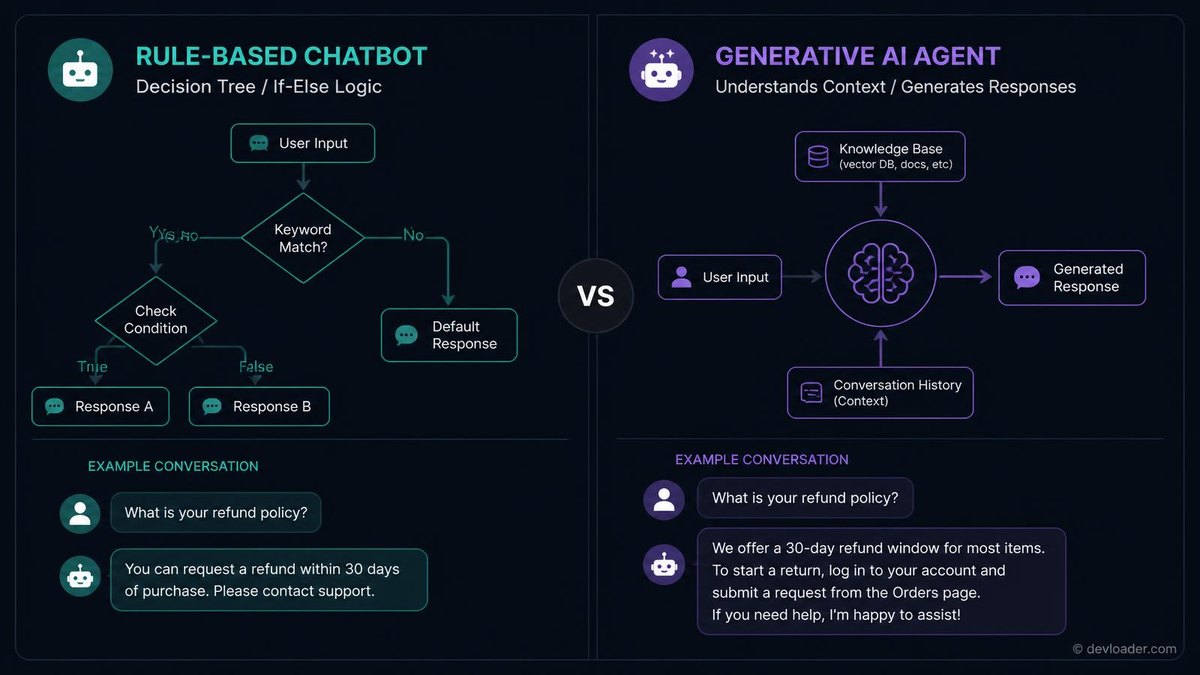
The first generation of customer service bots could only walk users through rigid menus and pre-written replies. Ask a question in unexpected wording and the conversation collapsed. Today the meaningful split is generative AI versus rule-based help desk logic.
Modern AI-powered customer service leans on natural language processing to read intent rather than match keywords. An AI agent chatbot picks up context, tone, and what the customer asked two messages ago. Paired with large language models and your own account history, a customer care bot can produce a genuinely tailored answer instead of a canned paragraph. That is why chatbot customer service is shifting from Q&A scripts toward an AI customer service agent that can work through real technical issues — the same shift we covered in our guide to building AI workflows with an AI agent builder.
Why adopt an AI-powered chatbot for customer service
If you are asking how conversational AI improves service efficiency, the answer is scalability and cost per resolution. A well-designed customer support chatbot handles common queries around the clock, so nobody waits until Monday for a shipping update.
- Ticket deflection. Routing repeat questions to a virtual assistant frees human agents for the complex, high-value troubleshooting only they can do.
- Sustainable growth. You can scale support volume without scaling headcount at the same rate, which protects margins during growth spikes and seasonal peaks.
- Brand consistency. Maintaining brand voice in automated communications means the tone stays professional and empathetic whether the user reaches a bot or a person.
- Modernised call centres. Call centre bots cut hold times by resolving simple requests before a queue ever forms.
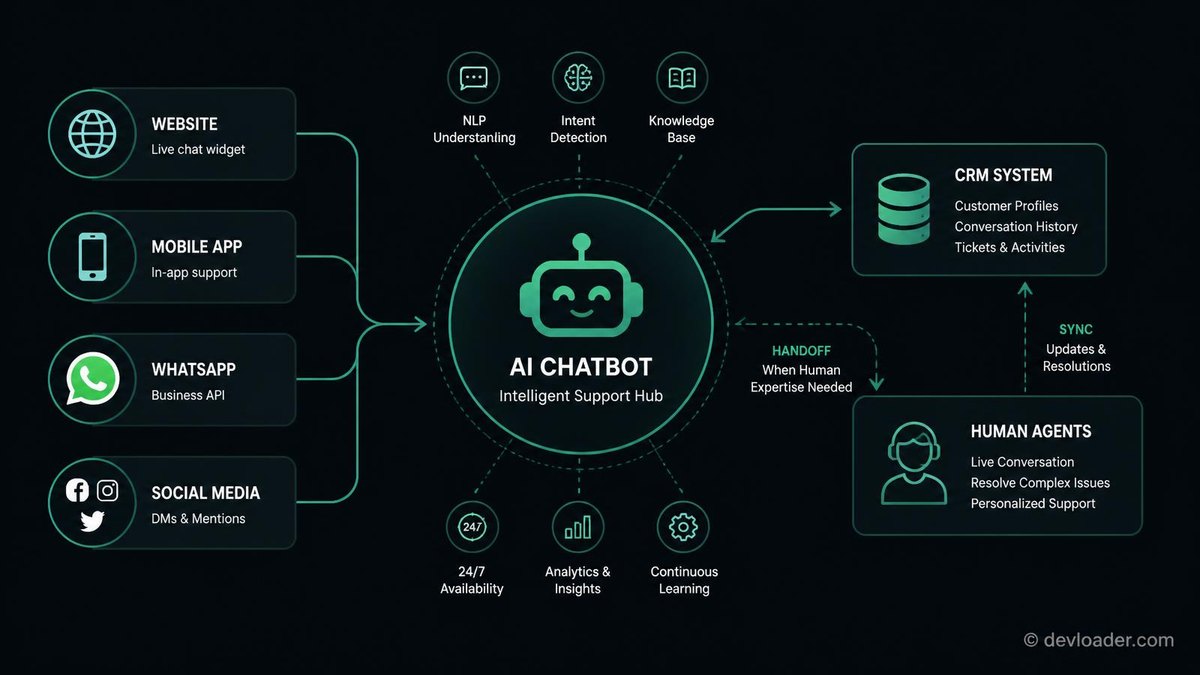
As part of an omnichannel messaging strategy, a dedicated chatbot service client gives users consistent help on your website, mobile app, and social channels — with one conversation history behind all of them.
Choosing the best AI chat software for business support
Finding the best AI chatbots for business customer service starts with your own operational reality, not a feature grid. Not all customer support chat bot solutions are equal, and the strongest ones share two traits: deep integration and predictable reliability.
Connecting the chat interface to your CRM is the difference between a generic assistant and a useful one. The best AI chatbot for customer service pulls user data instantly — greeting people by name, referencing past orders, and skipping questions it can already answer. If your team lacks internal engineering capacity, a specialist custom web development partner can configure and integrate the platform against your real data model rather than a demo dataset. The groundwork matters here: secure user sessions and permissions, which our Supabase authentication tutorial walks through, decide what the bot is allowed to reveal to whom.
When comparing the best AI agents for customer support, prioritise features that improve the digital consumer journey: intuitive admin dashboards, easy configuration of workflow triggers, transparent conversation logs, and clean analytics.
What we check before recommending a support chatbot
We deploy support automation for client sites, so this section is from implementation work rather than vendor documentation. Before we sign off on a platform, we run the same three checks.
First, failure behaviour: what the bot says when the CRM lookup times out. A confident wrong answer costs more than a graceful "let me get a colleague." Second, handoff quality: whether the human agent inherits the transcript and customer record, or the user has to repeat everything. Third, log access: if you cannot export conversations and read where intent detection failed, you cannot improve the bot. Platforms that demo identically diverge sharply on these three, and all three show up in week one of a real rollout.
A step-by-step guide to deploying support automation
- Define objectives. Decide whether you need a simple FAQ bot or a system that processes returns and technical escalations. Scope creep is the usual reason these projects stall.
- Choose the platform. Pick software that aligns with your existing CRM and helpdesk rather than one that requires replacing them.
- Map the workflows. Configure triggers around real user journeys and the questions your inbox actually receives.
- Train the AI. Feed it historical support transcripts and your knowledge base so answers reflect your policies, not generic advice.
- Plan the escalation route. A seamless handoff to human agents is the single most important feature. Nothing damages trust faster than a customer trapped in an automated loop.
- Test and refine. Validate tone, accuracy, and edge cases before launch, then keep reviewing transcripts weekly.
Measuring ROI on your customer support chatbot
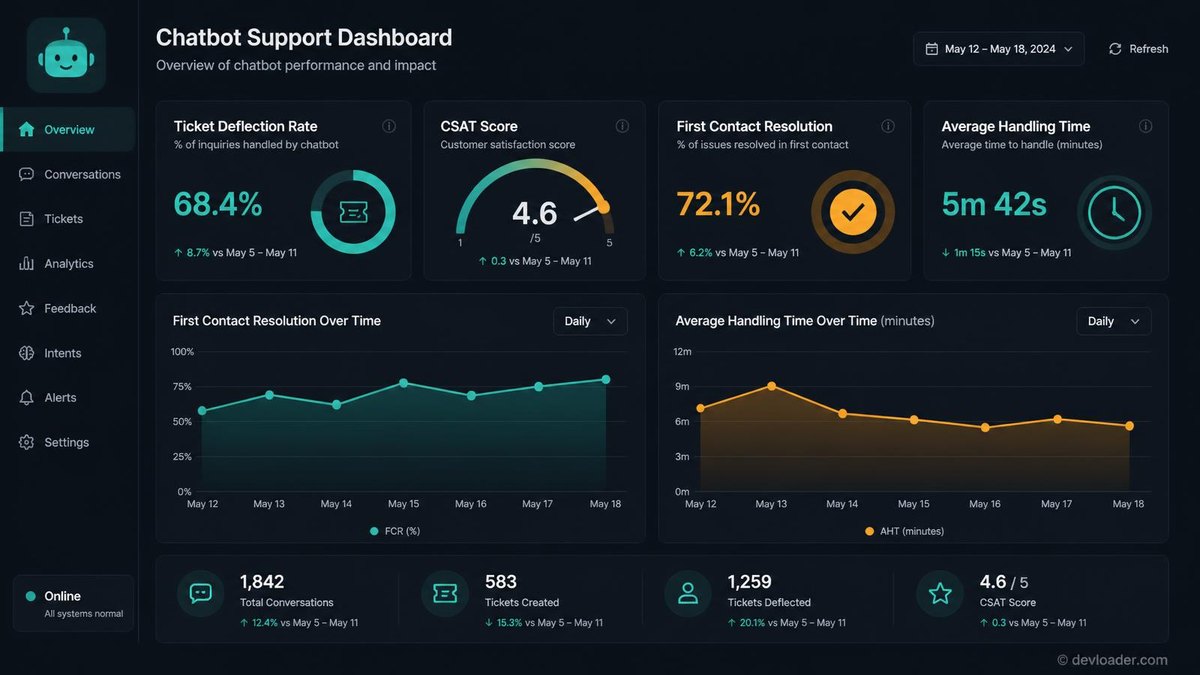
Once the AI agent chatbot is live, measurement decides whether it keeps improving. Track first-contact resolution, average handling time, deflection rate, and CSAT — and compare bot-handled conversations against human-handled ones on the same query types. Escalation rate is the most honest signal of all: a rising rate usually means your instructions or knowledge base, not the model, need work. Reviewing these numbers monthly turns a static deployment into a compounding asset, much like the measurement discipline behind using AI to organise a weekly schedule.
Conclusion
A reliable customer care bot is a genuine operational upgrade: fewer repetitive tickets, faster answers, and personalised support at any hour. Choose carefully, ground the bot in your own data, guarantee a clean handoff to humans, and measure what happens next — that combination is what produces an efficient, scalable, and genuinely satisfying support experience.