Explore the Best Great Design Sites for Modern Web Inspiration
Discover great design sites to inspire your next digital project — top-rated website designs, modern examples, curated galleries, and pattern databases that separate good design from great.
Every digital creator knows that starting with a blank canvas can be both exhilarating and deeply intimidating. Whether you are an experienced frontend developer or a business owner planning your very first digital project, knowing how to find web design inspiration is the ultimate key to breaking through creative blocks. Exploring great design sites helps you stay updated on shifting visual trends, core user experience principles, and innovative page-layout web structures. In this comprehensive guide, we will explore a curated list of creative resource hubs and discuss the exact elements that make modern websites truly stand out from the competition.
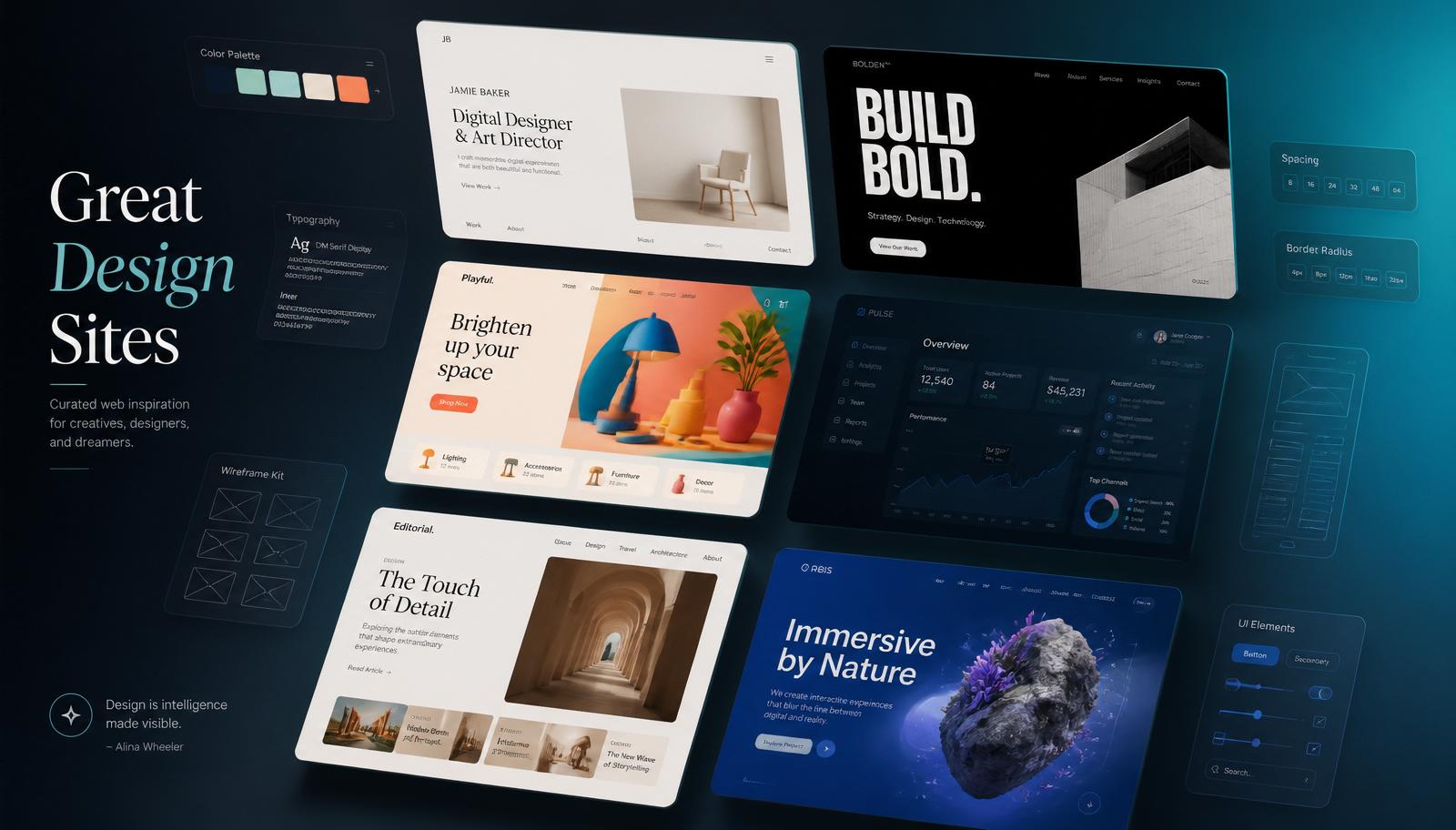
Where to discover the most awesome website designs
Finding the best website designs requires looking far beyond standard Google searches. You need dedicated platforms that champion and showcase creative web pages. If you are currently wondering where to discover minimalist layout ideas — or perhaps seeking vibrant, playful website design styles for a niche boutique — your first stop should be community-driven creative networks.
When comparing Behance versus Dribbble for creative projects, it helps to understand their distinct advantages. Behance often provides deep, scrollable case studies that give you a behind-the-scenes look into industry-leading branding and identity showcases. Dribbble, on the other hand, is fantastic for quick, bite-sized UI snippets and animations. Both platforms are invaluable if your goal is to browse top-rated UI/UX design portfolios created by global talent.
For a more strictly curated experience, spend some time browsing curated design galleries such as Awwwards, CSS Nectar, or SiteInspire. These platforms are perfect for analyzing award-winning website structures. By studying these hubs, you can see exactly how top-tier professionals achieve top-rated website design status, transforming basic concepts into digital masterpieces.
Deep dive: analyzing layout and structure
What ultimately separates average landing pages from truly great websites? Most often, it comes down to intentional layout and highly strategic user-centric features. If you closely examine modern website design examples, you will notice that the underlying architecture is just as important as the visual paint coat.
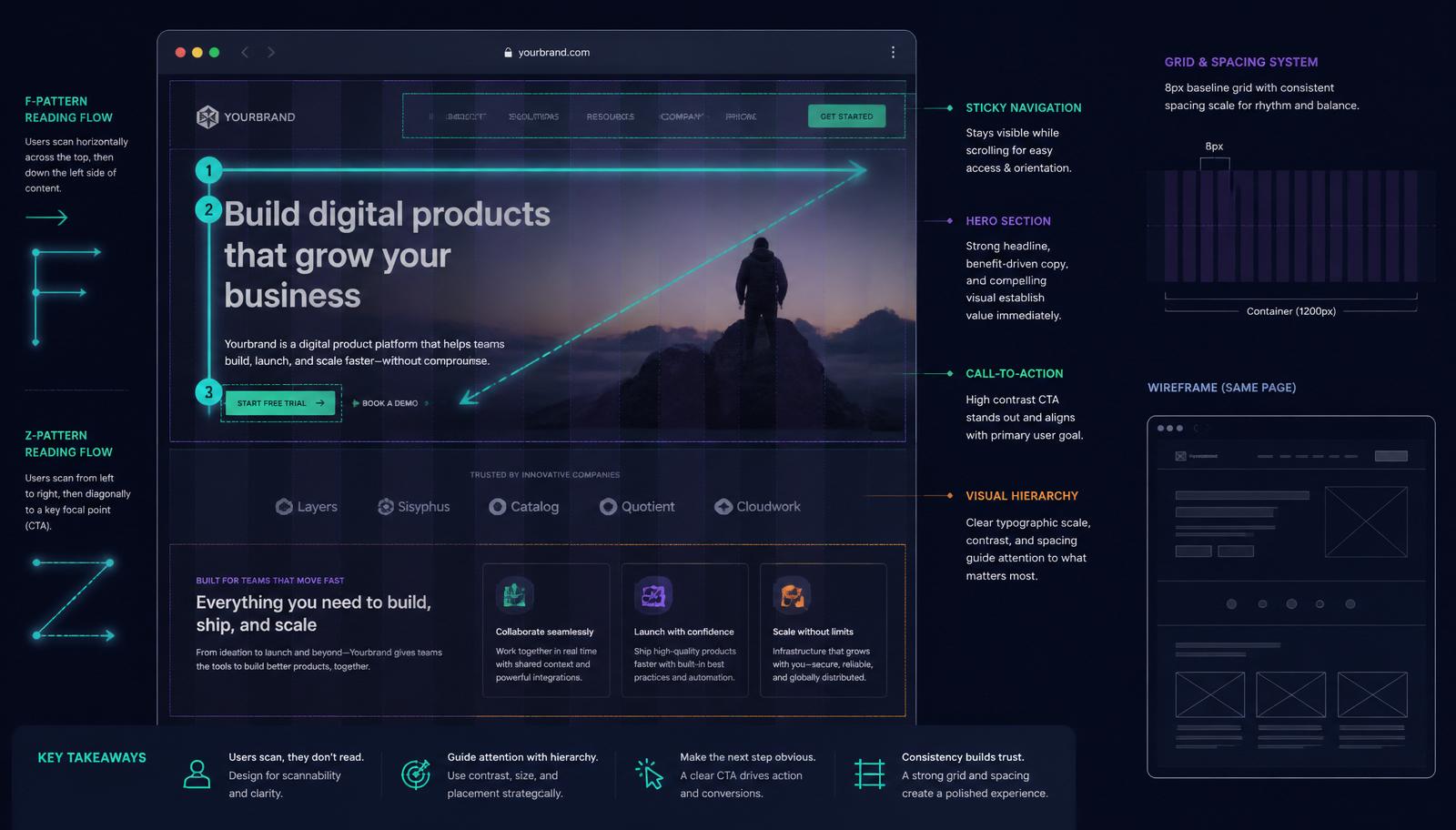
A seamless user journey relies heavily on how information is structured. Studying web design layout examples reveals patterns — such as the classic F-pattern for text-heavy pages or the Z-pattern for conversion-focused landing pages. When evaluating a sample homepage design, pay attention to the visual hierarchy: how headers, hero images, and call-to-action buttons are positioned. By doing so, you can quickly identify the web page design best practices that keep visitors engaged and drastically reduce bounce rates.
If you want to dive into the granular details of navigation and user flow, a searchable database of user interface patterns — like Mobbin or UI Garage — is highly recommended. These databases let you filter through thousands of good website design examples, helping you pinpoint the exact site-design elements for your specific industry or niche.
Key elements of the best website designs
When browsing cool web design websites, certain recurring themes quickly become apparent. The most impressive website design always balances aesthetics with absolute functionality. Here are the core pillars of a successful digital presence:
- Clean, sleek aesthetics. A truly sleek website deliberately removes unnecessary clutter. Embracing a minimalist visual language helps direct the user's immediate attention to your core message and product offering — the foundational rule of good site design.
- Mobile-first mentality. Searching for mobile-first design inspiration is non-negotiable. The best internet site design looks just as stunning and operates just as fluidly on a compact smartphone screen as it does on an ultra-wide desktop monitor.
- Innovative typography. Text is no longer just for reading; it is a critical visual component. Consulting typography inspiration sources like Typewolf or Fonts In Use demonstrates that bold, expressive fonts are a vital piece of modern, creative website design.
- Uncompromising accessibility. Visual beauty should never compromise usability. Evaluating accessibility in modern web layouts ensures that everyone — including users with screen readers or keyboard-only navigation — can consume your content seamlessly. This inclusivity is a hallmark of all good websites.
Interactive features and engaging experiences
Staying current in the digital space means keeping a watchful eye on emerging trends in interactive web design. From subtle micro-interactions that trigger when you hover over a button to bold browser-rendered 3D graphics, modern-looking websites are built to engage users actively rather than passively.
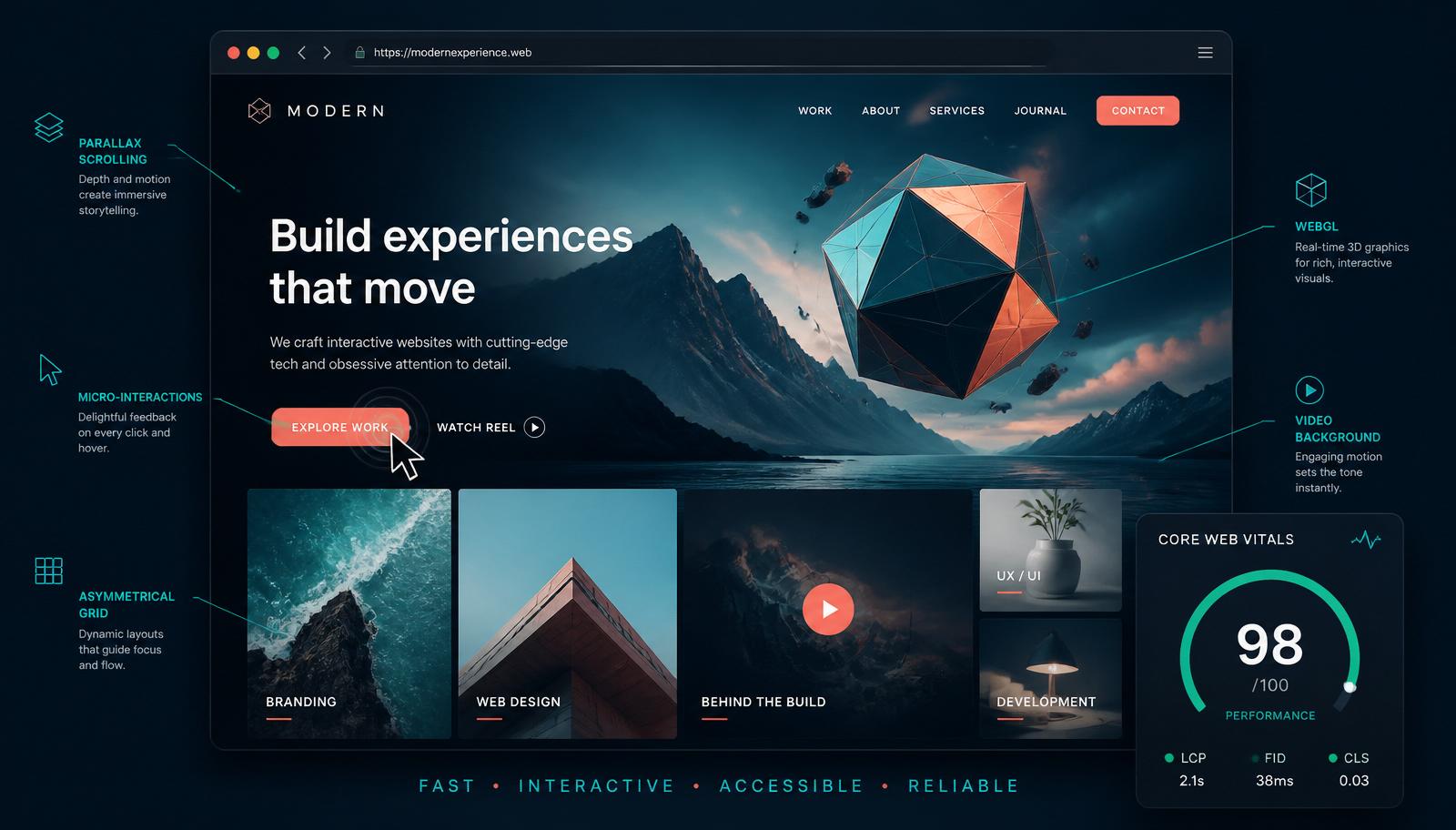
When you visit a top-tier creative web design website, you will likely encounter unique parallax scrolling effects, cinematic video backgrounds, or intentionally asymmetrical website layouts. These choices are not implemented just for visual flair — they are engineered to intuitively guide the user's eye down the page. Balancing these dynamic interactions with incredibly fast load times is exactly how modern teams achieve website design excellence.
From inspiration to execution: actionable tips
Once you have explored various great design sites, it is time to channel that inspiration directly into your own work. Transitioning from admiring great website designs to actively building the best web design requires a structured, logical approach:
- Gather your ideas visually. Building a professional mood board is your first actionable step. Collect screenshots of your favorite color palettes, typography pairings, and layout structures. Tools like Pinterest, Milanote, or Figma are excellent for organizing these references in one place.
- Source the right media. Even a brilliant layout falls completely flat with poor, pixelated imagery. Thoughtfully source high-quality, royalty-free assets from trusted libraries like Unsplash or Pexels — or license premium stock — to elevate and complement your work.
- Prototype and iterate. Before writing a single line of code, create wireframes based on the inspiration you have gathered. Prototyping lets you test user flows early, ensuring the final product matches your initial vision.
Final thoughts on web design excellence
Crafting a compelling online presence always starts with observing the masters. By exploring the platforms, tools, and galleries discussed above, you unlock a wealth of knowledge and visual strategy. Whether your primary goal is to launch a highly functional corporate portal or an artistic, boundary-pushing portfolio, leaning on these resources will undoubtedly elevate your creative workflow. Stay endlessly curious, keep analyzing the most awesome website designs on the web, and let the world's greatest digital galleries inspire your next online masterpiece.
Why Dev Loader LLC
Dev Loader LLC is a USA-registered web engineering studio that turns design-gallery-worthy references into shipped, fast, accessible websites. We pair senior product designers with technical SEOs and accessibility specialists so every site we launch reads as premium in a design gallery *and* ranks in Google, converts on mobile, and passes Core Web Vitals on day one.
If you are ready to move from bookmarking inspiration to shipping a site your competitors bookmark, request a scoped proposal below — we will send references, a fixed-fee estimate, and a technical plan within 24 hours.