Challenges and Solutions in Agile Adoption
The most common challenges of agile adoption — cultural resistance, executive buy-in, role confusion, testing gaps, and scaling — plus practical solutions, a step-by-step roadmap, and KPIs to prove ROI.
The modern business landscape moves at a breakneck pace. To remain competitive, organizations are rapidly shifting away from rigid, linear workflows toward a dynamic agile environment. But if you compare agile vs traditional project management, the differences can be jarring — traditional methods rely on heavy upfront planning, whereas agile embraces continuous change and flexibility. At Dev Loader LLC we have guided startups, growing SaaS companies, and enterprise product groups through this exact transition, and the pattern is consistent: the teams that commit see measurable results within a single quarter.
To clearly define agile development methodology, it is a collaborative, iterative approach to delivering value faster and with fewer headaches. However, navigating this transition is rarely seamless. Let's explore the core Challenges and Solutions in Agile Adoption, offering actionable insights to help your team thrive.

A brief agile software development overview
Before diving into the hurdles, it helps to understand the foundation. People often ask: *what is agile computing*, and what does agile actually mean in practice? The true agile development meaning centers on adaptability, customer collaboration, and continuous improvement — the same principles our custom web development teams apply on every engagement.
So, how does agile work? Instead of waiting months or years for a final product launch, the agile development process breaks projects down into smaller, consumable increments. This focuses on iterative development vs big-bang releases, ensuring teams can pivot the moment market demands shift. For a deeper foundation, see our companion guide on the key principles of agile project management.
At its core, this approach relies on fundamental agile development principles — valuing working software over comprehensive documentation and responding to change over following a strict plan. Whether you are building complex enterprise systems or lightweight agile software, utilizing a solid agile framework allows teams to remain resilient. Sticking to proven agile software development steps — from initial backlog grooming to continuous deployment — creates a reliable rhythm for success.
Why do agile transformations fail? Common challenges
Despite the overwhelming benefits of implementing agile in teams, many companies stumble during their transition from waterfall to agile. Understanding *why* agile transformations fail is the first step toward preventing disaster.

Cultural resistance and lack of support
One of the most significant roadblocks is managing cultural resistance to agile. People naturally cling to the workflows they know. If leadership tries to force a new agile development methodology without explaining the *why*, employees will push back. Furthermore, knowing how to get executive buy-in is critical — without leadership championing the change and providing resources, the transformation will quickly stall.
Misunderstanding roles and frameworks
Many teams adopt the terminology of agile approaches without changing their actual behavior. For example, failing at defining the Product Owner role often leads to competing priorities and a bloated backlog. Additionally, teams frequently get bogged down debating Scrum vs Kanban for developers. While Scrum offers structured, time-boxed sprints, Kanban focuses on continuous flow. Picking a framework that does not align with your team's natural workflow will disrupt your agile work.
Technical and design roadblocks
Integrating agile methodology in software testing is a common pain point. Traditional testing occurs at the end of the development cycle, but agile requires continuous, automated testing. Adapting the agile development design process can be equally tricky. Designers need to work in tandem with coders, seamlessly weaving agile UI/UX design into the broader agile system development lifecycle rather than working in isolated silos.
Solutions for a successful agile development environment
Overcoming these obstacles requires intention, patience, and a well-thought-out strategy. A comprehensive guide to building agile culture starts with empowering your people and optimizing your processes.
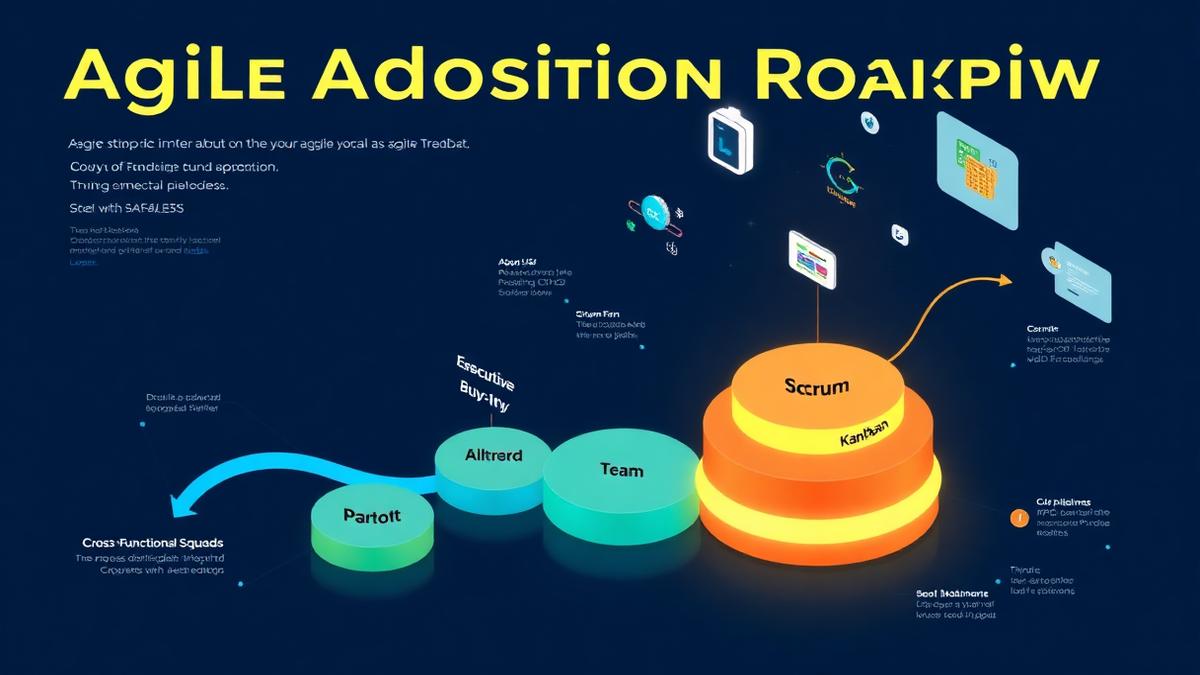
1. Create a step-by-step agile roadmap
Do not attempt an overnight overhaul. Instead, draft a step-by-step agile roadmap that guides your organization through incremental changes. Use an agile maturity assessment framework to evaluate where your team currently stands. This allows you to set realistic goals and steadily mature your agile software project management practices without overwhelming staff.
2. Leverage cross-functional teams
One of the best ways to accelerate agile project development is by breaking down departmental silos. The benefits of cross-functional teams are massive. By uniting developers, designers, testers, and operations into a single, cohesive unit, you eliminate hand-off delays and foster shared ownership over the web application being built.
3. Equip teams with the right tools
You cannot build modern applications with outdated tools. Investing in the right agile methodology software (Jira, Azure DevOps, Linear, Asana) ensures your agile development framework is supported by your technology stack. When selecting agile programming software, look for platforms that integrate seamlessly with your continuous integration and deployment pipelines — the same discipline we apply on every mobile app engagement.
4. Fix bad habits early
To maintain a healthy agile development environment, leaders must focus on fixing common agile anti-patterns. If daily stand-ups have turned into micromanaged status reports, or if sprint retrospectives are ignored, intervene immediately. True agile practices require psychological safety, where teams feel comfortable discussing failures and iterating on their processes.
Measuring success and scaling up
Once you have established your core agile methodology, how do you prove it is working? Track agile success metrics and KPIs — sprint velocity, cycle time, burndown rates, deployment frequency, change failure rate, and customer satisfaction. Together these provide quantifiable evidence that your agile software development efforts are yielding a positive return on investment.
As your organization grows, the success of a single team must translate to the entire enterprise. This is where scaling frameworks for enterprise agile (SAFe, LeSS, Nexus, Scrum@Scale) become invaluable. These frameworks take the core tenets of lightweight agile approaches and expand them, allowing dozens or even hundreds of teams to collaborate on large-scale initiatives without descending into chaos.
Adopting an agile mindset is a journey of continuous learning. From understanding the core of an agile software development overview to executing complex enterprise strategies, the transition requires strategic planning. By anticipating common roadblocks, investing in the right tools, and prioritizing cultural alignment, your organization can successfully navigate the complexities of modern software delivery and build a truly resilient business.
Work with Dev Loader LLC on your agile transformation
At Dev Loader LLC we combine hands-on engineering with practical agile coaching. Our teams have shipped agile transformations for regulated healthcare platforms, high-growth SaaS products, and multi-brand ecommerce systems — the same playbook we bring to your engagement.
- Agile-first web development — cross-functional sprints, CI/CD, and demo-ready increments every two weeks.
- Product design & UI/UX — designers embedded in your squad instead of throwing mockups over the wall.
- Mobile app development — Scrum-based delivery for iOS, Android, and cross-platform apps.
- Technology consultancy — maturity assessments, coaching, executive workshops, and SAFe/LeSS rollouts.
Ready to move from theory to a working sprint? Contact Dev Loader LLC for a free 30-minute agile adoption consultation.