Unlock AI Innovation: Best Free LLM API Platforms
Discover the best free LLM API to build AI-powered applications without cost. Perfect for developers, startups, and hobbyists to innovate risk-free!
Building an AI-powered product used to mean a signed contract and a five-figure minimum. It does not any more. A free LLM API now gets you production-grade reasoning, streaming responses, and function calling without a credit card — enough to validate an entire product idea before you spend anything.
This guide covers which free endpoints are actually worth your time, how to stay inside their limits, and when to stop using them.
What we learned shipping on free tiers
We build AI features into client products for a living, and almost every one of them starts on a free tier. Three things repeat.
The first is that model choice matters far less than prompt design at the prototype stage. Teams burn a week benchmarking providers when a tightened system prompt would have closed the quality gap on any of them.
The second is that free tiers fail on *concurrency*, not quality. A model that answers beautifully in the playground starts returning 429s the moment three users hit it at once. Design for retries from day one.
The third is that nobody reads the data-retention clause until legal does — and by then the prototype has already seen customer data.
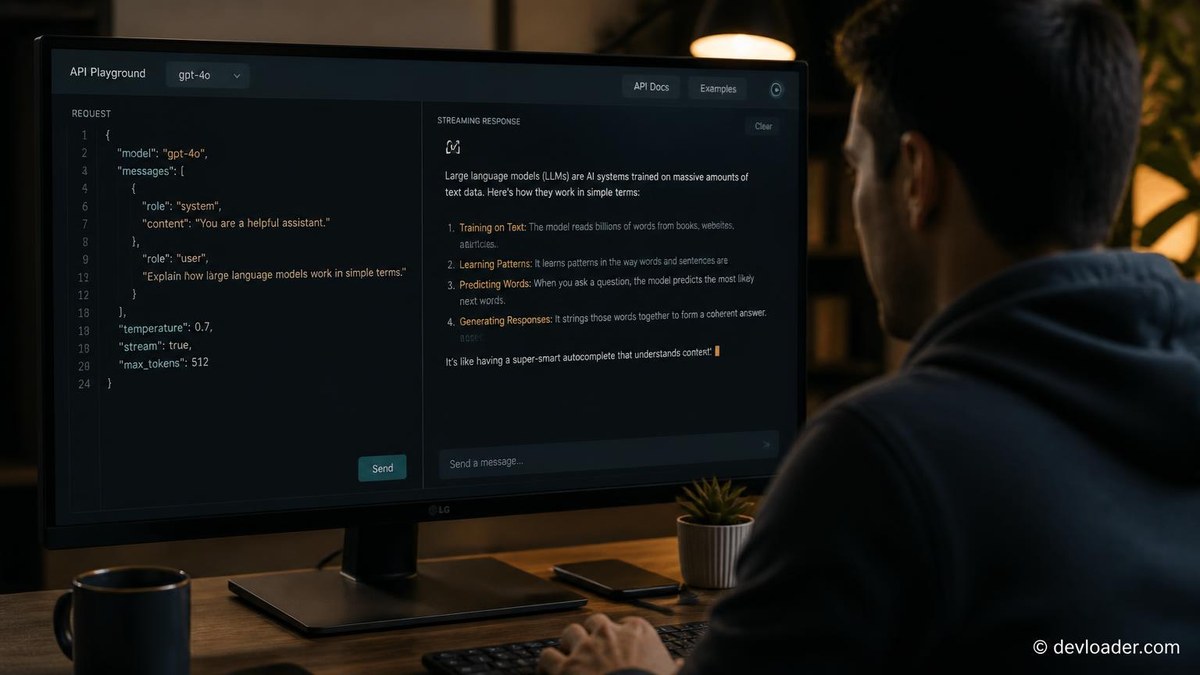
Why start with a free LLM API
Starting on a zero-cost endpoint removes the only irreversible decision in early AI work: commitment. You can test prompts, measure latency, compare model output on your own data, and throw the whole thing away on Friday having lost nothing but time.
It also keeps you honest about value. If a feature is not compelling on a free model, a paid one rarely rescues it — the problem is usually the product, not the parameter count. And because switching costs are near zero, you can run two providers side by side on the same prompt set and let real output decide, rather than a pricing page.
The best free LLM API providers in 2026
Hugging Face Inference
Hugging Face remains the widest catalogue in the industry. The Inference API lets you call thousands of hosted community models with a few lines of code, which makes it unbeatable for exploration — if a model exists, it is probably reachable here.
The trade-off is throughput. Community endpoints are sized for testing, cold starts are real, and shared models queue under load. Treat it as a research bench, not a production backend.
Groq
Groq's free tier is the fastest way to feel what low-latency inference does to a product. Token throughput on open-weight models such as Llama and Mixtral is high enough that streaming feels instant, which changes how users perceive the whole application. Limits are expressed in requests per minute, so bursty traffic is what breaks you, not total volume.
Together AI and Mistral
Both ship generous starting credits against strong open-weight models, with OpenAI-compatible request shapes — meaning you can swap base URL and model name without rewriting your client. That compatibility is the single most valuable property to look for, because it makes provider migration a config change instead of a refactor.
Google AI Studio
Gemini's free tier is the most forgiving for prototyping: a large context window, multimodal input, and per-minute rather than per-month limits, so a quiet day resets your budget.
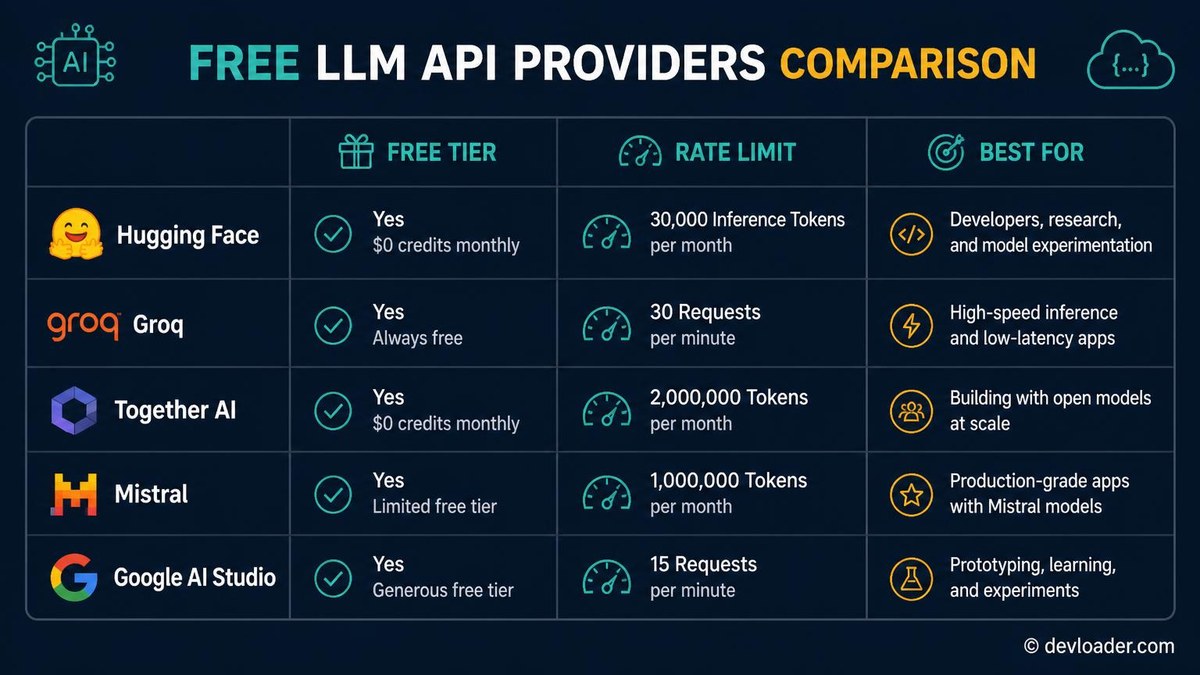
Provider — Strength — Watch out for — Best for
Hugging Face — Largest model catalogue — Cold starts, shared queues — Research and experimentation
Groq — Extremely low latency — Requests-per-minute caps — Streaming chat interfaces
Together AI — Open-weight breadth, OpenAI-compatible — Credits expire — Scaling open models
Mistral — Strong quality per token — Smaller free allocation — Production-shaped prototypes
Google AI Studio — Big context, multimodal — Per-minute throttling — Learning and rapid demos
How to get free API keys and make them last
Sign-up is almost always a single form plus a GitHub or Google account, after which a key and a starting balance appear in the dashboard. Making that balance last is the real skill.
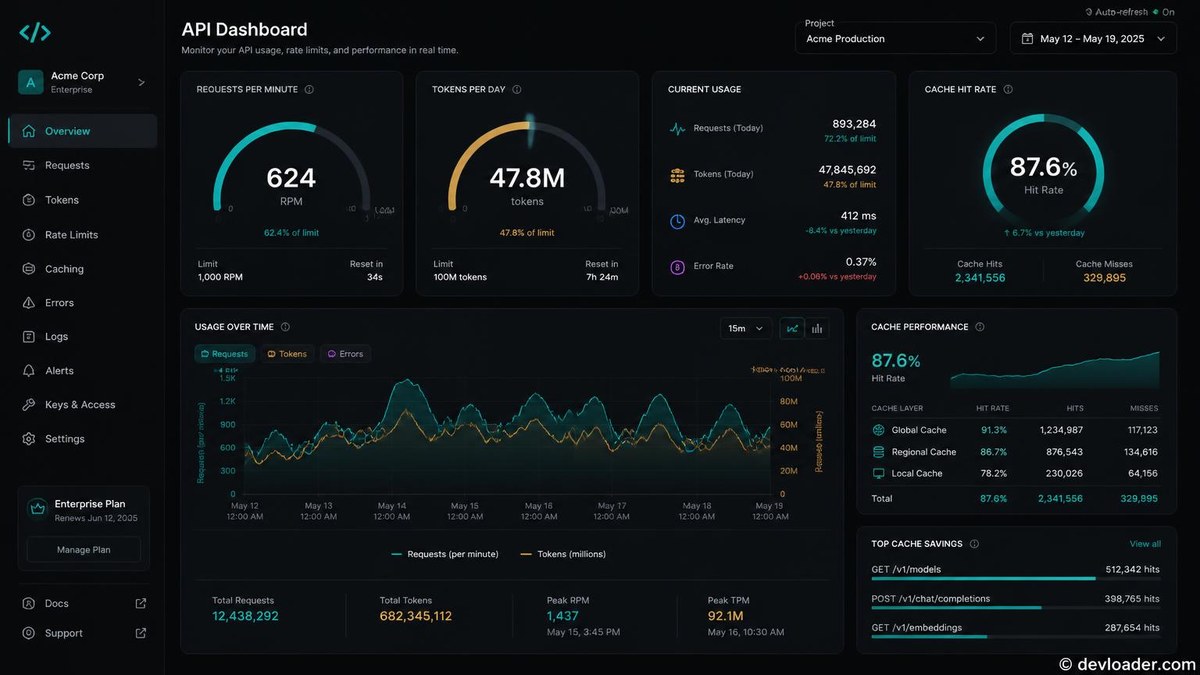
Watch the dashboard daily. Credits expire on a clock, and an accidental retry loop can drain a month of quota in twenty minutes. Set a hard spend or request ceiling in your own code, not just in the provider console.
Handle rate limits properly. Providers cap requests per minute and tokens per day. Implement exponential backoff with jitter so a 429 becomes a short pause instead of a crash, and queue non-urgent calls rather than firing them in parallel.
Shorten your prompts. Politeness costs tokens. A tight system prompt with explicit output format usually improves quality *and* halves cost.
Cache aggressively. Identical questions should never reach the model twice. A small Redis or Postgres cache keyed on a prompt hash routinely removes half the traffic in support and documentation use cases — the same caching and performance discipline you would apply to any expensive upstream call.
Stream responses. Streaming does not save tokens, but it makes a slow free tier feel fast, which is often the difference between a demo that lands and one that does not.
Privacy: what you must never send to a free endpoint
Free tiers are frequently subsidised by data. Prompts may be logged, sampled by human reviewers, or used to improve future models, and the retention terms differ sharply between providers and between free and paid plans on the same provider.
The rule is simple: no personal identifiable information, no customer records, no proprietary source code, no credentials, and nothing covered by a client NDA. If a prompt would be a problem in a screenshot, it is a problem in a log.
If your data cannot leave your control, formalise it — model access belongs in your risk register alongside every other vendor dependency, which is exactly what AI governance responsibilities and mature risk management frameworks exist to enforce.
Running models locally instead
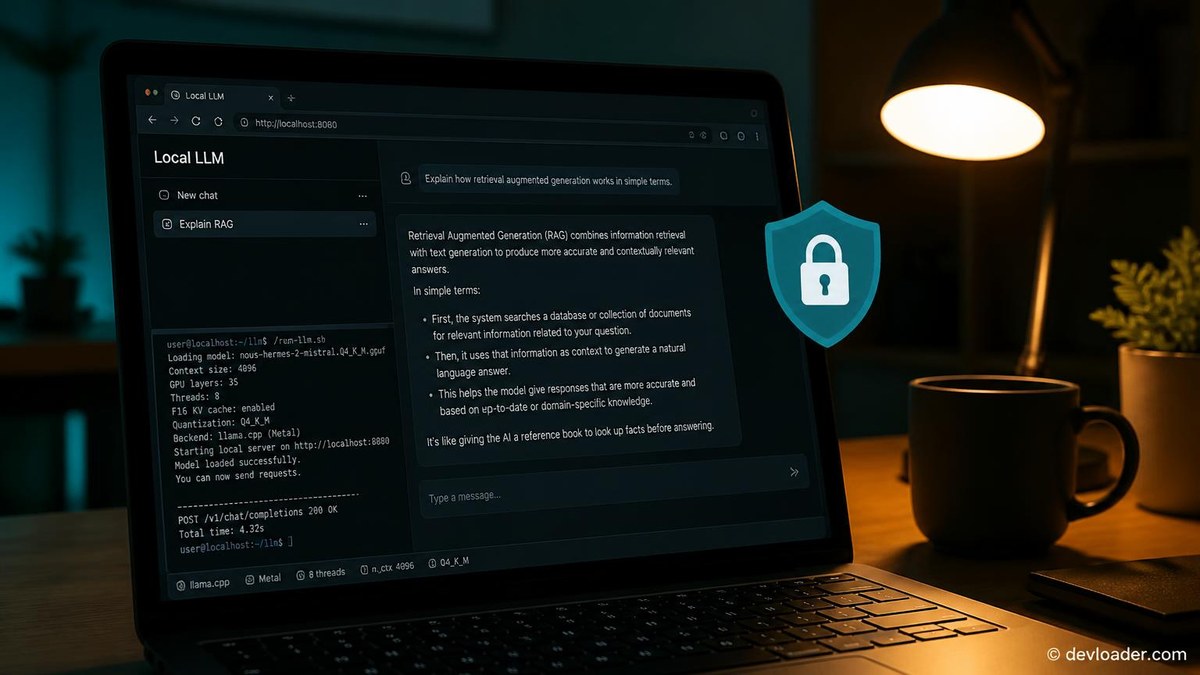
When privacy or rate limits become the binding constraint, local hosting removes both. Ollama, LM Studio, and GPT4All download open-weight models straight to your machine and expose an OpenAI-compatible endpoint on localhost, so your application code barely changes.
You trade cloud quality and speed for hardware. Quantised 7B–8B models run comfortably on a modern laptop; larger models need a serious GPU. In return you get unlimited tokens, no network dependency, offline development, and absolute certainty about where your data went. For regulated work — or for building on a plane — that trade is usually worth making.
When to leave the free tier
Move to paid when any of these become true: users are hitting rate limits, you need an uptime commitment, you need a contractual guarantee that prompts are not retained, or you are spending more engineering time working around quotas than building features. That last one is the most common and the most expensive to ignore.
Conclusion
A free LLM API is the cheapest possible way to find out whether your AI idea is any good. Pick an OpenAI-compatible provider so you can switch later, cache and back off from day one, keep sensitive data off public endpoints, and graduate to paid infrastructure only when real usage forces it. The tooling to build the future is genuinely free to start — the discipline is what you bring.
Need AI features built properly?
Dev Loader ships production AI integrations — streaming chat, retrieval-augmented search, function calling, provider failover, prompt caching, cost controls, and the observability to keep all of it accountable. If you have validated an idea on a free tier and need it hardened for real users, that is exactly the work we do.