Essential Law Firm Web Design: Key Elements & Tips
A complete guide to law firm web design — trust signals, UX, mobile speed, local SEO and lead capture that turn visitors into signed clients.
When a potential client faces a legal challenge, their very first step is almost always a quick search-engine query. If your digital presence does not immediately project authority, empathy, and professionalism, they will click away to a competitor within seconds. Understanding the Essential Elements of Law Firm Web Design is no longer optional — it is critical for survival in a highly competitive digital landscape.
Whether you are upgrading an outdated site or launching a new practice, effective law firm website design blends aesthetics, technical functionality, and client psychology. In this comprehensive guide we walk through what it takes to elevate your practice — from basic law website design principles to advanced website development for lawyers.
First impressions: design aesthetics and homepage fundamentals
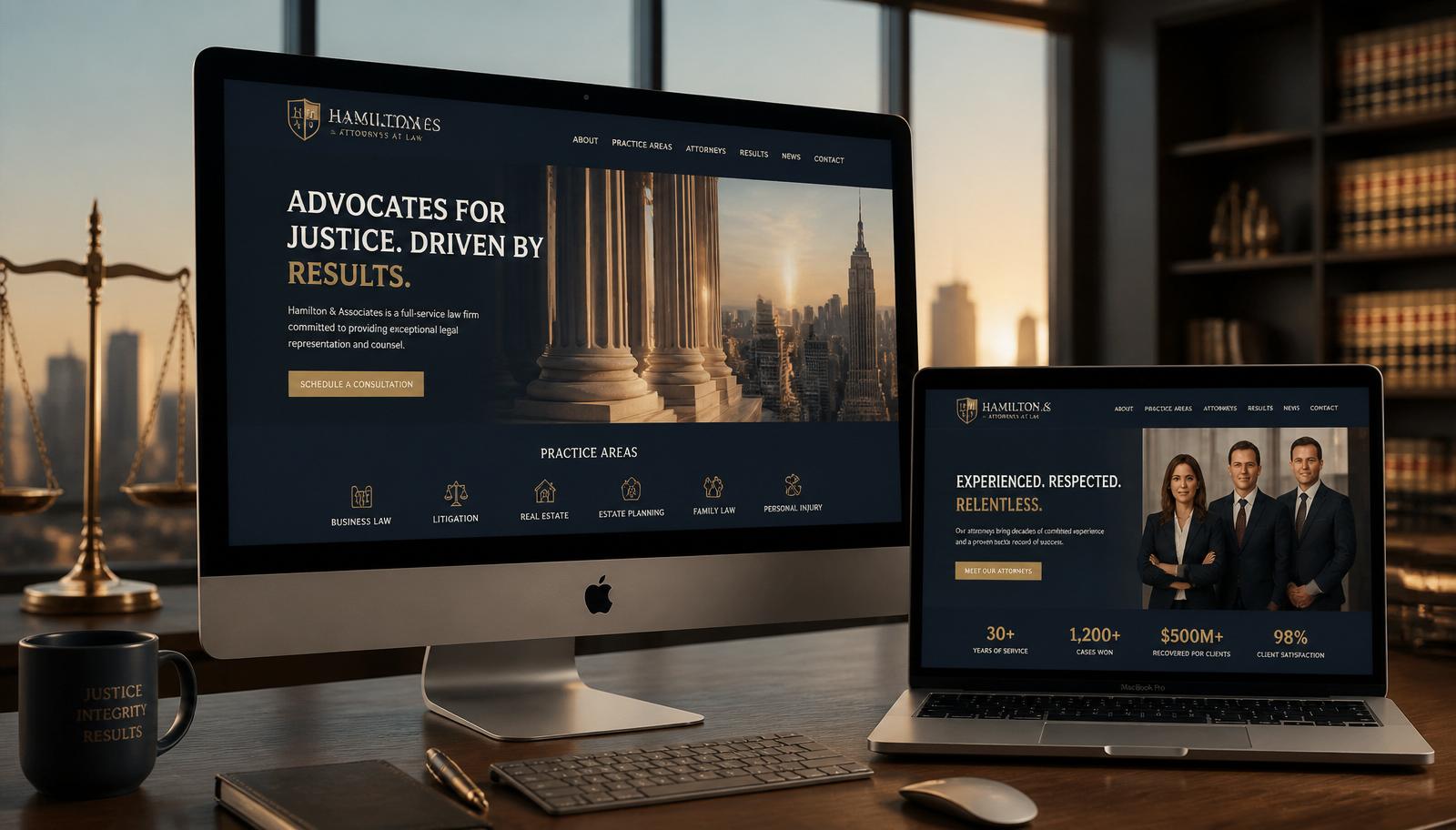
When tackling website design for legal firms, your homepage is your digital front door. Knowing exactly what information belongs on a law firm homepage is crucial for retaining visitors. Your homepage should immediately feature a clear value proposition, an overview of your primary practice areas, and highly visible contact information.
A frequent debate in attorney web design revolves around modern vs traditional lawyer website aesthetics. Traditional designs often lean heavily on stock images of gavels, scales of justice, and courthouses. Modern legal website design favors clean lines, ample white space, and authentic photography of your actual team and office.
Regardless of your aesthetic choice, it is vital to use professional color palettes for legal branding. Deep blues and slate grays evoke trust and stability; muted greens and golds work beautifully for financial, real-estate, and corporate practices. Ultimately, a strong firm website design should instantly communicate *who you are* and *the specific type of clients you help*.
Building trust and credibility
Legal clients are frequently in vulnerable, high-stress situations. Your law firm websites must establish immediate credibility. Integrating prominent trust signals — Super Lawyers badges, AVVO ratings, Better Business Bureau accreditation, local bar-association logos — reassures anxious visitors that you are a vetted professional.
Social proof is equally vital, but attorneys must know how to showcase client testimonials legally. Always adhere strictly to your state bar's advertising rules. Typically this means clear disclaimers stating that past results do not guarantee future outcomes, and ensuring no confidential client information is inadvertently revealed.
Clients ultimately hire people, not faceless entities. Following attorney profile-page best practices is a cornerstone of quality attorney website design: professional headshots, detailed educational backgrounds, specific case experience, and a touch of personal flair (like community involvement) to humanize your team.
User experience (UX) and navigation
Exceptional law firm web design relies on intuitive UX. If a visitor cannot find the information they need within seconds, they will bounce back to the search results.
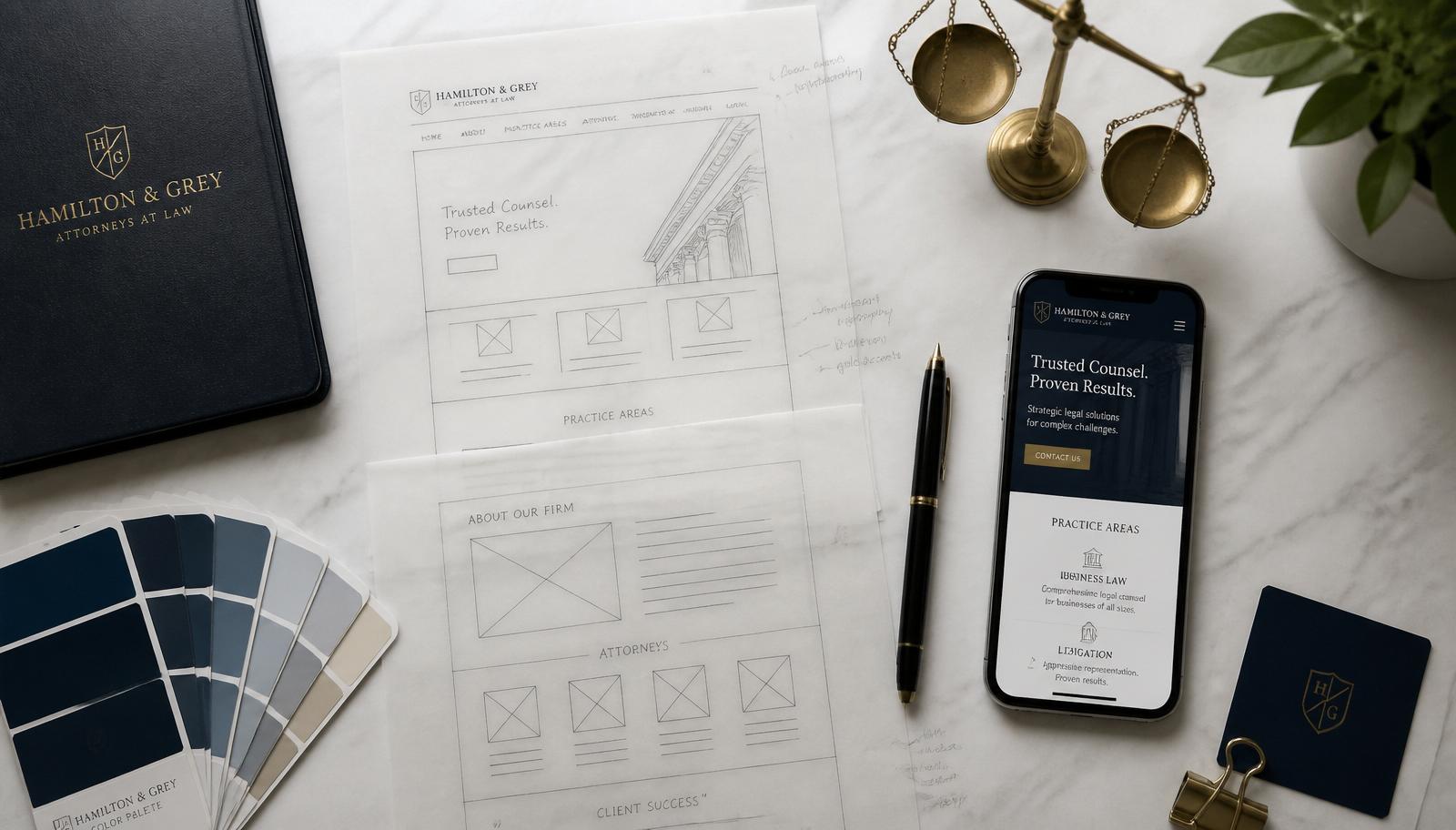
- Mobile functionality. A mobile-responsive law firm site is non-negotiable. Over half of all legal inquiries originate on smartphones. Menus must be thumb-friendly, and phone numbers must be tap-to-call.
- Site speed. A loading delay of just two to three seconds costs you high-value leads and hurts your search rankings. Optimized images and clean backend lawyer website development are essential.
- Inclusivity. ADA compliance for legal websites protects your firm from liability and ensures accessibility for everyone, including users with visual or auditory disabilities. Screen-reader compatibility and high-contrast text are essential elements of modern lawyer website design.
Content structure for SEO and client conversion
Beautiful website design for lawyers is only effective if potential clients can actually find you. Structured, informative practice-area pages capture highly targeted search traffic. Avoid the temptation to group every service onto a single page — create dedicated, long-form pages for each distinct specialty (Car Accidents, Divorce, Estate Planning, and so on).
Your law office web design must also incorporate robust local SEO features. Embed an interactive Google Map, keep your NAP (Name, Address, Phone number) perfectly consistent in your site's footer, and naturally weave location-specific keywords into your content.
To convert that localized traffic, place strategic calls-to-action throughout the text. Do not wait until the bottom of a 1,000-word page to ask the reader to contact you — guide them at every logical decision point.
Capturing leads: contact forms and communication
Generating traffic is useless if your site fails to convert visitors into consultations. High-converting law firm contact forms require balance: ask for enough information to qualify the lead (name, email, phone, and a brief message), but avoid multi-page questionnaires that deter submissions.

Many attorneys weigh live chat vs contact forms. The best law firm websites include both. Live chat and chatbots provide instant gratification during business hours, while secure contact forms suit those reaching out after hours or with sensitive inquiries.
Choosing the right development path
For solo practitioners on a tight budget, the best website builder for law firm needs is a practical first step. Template-based platforms get small law firm websites off the ground quickly and affordably.
For growing practices seeking a dominant competitive edge, custom lawyer web design is the gold standard. A truly custom law firm website design allows tailored SEO architecture, unique branding, and complex software integrations that templates simply cannot match.
If you decide to outsource this critical task, look for a specialized law firm web design agency. Comprehensive packages typically include backend attorney web development, content creation, and ongoing maintenance — with technical details (from backend security to frontend custom code) executed flawlessly.
Final thoughts
Crafting an effective legal digital presence requires a strategic blend of aesthetics, functionality, and strict compliance. By prioritizing the Essential Elements of Law Firm Web Design — from blazing-fast load times and intuitive navigation to compelling attorney profiles and secure contact methods — you can transform your website into a 24/7 rainmaker.
Build your law firm website with Dev Loader LLC
At Dev Loader LLC we design and build high-converting websites for law firms across the United States. Every project we ship pairs modern custom web design with the trust signals, ADA compliance, local SEO, and lead-capture engineering your practice needs to grow.
- Explore our services — full-stack design, development, and SEO for legal practices.
- View our portfolio — see the work we have shipped for professional-services clients.
- Request a project — tell us about your firm and get a proposal within two business days.
- Contact our team — visit us at 236 Farragut St NW H203, Washington, DC 20011.
Ready to turn your website into your best-performing rainmaker? Start your law firm project with Dev Loader today →
Frequently asked questions
What are the essential elements of a law firm website?
Every law firm website needs: a fast-loading home page, dedicated practice-area pages, attorney bios with credentials, verified reviews, clear contact information with map and driving directions, a blog for topical authority, and LegalService + LocalBusiness schema markup.
How many practice-area pages should a law firm site have?
One indexable page per service the firm actively markets — no more, no less. A boutique estate planning firm may have three (wills, trusts, probate); a full-service firm may have twelve. Each page needs unique title tags, 800+ words of original content, and its own FAQ section.
Do law firm websites need a blog?
Yes — a well-maintained blog is one of the strongest ranking signals for law firm SEO. Publishing two to four in-depth articles per month on client questions, local legal updates, and case-study breakdowns compounds organic traffic and supports internal linking to practice-area pages.
What legal disclaimers must a law firm website include?
Required disclaimers vary by state but typically include: no attorney-client relationship formed by visiting the site, no legal advice given via forms or chat, prior results don't guarantee similar outcomes, and jurisdictional limits on where the firm is admitted to practice. Consult your state bar's advertising rules.
How often should a law firm website be redesigned?
Plan a full redesign every 3–4 years and continuous iterative improvements between. Design, accessibility standards, and Core Web Vitals thresholds shift fast enough that sites older than four years typically lose rankings and conversion rate to newer competitors.
Related resources from Dev Loader LLC
Practice-area websites we design
- Ship the essentials on a personal injury attorney website built for fast case-value capture.
- Anchor client trust in a professional estate planning website tuned for wills, trusts, and probate leads.
- See every law firm website template by practice area.
Keep reading — related law-firm design guides
- Layer SEO on top of the essentials with our law firm website best practices guide.
- Turn a solid foundation into leads with engagement-focused legal web design.
- Polish usability with our user-friendly law firm website design tips.
- Modernize the finish with the top legal website design trends.