User-Friendly Law Firm Website Design Tips
Create user-friendly law firm websites with strategic design and development. Enhance client experience and drive conversions with professional web design for legal firms.
Creating User-Friendly Law Firm Websites
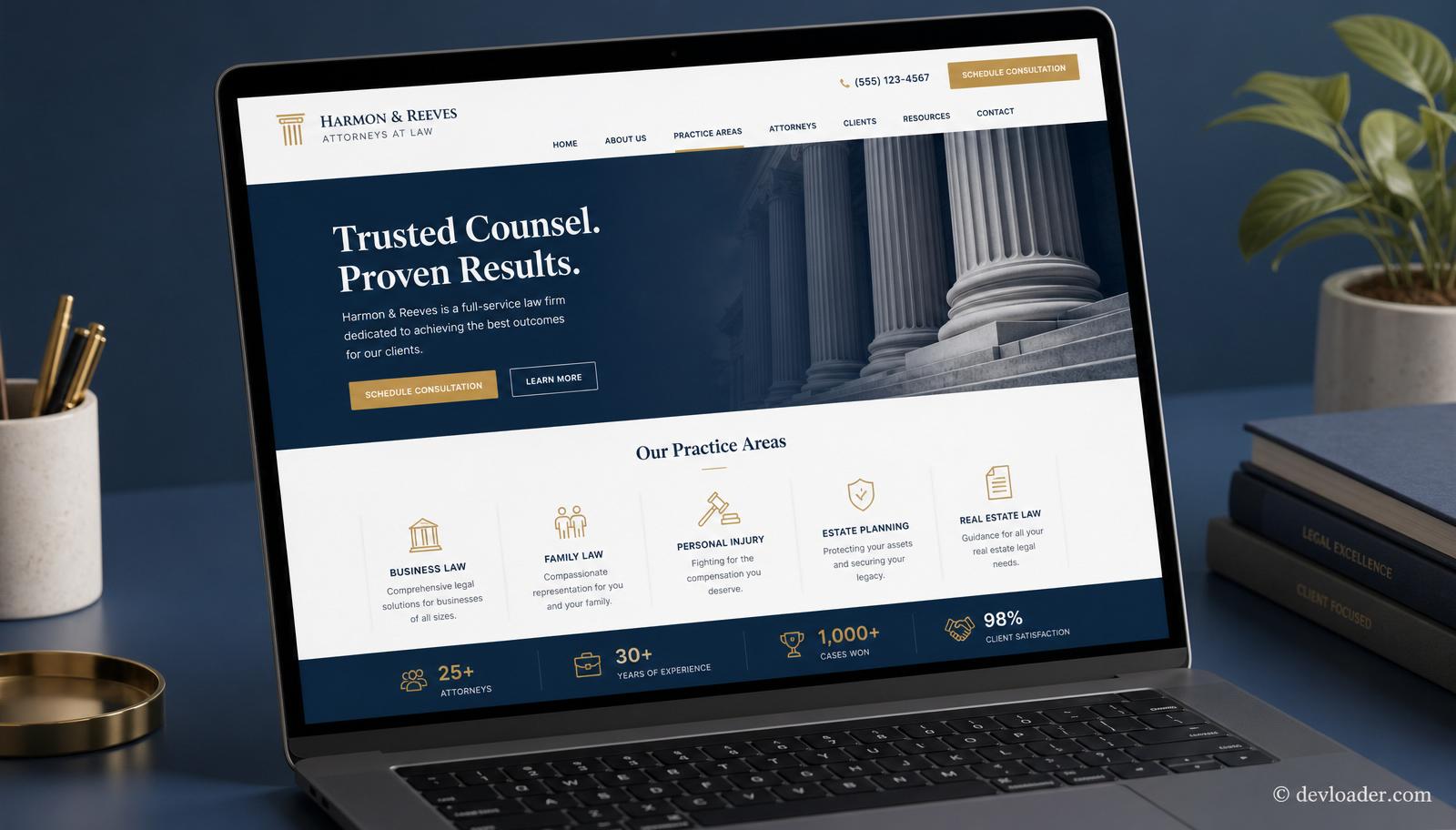
When potential clients search for legal help, they are often navigating a stressful and overwhelming time in their lives. Creating User-Friendly Law Firm Websites is not just an aesthetic choice; it is a vital business strategy that bridges the gap between a client in distress and the legal expertise they desperately need.
A strong foundation in law firm website design ensures that your practice connects instantly with your target audience. Whether you manage a solo practice looking for an affordable small law firm website design or a large partnership requiring enterprise-level lawyer website development, focusing on the user experience (UX) is paramount. Professional attorney website design acts as your 24/7 digital storefront, and making it welcoming is the key to converting visitors into retained clients.
The Core of Client-Centric Design
Implementing client-centric legal web design strategies is the first step toward a successful online presence. Firms often wonder how to build trust with legal clients online. The answer lies in empathy and clarity.
The best law firm website design removes friction by avoiding dense legal jargon and instead offering clear, accessible language. Successful web design for lawyers is about anticipating the user's needs the moment the homepage loads. Modern law firm web design prioritizes a reassuring tone, transparent communication, and immediate value.
Structural Foundations: Navigation and Content
So, what makes a law firm site easy to navigate? It all begins with the best navigation structure for law firms—a clean, intuitive menu that guides visitors naturally to the information they seek.
Organizing Your Practice Areas
Avoid lumping all your services under a single, generic "What We Do" tab. Instead, establish a logical content hierarchy for legal practice areas. For example, separate "Car Accidents" from "Medical Malpractice" so users can find their specific issue within seconds. This level of organization is a hallmark of excellent firm website design.
Accessibility Matters
Furthermore, your site must adhere to strict legal website accessibility standards. Features like alt-text for images, keyboard-navigable menus, and high-contrast text ensure your site is fully usable by individuals with disabilities. This inclusivity is not just legally prudent; it is the foundation of top-tier legal website design.
Mobile Responsiveness and Speed
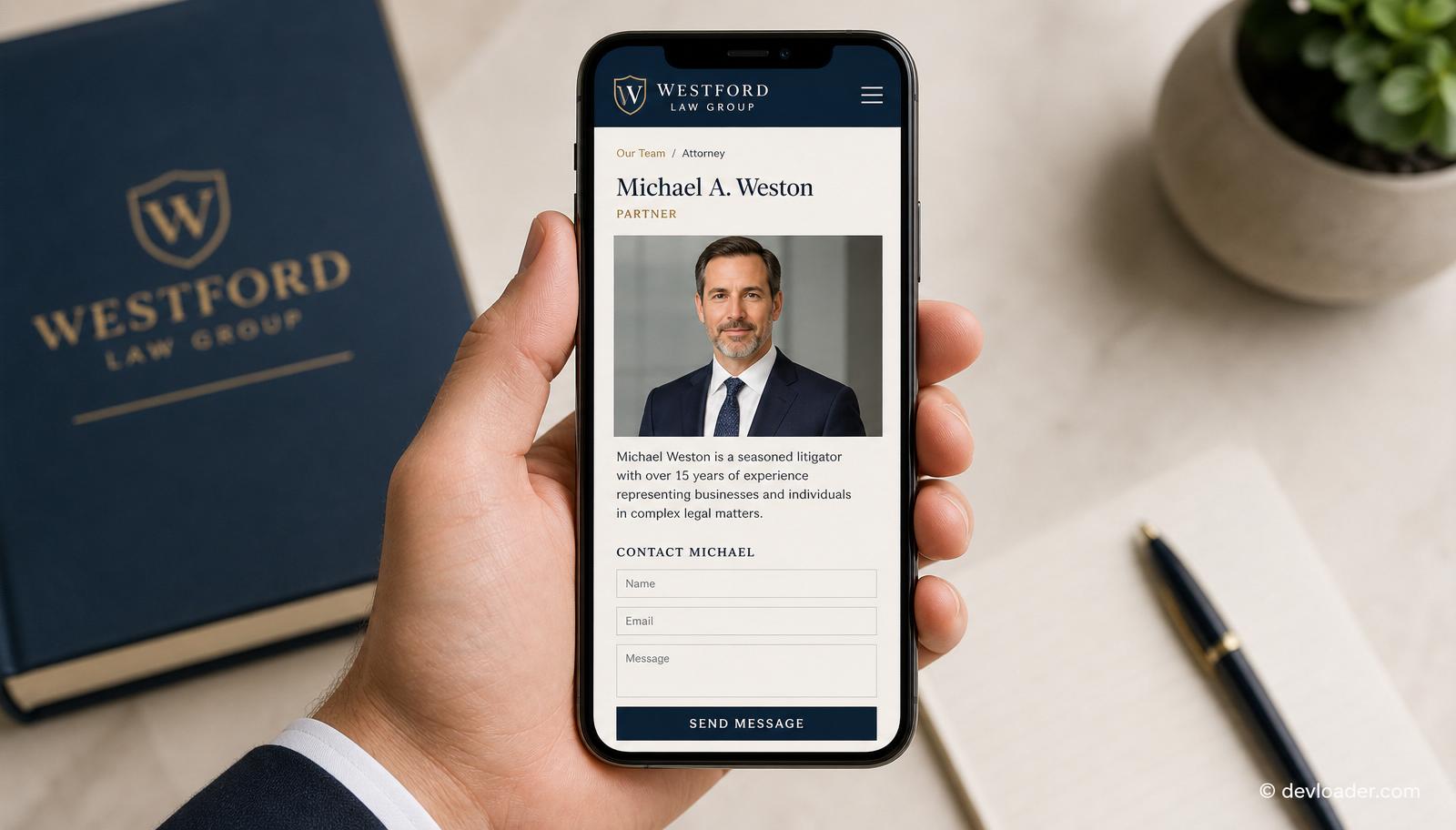
In today's fast-paced digital landscape, adopting a mobile-first design for attorneys is non-negotiable. Over half of all legal queries are performed on smartphones.
When debating responsive vs adaptive design for law sites, responsive design—where the layout fluidly adjusts to fit any screen size perfectly—is widely considered the industry standard. This must always be paired with rigorous website speed optimization for legal practices. A slow-loading page will dramatically increase your bounce rate. Fast, efficient law firm web development keeps potential clients engaged and prevents them from returning to the search results to find a competitor. Ultimately, quality website design for legal firms means prioritizing behind-the-scenes performance just as much as visual appeal.
Driving Conversions: Landing Pages and Features
Generating traffic is only half the battle; converting those visitors into qualified leads is the ultimate goal. To build high-converting law firm landing pages, you need to focus on specific, actionable elements:
- Humanize Your Practice: Follow attorney bio page best practices. Biographies are typically the second most-visited pages on legal sites. Include professional headshots, detail your specific case experience, and share a brief personal philosophy to build rapport.
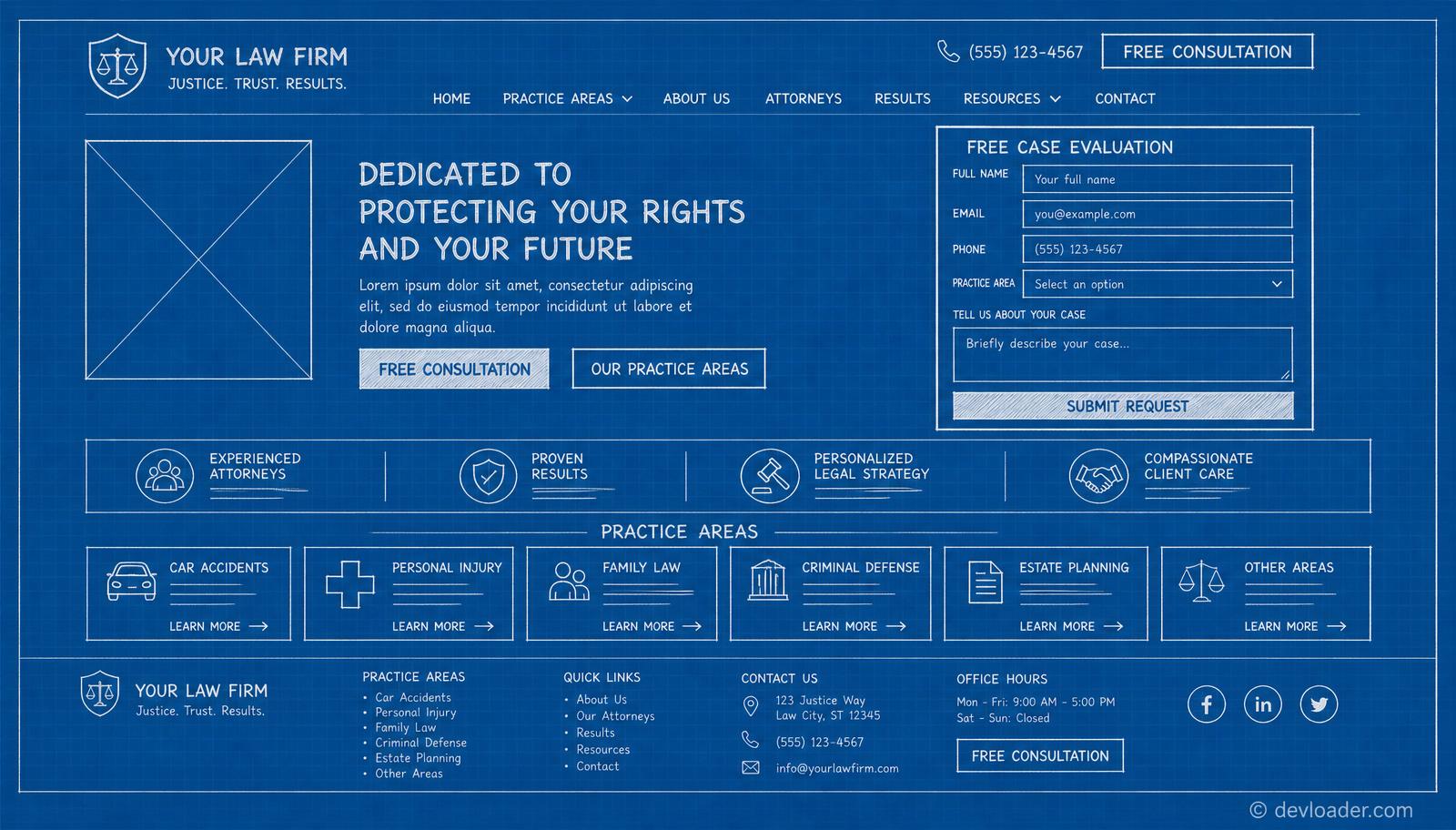
- Streamline Contact: Remove barriers to entry by integrating online intake forms for lawyers directly onto your landing pages. Keep the required fields minimal—usually just a name, email, phone number, and a brief message box.
- Guide the User: Provide clear call-to-action examples for lawyers, such as "Schedule Your Free Consultation," "Speak with an Attorney Today," or "Get a Free Case Evaluation."
These conversion-focused elements form the core of effective attorney web design.
Choosing the Right Path: Builders vs. Custom Solutions
How do you bring this digital vision to life? The route you choose depends entirely on your budget, firm size, and long-term goals.
DIY Builders for Solo Practitioners
If you are launching a new solo practice, you might be searching for the best website builder for law firm use. Platforms offering a dedicated law firm website builder or a general lawyer website builder can help you get online quickly and affordably. These platforms are incredibly useful for launching basic small law firm websites.
The Value of Custom Development
However, as your firm scales, templated law website design may fall short of your marketing needs. Investing in custom lawyer web design or entirely custom law firm website design allows for unique branding, advanced security features, and seamless CRM integrations.
Opting for custom web design for lawyers means partnering with a specialized law firm web design agency or seeking out the best law firm website design companies. These industry experts offer comprehensive law firm website design services, bridging the massive gap between simple law office web design and robust, scalable law firm website development.
Maximizing Reach and Avoiding Pitfalls
Proper website development for lawyers must also account for search engine visibility. Implementing strong local SEO for law firm websites ensures your practice appears prominently in Google's Local Pack when nearby clients search for legal assistance. Optimize your Google Business Profile, ensure your NAP (Name, Address, Phone) citations are consistent, and publish localized legal content.
As you build or revamp your site, beware of common law firm website mistakes to avoid. These include:
- Burying contact information at the bottom of the page.
- Using cliché stock photos (like gavels and scales of justice).
- Relying on outdated, clunky lawyer website design.
When you invest time and resources into professional attorney web development, you actively protect your firm from these revenue-draining pitfalls, elevating standard law firm websites into powerful lead-generation engines.
Conclusion
Ultimately, strategic website design for lawyers is about building a digital environment that reflects the professionalism, empathy, and authority of your real-world practice. By prioritizing intuitive navigation, lightning-fast mobile speeds, accessible content, and clear conversion paths, you create an online presence that reassures visitors that they have come to the right place. Focus on the user first, and your website will naturally become your firm's most valuable marketing asset.
Ready to Build a High-Converting Law Firm Website?
At Dev Loader LLC, we specialize in building fast, accessible, and conversion-optimized websites for law firms of every size. From custom attorney website design to full-scale web application development and ongoing SEO, our team turns your practice into a 24/7 lead engine.
- Explore our services for tailored legal web solutions.
- Browse our portfolio of client work.
- Request a project and get a free consultation from Dev Loader LLC today.
Related reading: Essential Law Firm Web Design · Top Trends in Legal Website Design · Top Law Firm Web Design.
Frequently asked questions
What makes a law firm website user-friendly?
A user-friendly law firm site loads in under 2.5 seconds, uses plain-English navigation labels (not "Practice Areas 1"), keeps forms under 4 fields, offers click-to-call on mobile, and passes WCAG 2.2 AA color contrast so both aging clients and search crawlers can consume the page comfortably.
How important is mobile responsiveness for attorney websites?
Critical. Over 60% of legal searches happen on mobile, and Google indexes the mobile version first. A mobile-first attorney site with tap-friendly buttons, readable body copy (16px+), and thumb-reachable CTAs consistently outranks desktop-only designs.
Which accessibility standards should a law firm website meet?
Aim for WCAG 2.2 AA at minimum: keyboard-navigable menus, alt text on every image, sufficient color contrast, resizable text, and semantic HTML landmarks. ADA lawsuits against inaccessible law firm sites have risen every year since 2020 — accessibility is now a compliance requirement, not a nice-to-have.
How should attorney bios be structured for usability?
Lead with a professional headshot, name, and admissions, then a two-sentence summary, followed by practice areas, notable results, and a direct booking button. Long chronological CVs belong further down the page or on a separate résumé tab.
What forms should a law firm website use for intake?
Use a two-step progressive form: step one captures name, phone, and matter type; step two collects incident date and short description. This structure consistently converts 20–40% better than one long form on personal injury, family law, and estate planning sites.
Related resources from Dev Loader LLC
Practice-area websites we design
- Rebuild your intake flow on a personal injury website that converts leads 24/7.
- Guide grieving and planning families through a calm, conversion-optimized estate planning website.
- Or browse every attorney website template by practice area.
Keep reading — related law-firm design guides
- Ship the right foundations with our law firm website design and SEO best practices.
- Learn how engagement-driven design keeps prospective clients on your site.
- Get ahead of competitors with the top legal website design trends of 2026.
- Review the core elements every law firm website needs.