Create an App & Make Money: A Comprehensive Guide
A practical blueprint for how to create an app and make money: validate a niche, pick a build route, choose the right monetization model, and grow revenue with ASO, retention and unit economics.
If you have ever downloaded a hit game or a fitness tracker and wondered whether the person behind it is actually earning a living from it, the answer is often yes. Learning how to create an app and make money is less about a lucky idea and more about following a repeatable sequence: validate a real problem, build the smallest useful version, attach a monetization model that fits your audience, and then improve retention every month.
This guide walks through that sequence end to end — planning, build routes and costs, the monetization models that actually pay, launch marketing, and the unit economics that decide whether your app is a business or a hobby.
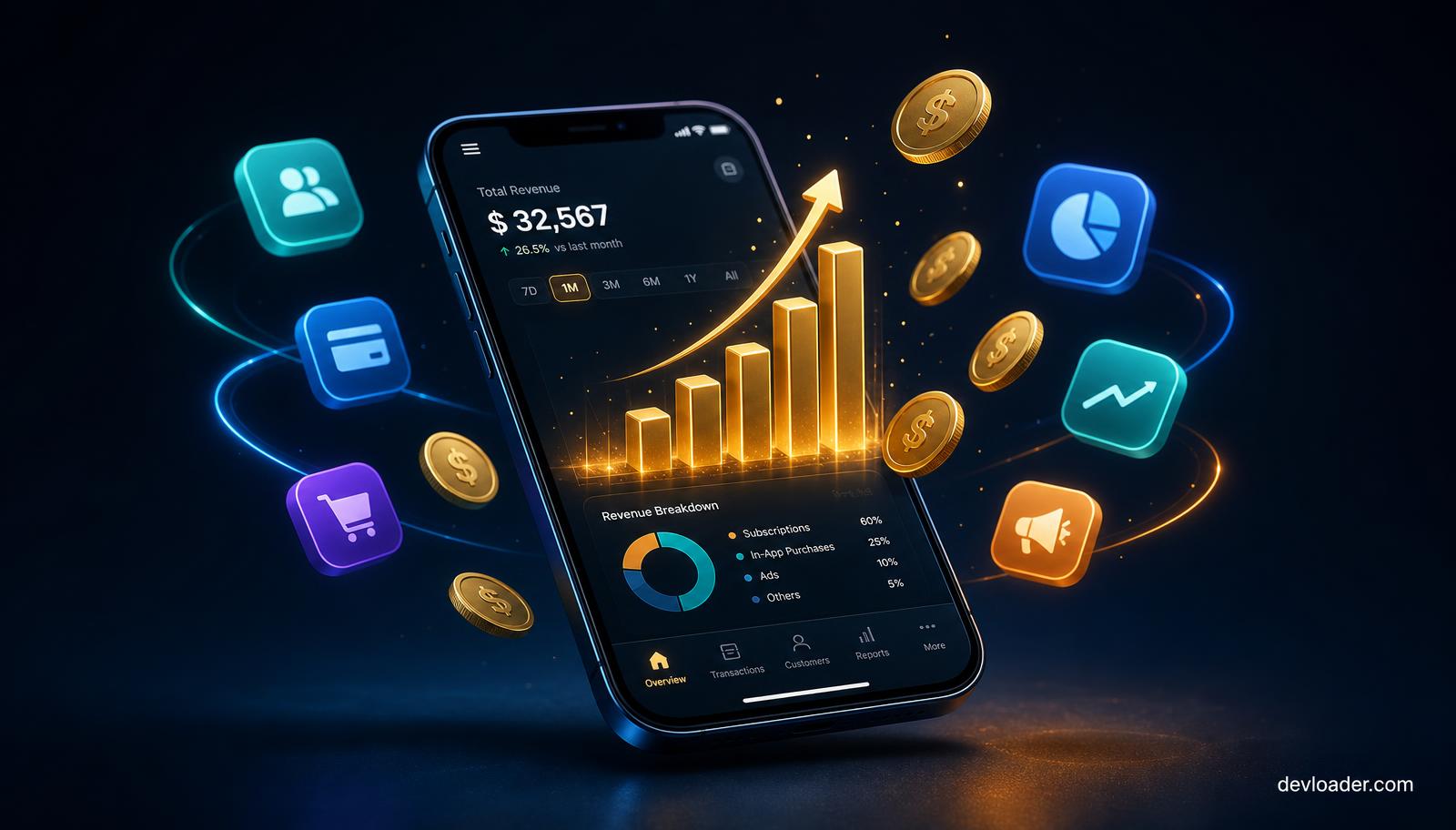
*A profitable app is a product plus a business model — the revenue chart only moves when both are designed together.*
Key takeaways
- App revenue follows product-market fit, not the other way round: validate the niche before writing code.
- The four proven models are advertising, in-app purchases, subscriptions and sponsorship/affiliate revenue — most successful apps blend two.
- Subscriptions produce the most predictable income; rewarded video ads monetize free users who will never pay.
- App stores take roughly 15–30% of digital sales, so build that into your pricing from day one.
- Lifetime value must comfortably exceed user acquisition cost, or growth simply burns cash faster.
Phase 1: planning, strategy and development
Before you think about making money from mobile apps, build the foundation.
Market research. Start by finding a niche with a specific, unsolved problem rather than entering a saturated category. Read one-star and three-star reviews of the top apps in your space — those reviews are a free backlog of features people are already asking for and not getting.
Strategic planning. Once the idea holds up, write a short business plan covering your target audience, projected build and running costs, pricing, and a twelve-month revenue goal. Planning is cheap; discovering a broken business model after launch is not.
Choosing a build route. The most common question is how much it costs to build a mobile app, and the honest answer depends on the route you choose. No-code builders let you assemble a working product for a low monthly fee and are the realistic path if you want to make an app for close to free and still monetize it. Custom development costs more up front but scales further and keeps you in control of performance, data and integrations. Our detailed breakdown of how much it costs to create an app walks through both routes with real numbers.
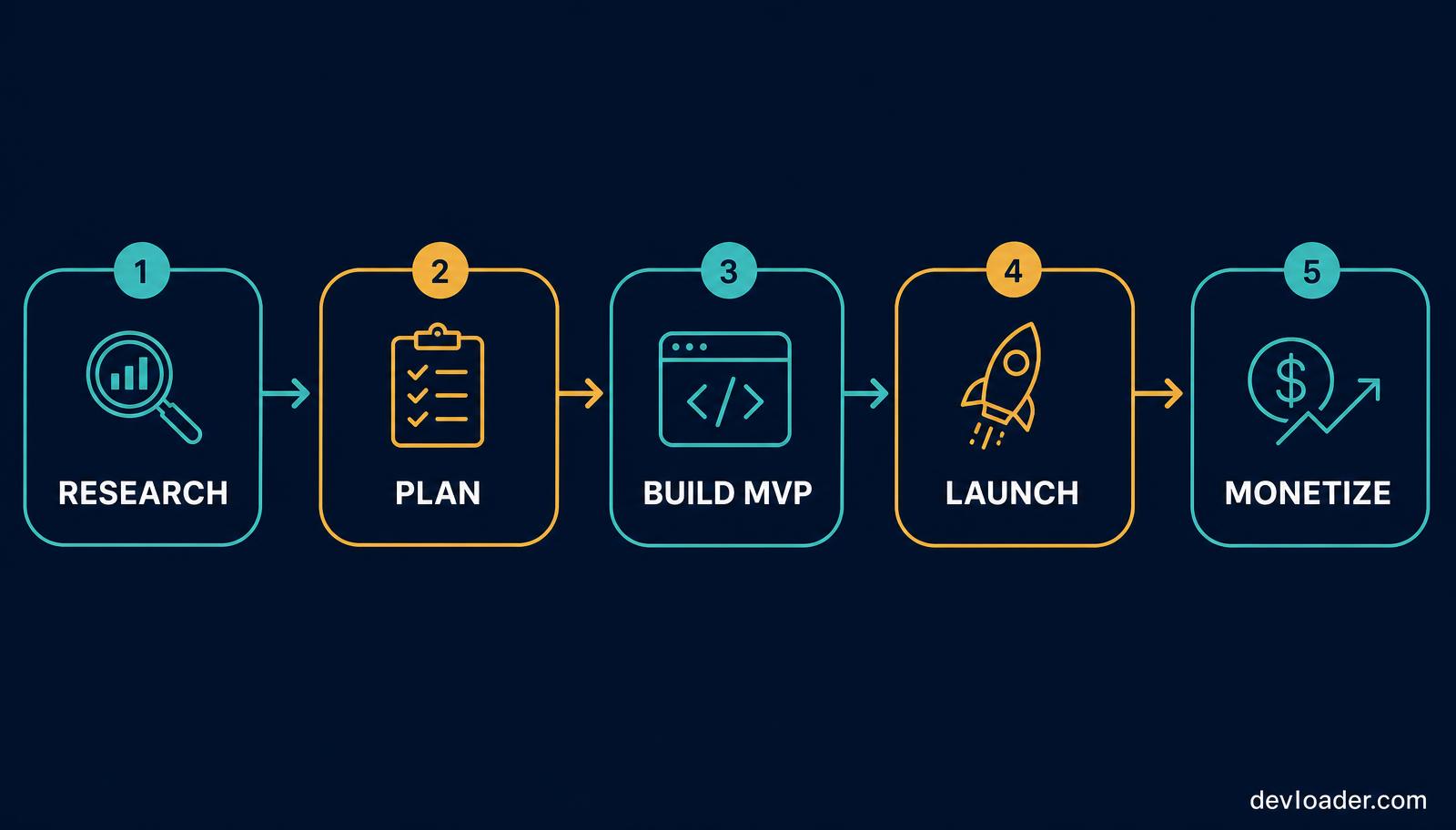
*Research, plan, build, launch, monetize — skipping a stage is the most common reason apps never earn.*
Development and delivery. If you are hiring external talent, watch for the usual outsourcing risks: vague scopes, hidden change-request costs and code you cannot maintain after handover. Insist on a repository you own, documented architecture and a fixed definition of done. If you are building for both platforms, cross platform mobile development usually removes 30–40% of the build cost compared with two native teams.
Launch small. Ship a minimum viable product: just enough core functionality for early adopters to get real value. Then run proper user acceptance testing before release, so your first reviews are not bug reports.
Phase 2: proven monetization strategies
This is where most creators get stuck. How do phone apps make money, and how do you earn from a free app? There are four dependable models.
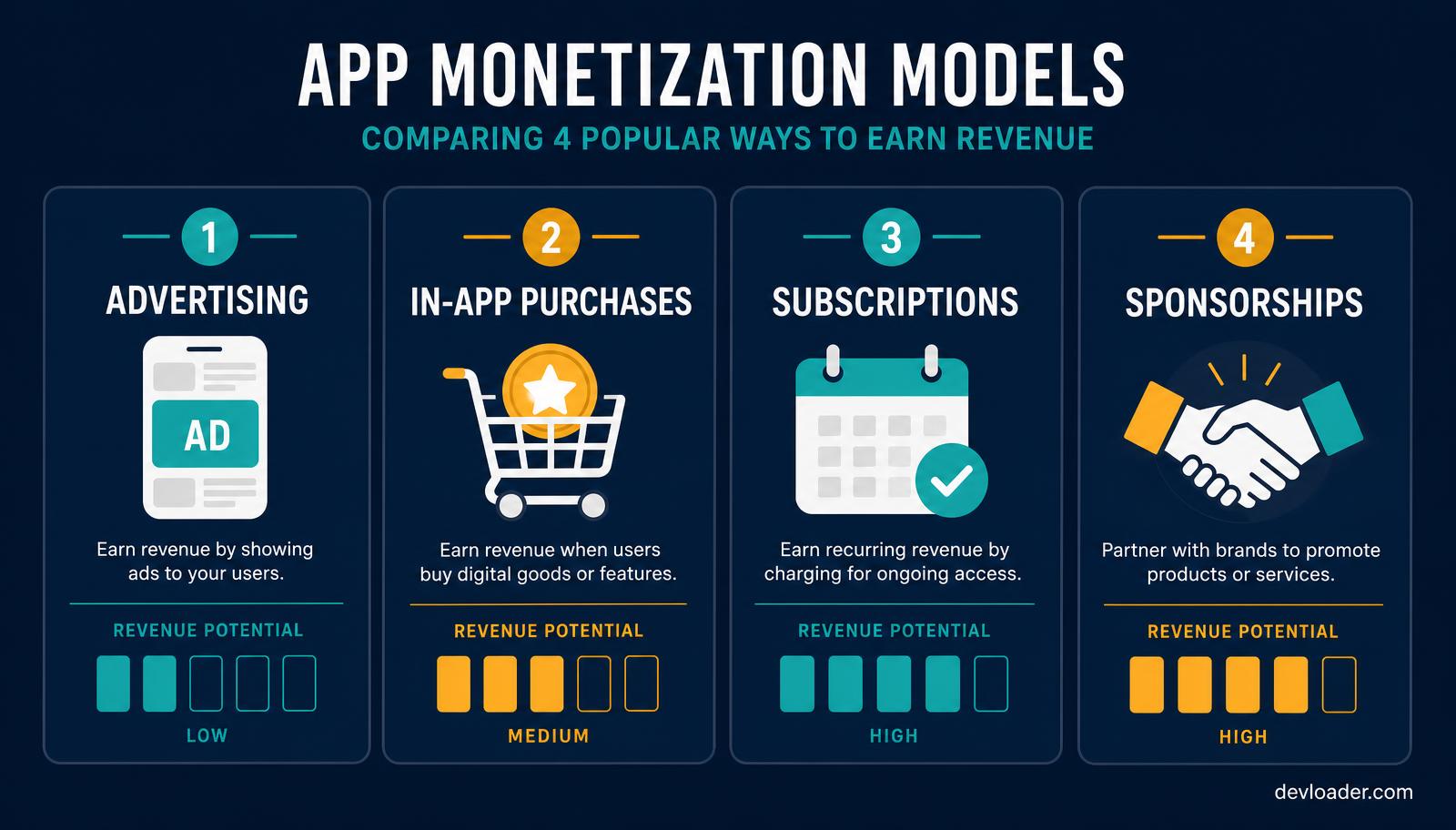
*Most profitable apps combine two models — for example a free ad-supported tier feeding a paid subscription.*
1. Advertising. Banner ads, full-screen interstitials and rewarded video. Rewarded video — where a user watches a short ad in exchange for in-game currency or a premium feature unlock — converts far better than banners because the value exchange is explicit. Ads monetize the majority of users who will never pay you directly.
2. In-app purchases. The freemium model keeps the download free and charges for virtual currency, extra content or premium features. It generates revenue without hiding the product behind a paywall, and it lets a small percentage of high-intent users fund the whole product.
3. Subscriptions. Recurring billing is the gold standard for predictable monthly income and is now dominant in fitness, education, dating and utility apps. Subscriptions are only sustainable when the app delivers ongoing value — a weekly reason to open it.
4. Sponsorship and affiliate revenue. If you want to monetize a free app without ads and keep a clean interface, brand sponsorships, affiliate partnerships and merchandise are all viable. This works best in apps with a tightly defined community.
Whichever model you choose, engagement is the multiplier. A daily-use app with 100,000 loyal users monetizes better than a novelty app with a million one-time installs.
Phase 3: launching, marketing and optimization
You can know how to develop an app on a technical level and still earn nothing without distribution.
App store optimization. Your title, subtitle, keyword field, icon and screenshot gallery decide how much free traffic the stores send you. Write the primary keyword into the title naturally, use the first two screenshots to show the outcome rather than the interface, and refresh your listing after every major release. Better rankings mean cheaper organic installs, which directly improves margins.
Platform economics. iOS users historically spend more per head on in-app purchases and subscriptions, while Android's global install base delivers far more advertising volume. If your model is subscription-led, prioritise iOS; if it is ad-led, Android scale matters more.
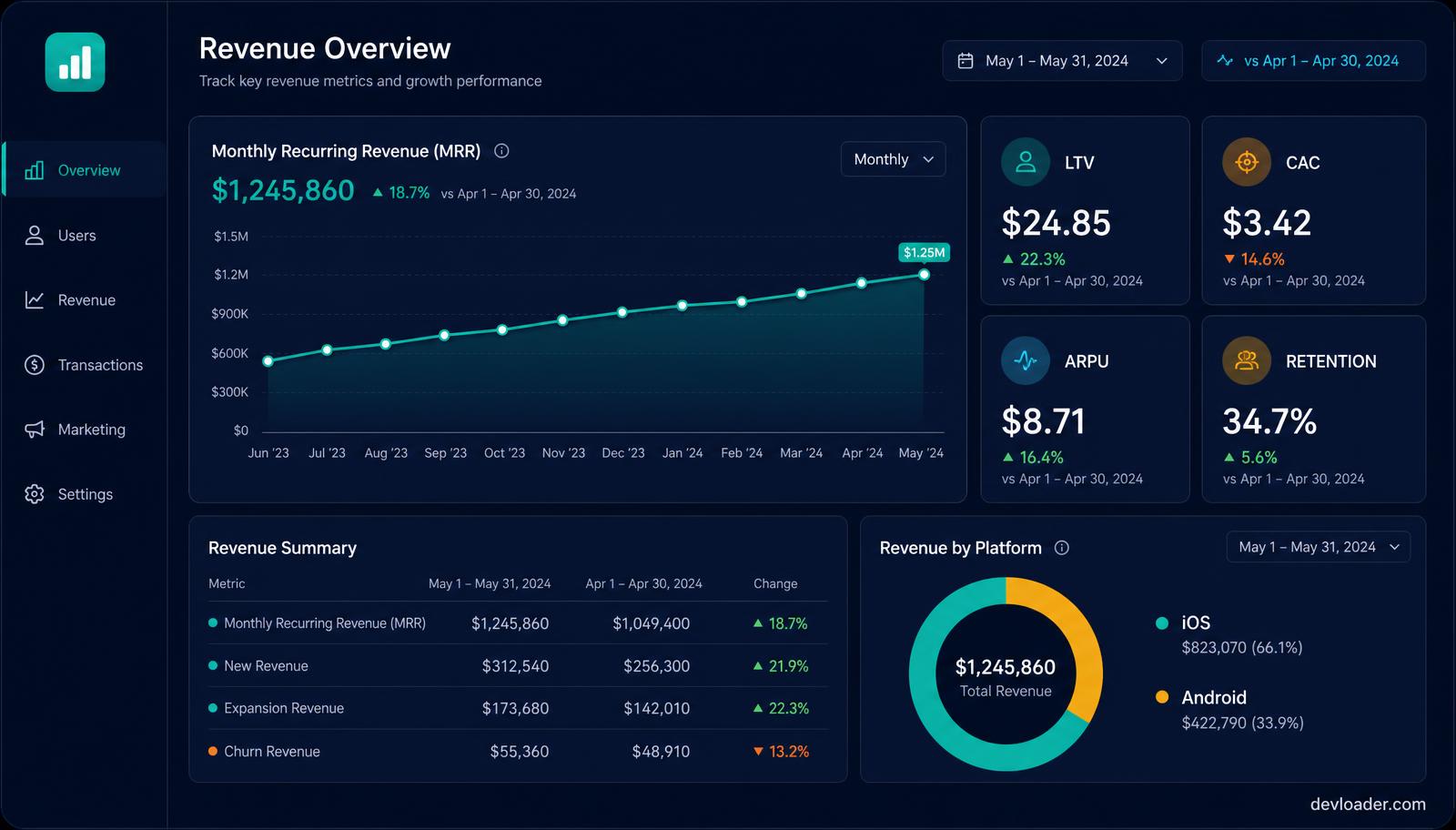
*If lifetime value does not clear acquisition cost with room for store fees, growth spending makes losses bigger, not smaller.*
Unit economics. Track user acquisition cost against lifetime value. If a new user costs three dollars to acquire, their lifetime revenue must exceed that by a healthy multiple — most operators target 3x. Then subtract the app store commission, typically 15–30% of digital sales, before you call anything profit.
Phase 4: scaling your mobile business
At scale, revenue growth comes from iteration rather than new ideas. Successful teams study cohort data to find where users drop off, then remove that friction. They introduce higher premium tiers, annual plans and exclusive content for power users. They ship consistent updates that fix bugs and add the features reviewers keep requesting.
Retention is the compounding asset. A one-point improvement in month-two retention raises lifetime value across every future cohort, which in turn raises how much you can afford to spend acquiring users. That feedback loop — retain, monetize better, reinvest in acquisition — is how apps grow from side project to business.
If your goal is income that keeps arriving after the launch work is done, pair this with our guide to passive income ideas that actually compound.
Frequently asked questions
Can you actually make money creating an app? Yes, but revenue follows usage. Apps that solve a specific recurring problem and retain users past the first week can be monetized reliably through subscriptions, in-app purchases or advertising.
How do free apps make money? Free apps earn through advertising, in-app purchases of virtual goods or premium features, subscriptions to an upgraded tier, and sponsorship or affiliate partnerships. Most combine at least two.
Which monetization model earns the most? Subscriptions produce the highest and most predictable lifetime value for apps used weekly. Advertising earns less per user but monetizes the large majority who will never pay.
How much does it cost to build a mobile app? A no-code MVP can start in the low thousands, while a custom cross-platform product typically runs from around $25,000 to well over $100,000 depending on features, integrations and design depth.
How long before an app becomes profitable? Most apps need six to eighteen months of iteration on retention and pricing before revenue reliably exceeds development and marketing costs.
How much do app stores take from revenue? Apple and Google generally take 30% of digital sales, reduced to 15% for small developers and for subscription revenue after the first year.
Do I need to know how to code to make a profitable app? No. No-code platforms let non-technical founders validate and monetize an idea, though most successful products eventually move to custom development for performance and scalability.
Related content
- Apps like Dave: how instant cash advance apps are built and what they cost — a look at the fintech model behind earned wage access products.
- How much does it cost to create an app? — a full budget breakdown before you commit to a build.
- Cross platform mobile development: best tools and frameworks — ship iOS and Android from one codebase and cut build cost.
- Master mobile app design: create top UI/UX apps — the interface decisions that drive retention and paid conversion.
- What does UAT stand for? — release sign-off that protects your store rating.
- How to hire developers for startup success — building the team behind a revenue-generating app.
Build a profitable app with a senior team
Dev Loader designs, builds and launches revenue-generating mobile products — market validation, MVP scoping, cross-platform engineering, subscription and in-app purchase integration, app store optimization and post-launch analytics. Explore our mobile app development services, browse recent work in the portfolio, or read more guides on the Dev Loader blog.
Get a scoped quote for your app idea →
About the author
Written by the Dev Loader editorial team — engineers and product strategists at Dev Loader LLC (Washington, DC) who have delivered mobile and web products for startups and established businesses, covering monetization architecture, subscription billing, app store launches and growth analytics. Every guide is reviewed against live client project experience before publication.